
What the House Is Telling You
Signs Your Maryland Foundation Needs Repair
A foundation rarely fails all at once. It shows itself first in the house above it, a door that stopped closing right, a crack that wasn't there last spring, a floor that isn't quite level anymore. OBW's inspectors trace these signs back to what the foundation is actually doing beneath the house.
Schedule a Free Inspection (410) 879-3360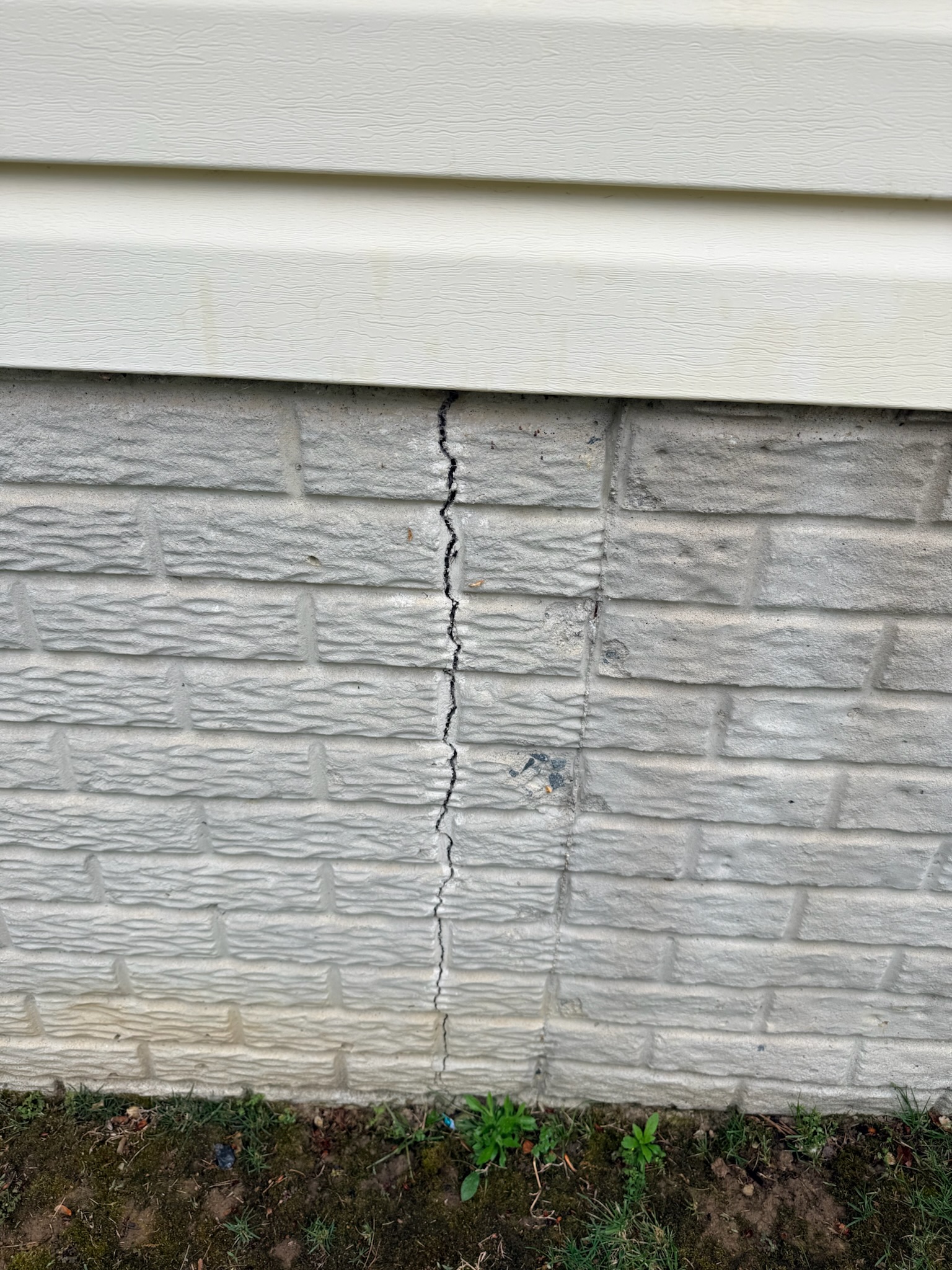
Eighteen Signs, Three Root Causes
Find Your Sign
Jump straight to the sign you're seeing. Each page covers what causes it, how OBW diagnoses it, and what the repair actually involves.
Cracks & Crack Patterns
Bowing Walls
A wall bowing inward under Maryland clay pressure, stabilized with carbon fiber or wall anchors.
Cracked Bricks
Cracked or crumbling brick, checked for whether it's veneer or a structural wall issue.
Diagonal Cracks
A crack running at an angle, read for how much foundation movement it represents.
Drywall Cracks
Interior cracks checked for cosmetic seasonal movement versus a structural cause.
Floor Cracks
Slab cracks measured for width and displacement to rule shrinkage in or out.
Stair Step Cracks
Cracks following brick or block mortar joints, measured for active movement.
Doors, Windows & Frames
Cracks at Door Frames, Ceilings & Corners
Often the earliest visible sign of settlement, before any door sticks.
Doors Not Latching
A strike plate drifted out of alignment, measured to trace which way the wall moved.
Doors & Windows Misaligned
An uneven reveal around a frame, usually the smallest sign before sticking begins.
Gaps Around Windows & Doors
A widening gap at the wall boundary, checked before it gets resealed again.
Sticking Doors & Windows
Tested against seasonal humidity before blaming the foundation.
Settlement & Structure
Detached Cabinets
A cabinet pulling away from the wall or floor, tied back to what's actually moving.
Foundation Settlement
Diagnosing the cause behind a settled foundation before specifying piers.
Foundation Upheaval
The opposite of settlement, a section pushed up by swelling clay or frost heave.
Leaning Chimneys
A chimney's own footing settling independently of the rest of the house.
Sagging Floor
A localized dip traced to the exact foundation support point beneath it.
Sinking Foundation
The whole foundation settling evenly, often with no cracking to give it away.
Uneven Floors
Floor elevation mapped to find which foundation section actually moved.
Movement Warning Signs
- Floors that slope or feel uneven, one part of a room noticeably lower than another, usually the sign of differential settlement below
- A leaning chimney, chimneys sit on their own footing and often settle independently of the rest of the house
- Foundation upheaval, the opposite of settlement, sections of slab or footing pushing upward rather than sinking
- Sagging or bouncing floors near an exterior wall, where the wall and the floor framing are no longer supporting each other the way they were built to
- Gaps opening at the base of an exterior wall or between the wall and the floor, visible separation as the structure shifts
Door, Window, and Frame Warning Signs
- Doors and windows that appear misaligned, uneven gaps around the frame, a reveal that's wider on one side than the other
- Doors and windows that stick or drag, especially when the sticking doesn't ease up once the weather dries out
- Doors that no longer latch, the strike plate and the latch bolt have drifted out of alignment
- Cracks radiating diagonally from the corners of door or window frames, a common signature of a frame that's racked out of square
- Trim or drywall pulling away from a door or window frame, the finish materials showing movement the eye missed at the framing level
Wall and Crack Warning Signs
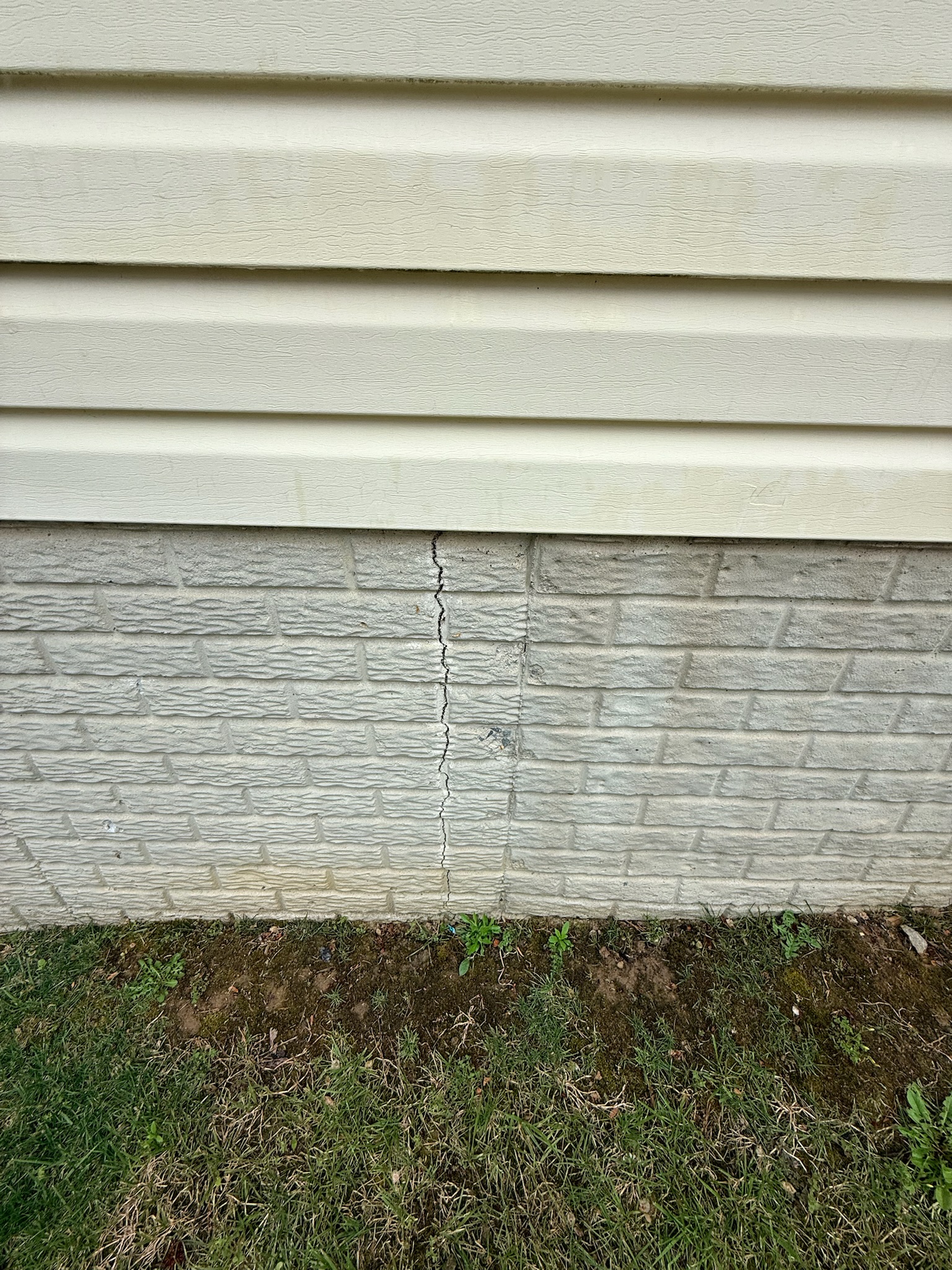
- Stair step cracks, following the mortar joints in brick or block, often the clearest visual signature of settlement at that section of wall
- Diagonal cracks, running at an angle rather than straight up and down, another differential settlement pattern
- Horizontal cracks or visible inward bowing, a wall being pushed by lateral soil pressure rather than settling straight down
- Cracks that are wider at one end than the other, indicating rotation of that wall section rather than uniform movement
- New cracks in a foundation that was previously crack free, or an old crack that has visibly widened over the past year or two
When to Call OBW
Any one of these signs on its own is worth a look. Several of them together, especially on the same side or corner of the house, usually point to a settlement or drainage cause that's been developing for longer than a single season. A free OBW inspection measures what's actually happening (floor slope, crack width, wall deflection) and tells you honestly whether it's a monitor it situation or a call for repair now. Family owned since 1953, backed by a written workmanship guarantee.
Seeing this problem in your home?
Family-owned since 1953. Honest, consultative guidance. Backed by a written workmanship guarantee. MHIC 4247.
Schedule Your Free Inspection (410) 879-3360