Matching the Method to the Diagnosis
Foundation Repair Solutions in Maryland
Every foundation repair method here exists to solve a specific problem. OBW's inspectors diagnose what's actually happening beneath your home first, then recommend from this list, they don't start with a method and work backward to a diagnosis.
Schedule a Free Inspection (410) 879-3360
Twenty Methods, Three Categories
Find Your Solution
Jump straight to the method that fits. Each page covers how it works, when OBW uses it, and what installation involves.
Wall Stabilization
Carbon Fiber Reinforcement
Stop a bowing wall without excavating the yard, straps installed from inside the basement.
Wall Anchors
The only bowing wall repair that can be tightened over time toward vertical.
I-Beam Wall Bracing
Stabilizing a bowing wall from the inside when the yard behind it isn't accessible.
Retaining Wall Anchors
Stabilizing a freestanding retaining wall, configured differently than a basement wall anchor.
Carbon Fiber Applications
The wider range of uses for carbon fiber beyond bowing wall straps.
Underpinning and Settlement
Foundation Underpinning
Extending a settling foundation's support down to soil that can actually bear the load.
Push Piers
Driven using the home's own weight as resistance, OBW's in-house underpinning method.
Helical Piers
How this underpinning method works and when piers are the right fix for a settling foundation.
Concrete Piers
Stacked precast sections driven to bearing soil, an alternative to steel piers.
Micro Piles
Small-diameter, drilled and grouted underpinning for the tightest access sites.
Deep Foundation Systems
The engineering category of methods that reach past unstable shallow soil.
Helical Deck Piers
A lighter-duty version of helical pier technology, sized for deck loads.
Tieback Anchors
A helical anchoring technique holding back excavation and retaining structures.
Slab and Crack Repair
Slab and Mud Jacking
A proven, heavier lift for sunken slabs, sidewalks, driveways, and patios.
Slab Piers
Load-bearing support for a settled slab, distinct from perimeter foundation piers.
Polyurethane Foam Injection
How polyjacking lifts a sunken slab. Oriole does not offer foam injection.
Polyurethane Foam Void Filling
How filling the space beneath a slab stabilizes it. Oriole does not offer foam work.
Epoxy Crack Injection
The right tool for certain cracks, and the wrong one for most Maryland foundation walls.
Grout Injection
Filling soil voids and stabilizing loose soil beneath a foundation without full excavation.
Expansion Joints
Giving concrete a designed place to move so seasonal change doesn't crack it instead.
Wall Stabilization
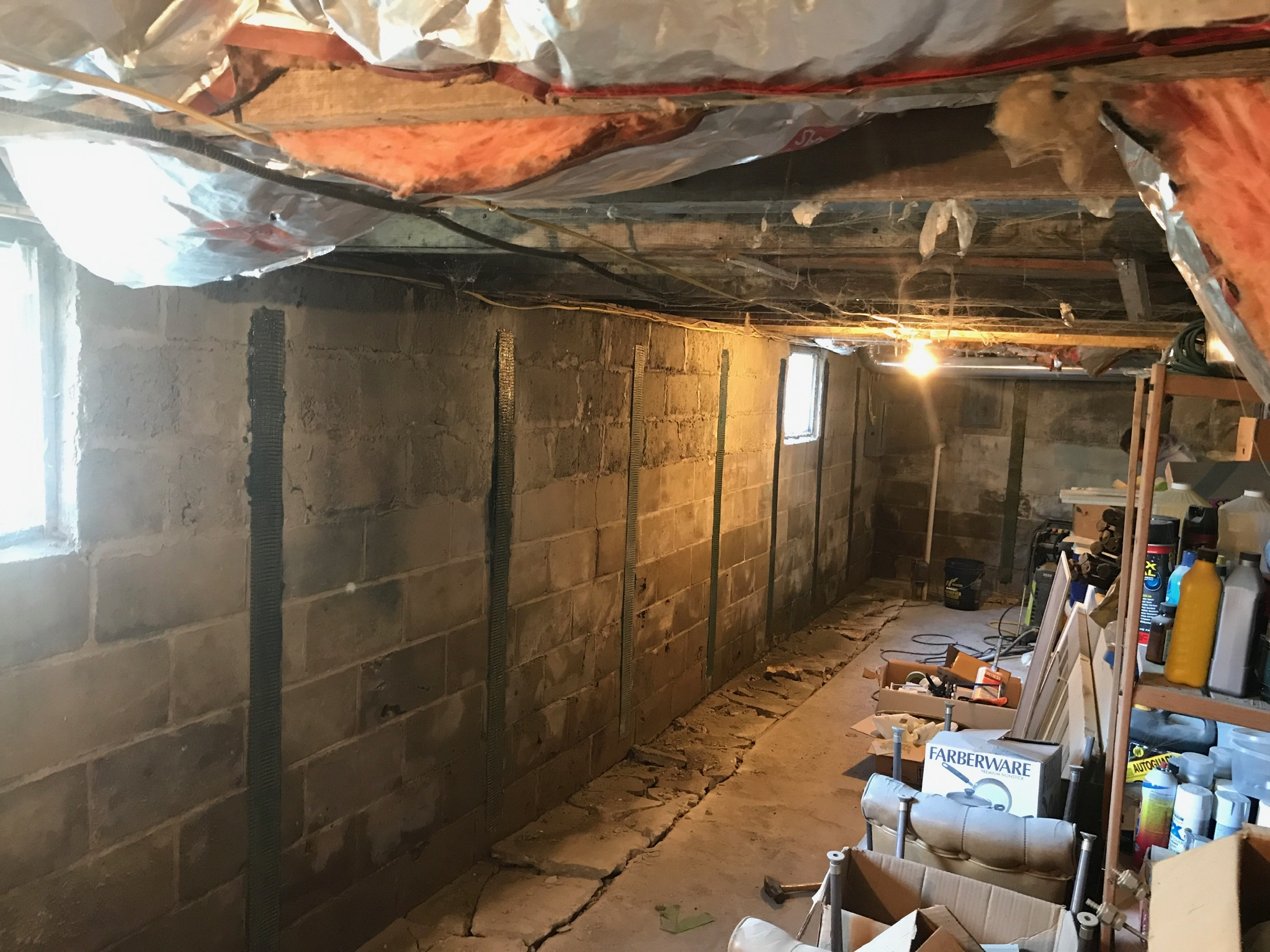
For walls being pushed inward by Maryland clay pressure: carbon fiber reinforcement for minor deflection, wall anchors for moderate deflection with gradual straightening, and I-beam wall bracing where anchors aren't viable. Retaining wall anchoring systems address freestanding landscape walls rather than the house's own foundation wall.
Underpinning and Settlement
Foundation underpinning covers the broader category of transferring a settled foundation's load to more stable soil. Specific methods include push piers, helical piers, concrete piers, micro piles, and, for tighter or deeper applications, deep foundation systems more broadly. Helical deck piers and tieback anchors are educational guides to methods used by specialists for lighter or specific structural applications.
Slab and Crack Repair
Slab and mud jacking and slab piers address settled or sunken slabs. Polyurethane foam injection lifts and levels slabs; polyurethane foam void filling fills the empty space beneath one without necessarily lifting it. For cracks, OBW's Artery Method seals stable cracks, while epoxy crack injection, grout injection, and expansion joints address specific crack and slab conditions. Carbon fiber applications surveys the wider range of uses for carbon fiber reinforcement beyond bowing walls.
Diagnosis Before Method
Many of these methods solve overlapping problems in different ways, and the wrong method for your specific foundation can be an expensive mistake. A free OBW foundation inspection identifies the cause and recommends from this list honestly, including telling you when a specialist outside OBW's own scope is the better fit. Family owned since 1953, backed by a written workmanship guarantee.
Ready to talk about your foundation?
Family-owned since 1953. Honest, consultative guidance. Backed by a written workmanship guarantee. MHIC 4247.
Schedule Your Free Inspection (410) 879-3360