Lost Structural Capacity Below
Sagging Floors
Over Your
Crawl Space
Floors that sag, bounce, or feel soft underfoot are telling you something below has already lost structural capacity.
In Maryland homes, this almost always traces to moisture damage, floor joists weakened by decay, support posts that have rotted, or main beams that have sagged from inadequate support. OBW connects the symptom you're feeling upstairs to its specific structural cause below, then repairs both.

A Slow Process, Then Sudden Symptoms
What's Happening Beneath
a Sagging Floor
A first floor is supported by a system of floor joists spanning from the foundation walls to a central main beam, itself supported at intervals by posts on footings. Any failure in this system produces visible symptoms above, eventually. In Maryland crawl spaces, failure typically begins with moisture: wood posts decay at their base, floor joists absorb ground moisture and lose structural strength, and concrete block piers settle unevenly as clay soil shifts with moisture content.
The process is slow, often taking years from initial moisture exposure to visible floor sagging, but by the time it's noticeable, meaningful structural capacity has already been lost. That's why the symptoms upstairs, sticking doors, cracked grout, a noticeable slope, are worth tracing to their cause rather than treated as cosmetic.
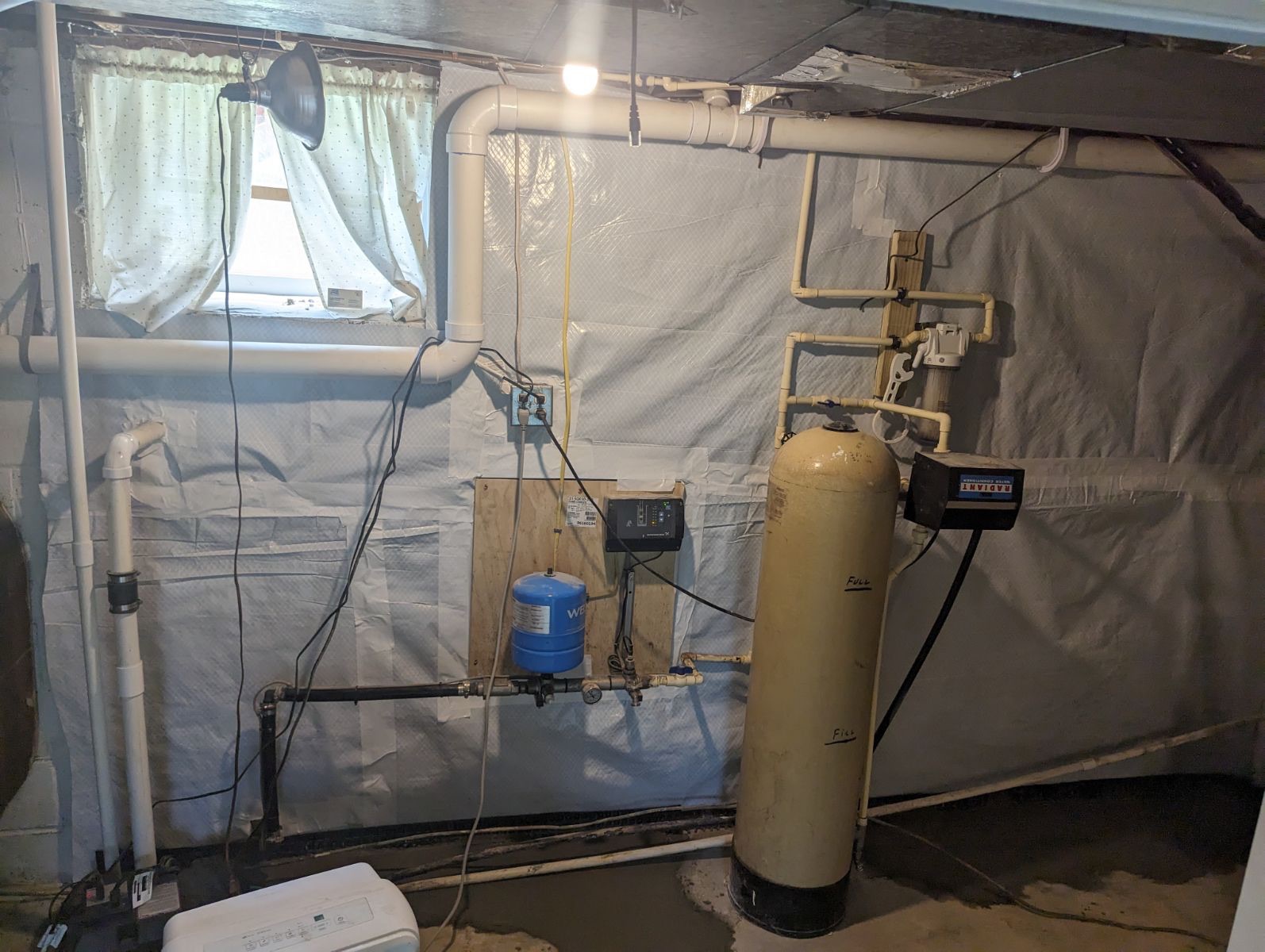
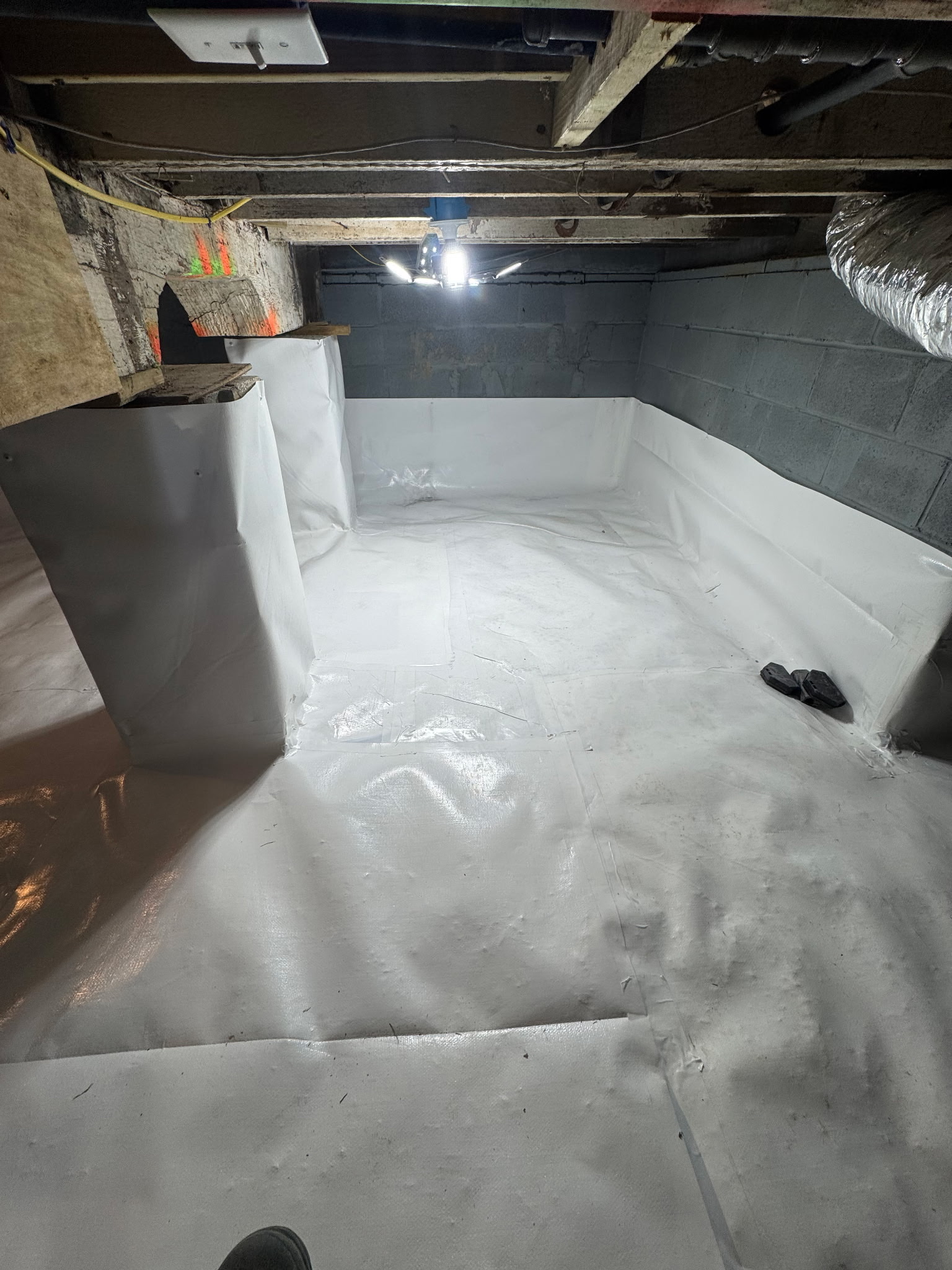
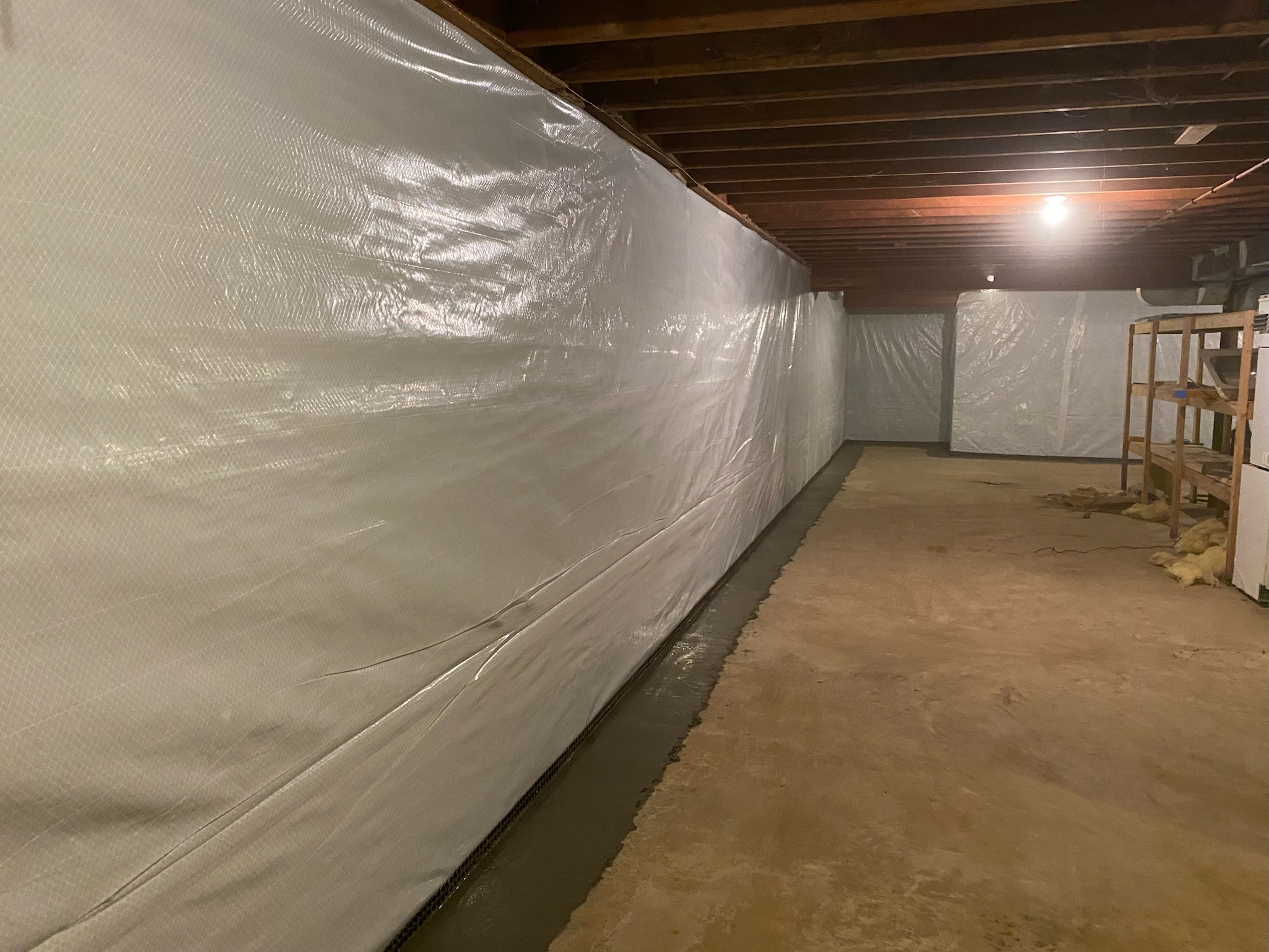
Moisture control at the wall base, installed so the wood structure above stays dry going forward
What You'd Notice Upstairs
Symptoms to Watch For
in Your Floors
These are the signs that show up above the crawl space, distinct from what an inspector finds directly beneath the floor.
- Floors that feel springy or bounce underfoot, especially near the center of a room
- Interior doors that stick, don't latch, or need lifting to close
- Gaps forming between baseboards and the floor surface
- Cracked tile grout in linear patterns following the joist direction
- A noticeable slope when placing a level or marble on the floor
What's Included
OBW's Sagging Floor
Repair Services
We start from the symptom you're seeing and trace it to the specific structural cause underneath.
Floor Symptom & Level Assessment
We document where floors are sloping, bouncing, or affecting doors and tile before inspecting the crawl space itself.
Joist & Support Inspection
The joists and supports beneath the affected floor area are checked directly to confirm what's actually causing the symptoms above.
Adjustable Steel Support Post Installation
Galvanized steel posts on new concrete footings stabilize and gradually lift the floor structure back toward level.
Joist & Beam Repair
Deteriorated joists and beams are sistered or replaced with pressure treated lumber as needed.
Moisture Control Pairing
Vapor barrier, drainage, and dehumidification are installed alongside the structural repair so it stays dry going forward.
Written Workmanship Guarantee
Structural repair and encapsulation work is backed by a written workmanship guarantee. Ask your inspector for the terms that apply to your job.
The Process
How OBW Diagnoses and
Repairs a Sagging Floor
Document the symptoms above. Confirm the cause below. Repair the structure and the moisture, together.
Floor Symptom Documentation
OBW documents where floors slope, bounce, or affect doors and tile, mapping the visible symptoms before going underneath.
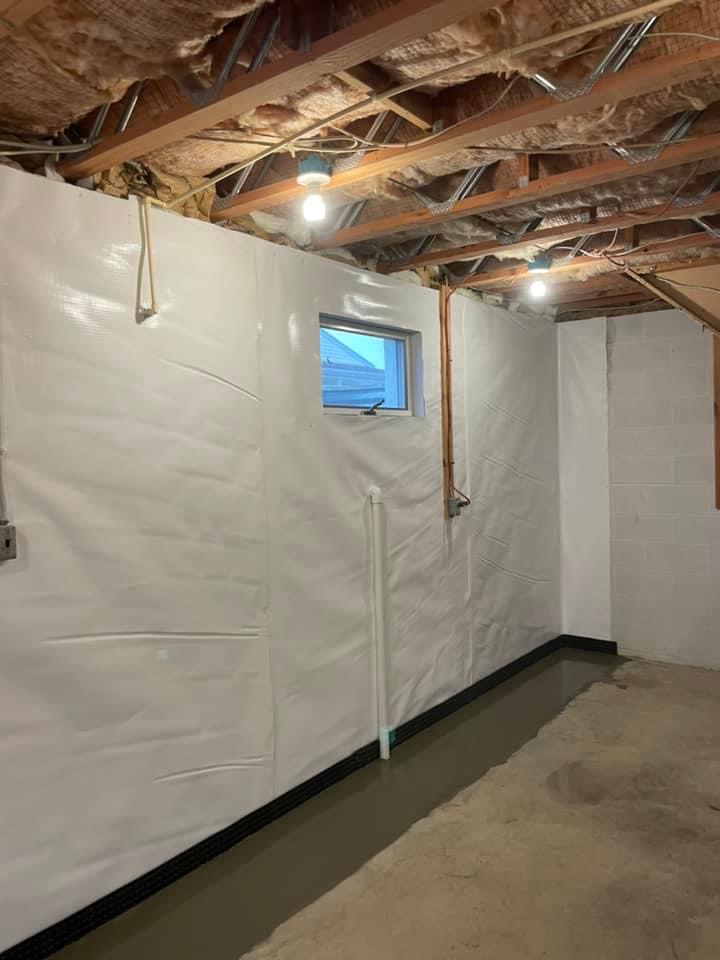
Crawl Space Inspection
The joists, beam, and supports beneath the affected area are checked directly to confirm the structural cause.
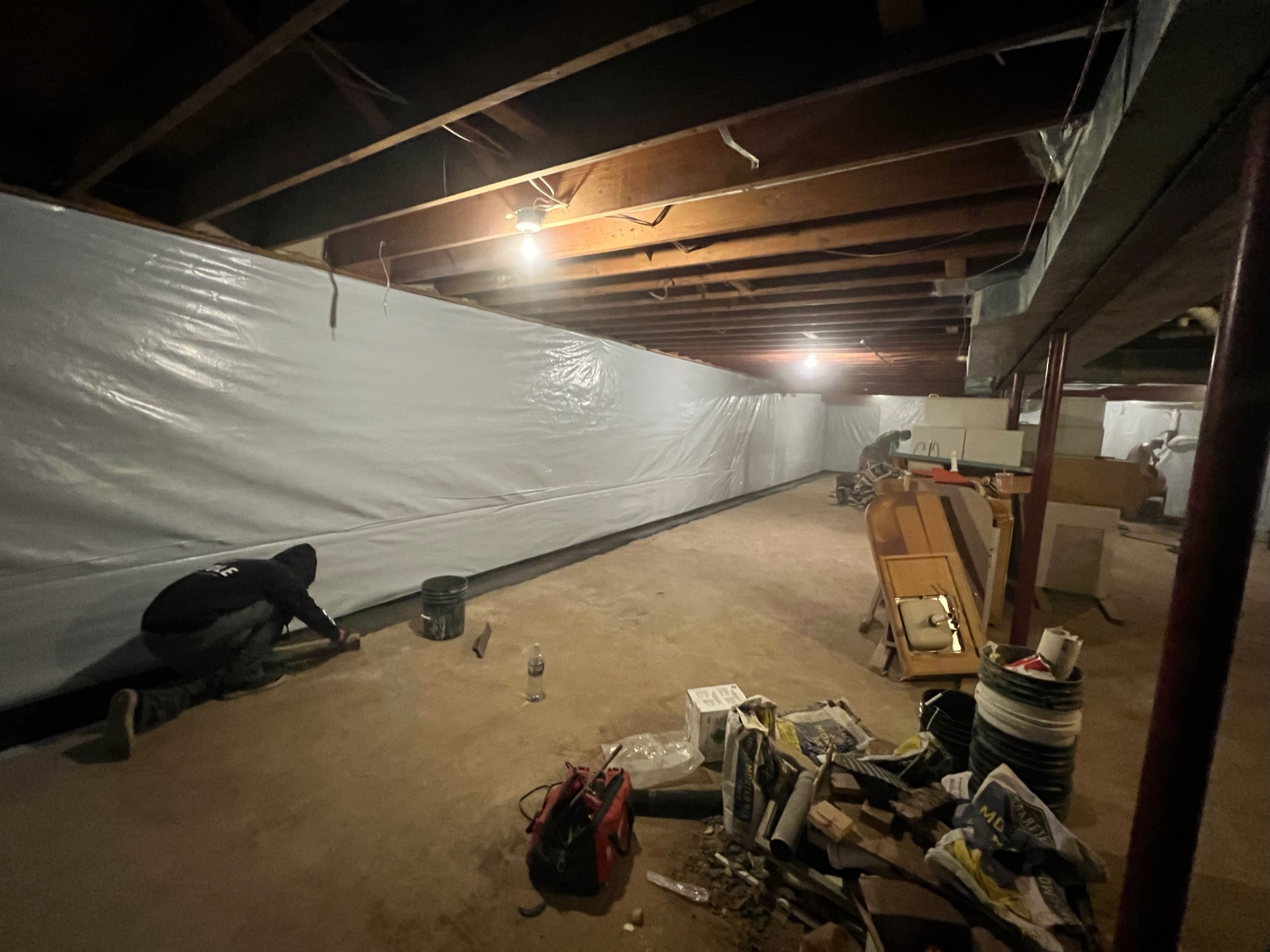
Structural Repair Installation
Steel support posts, and any needed joist or beam repair, are installed to stabilize and lift the floor structure.
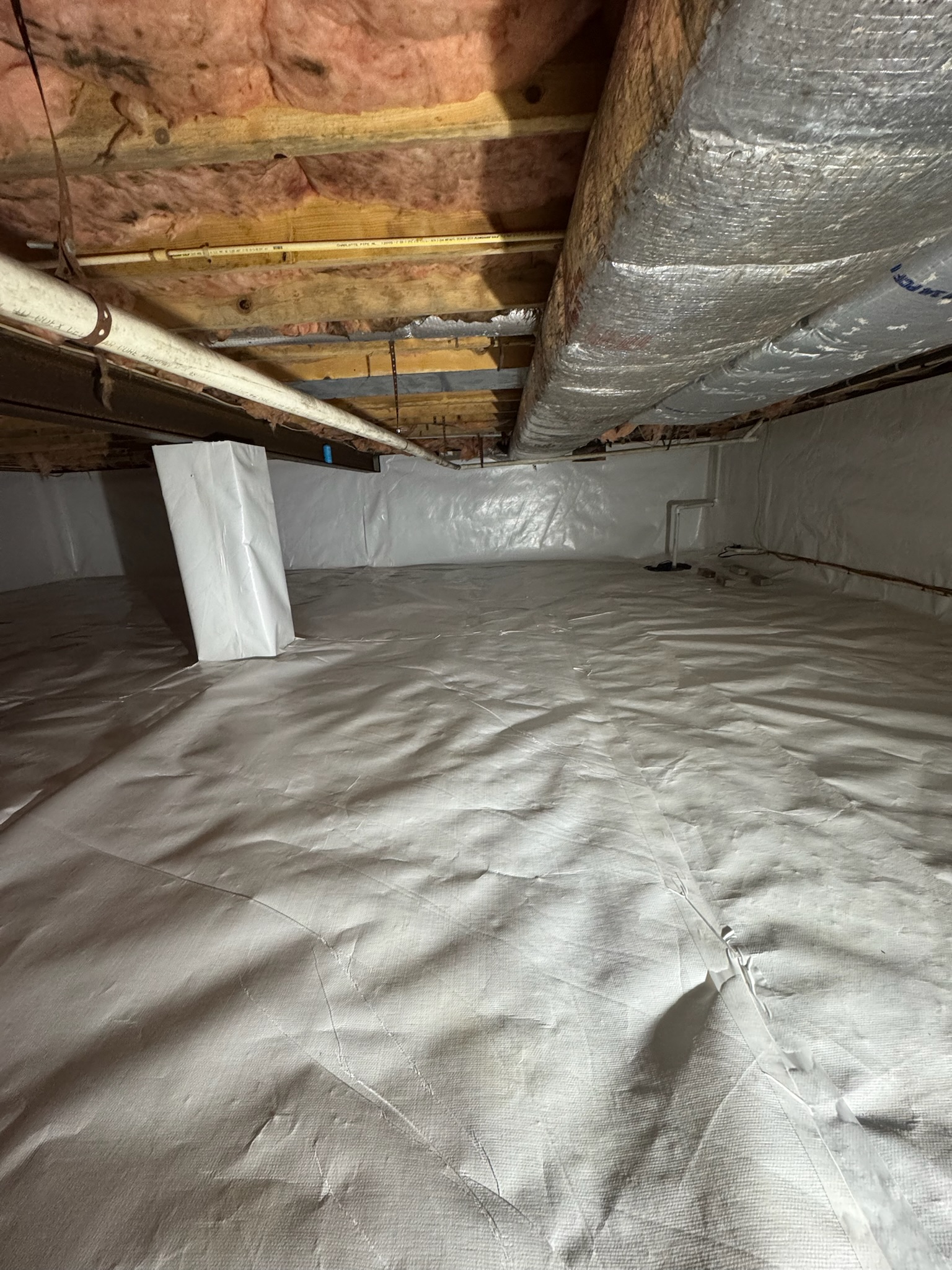
Moisture Control & Verification
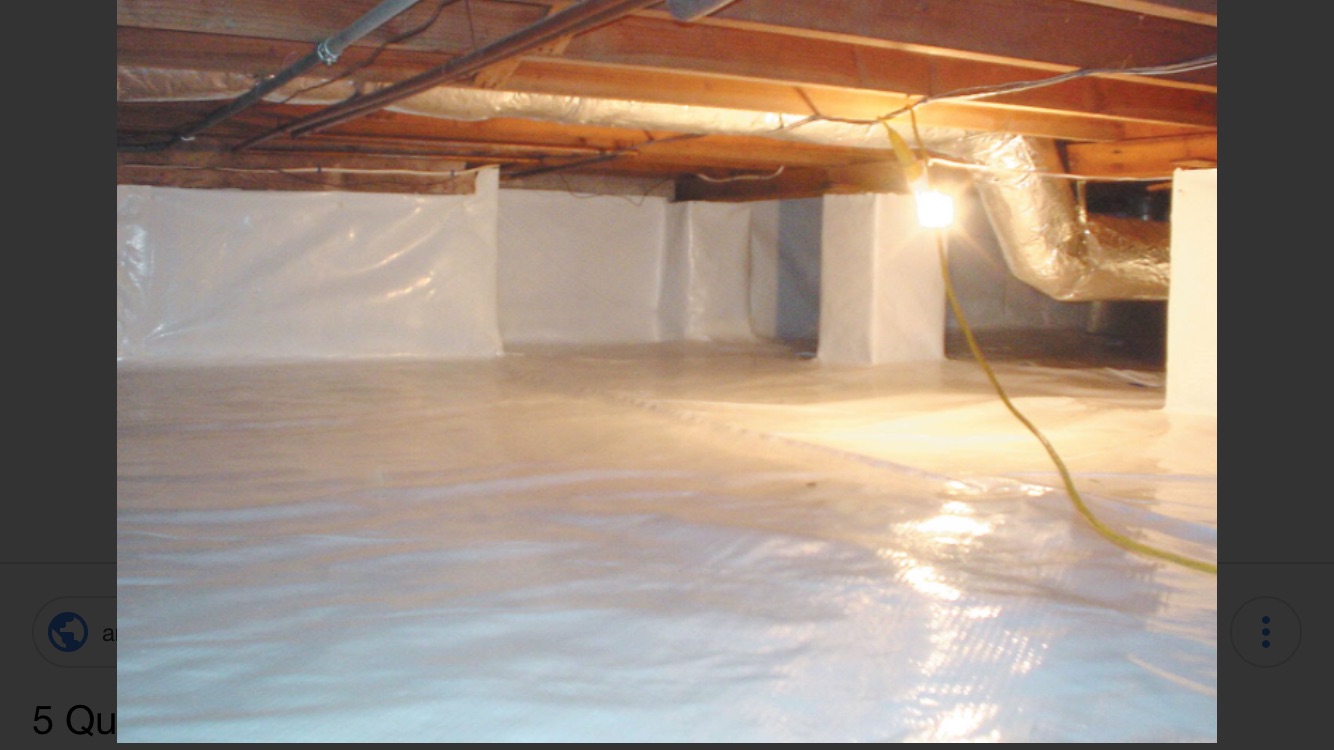
Vapor barrier, drainage, and dehumidification are installed, and the repair is verified to confirm the floor is stable and dry.
Photos From the Field
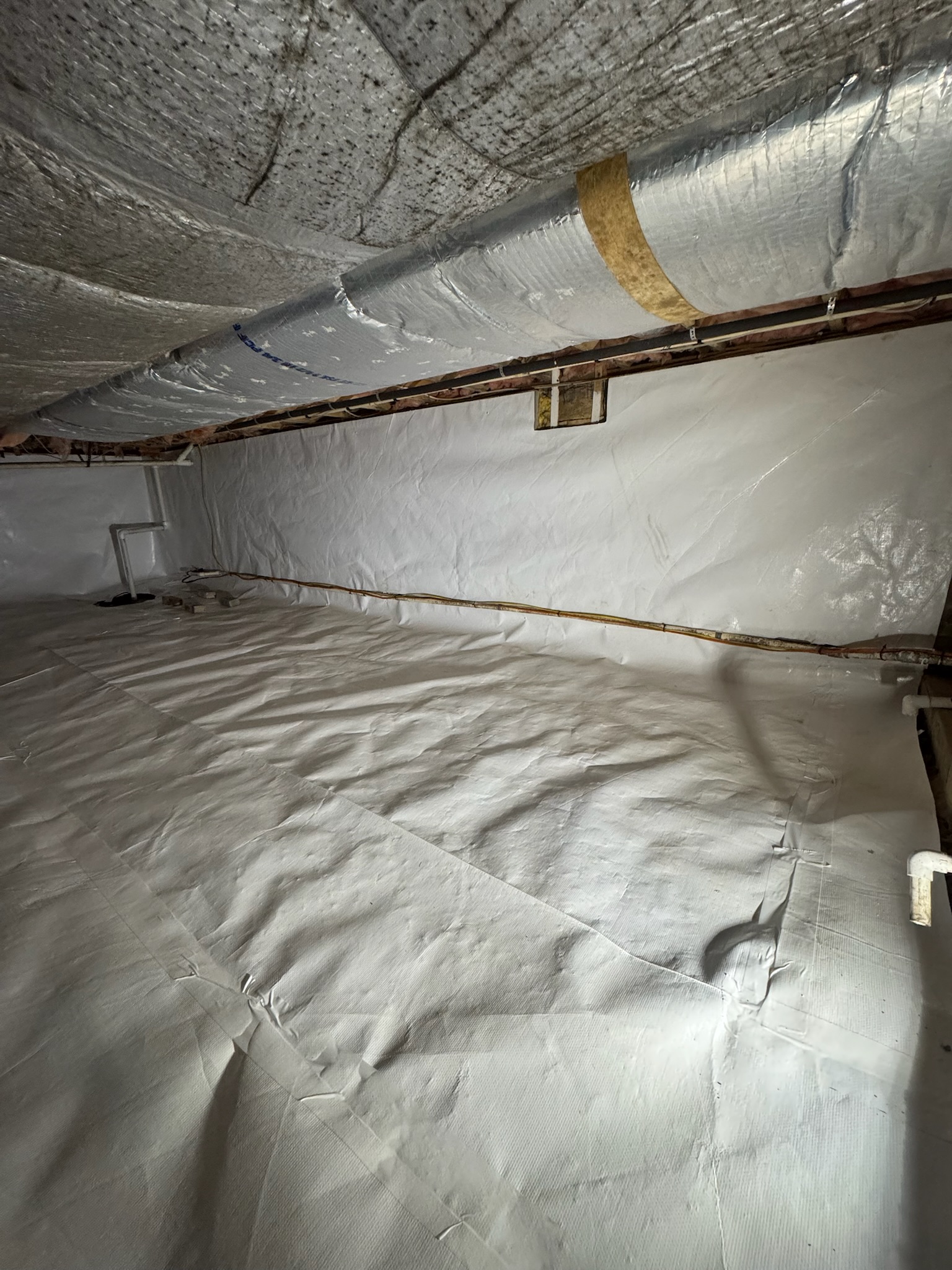
Job Site Photos
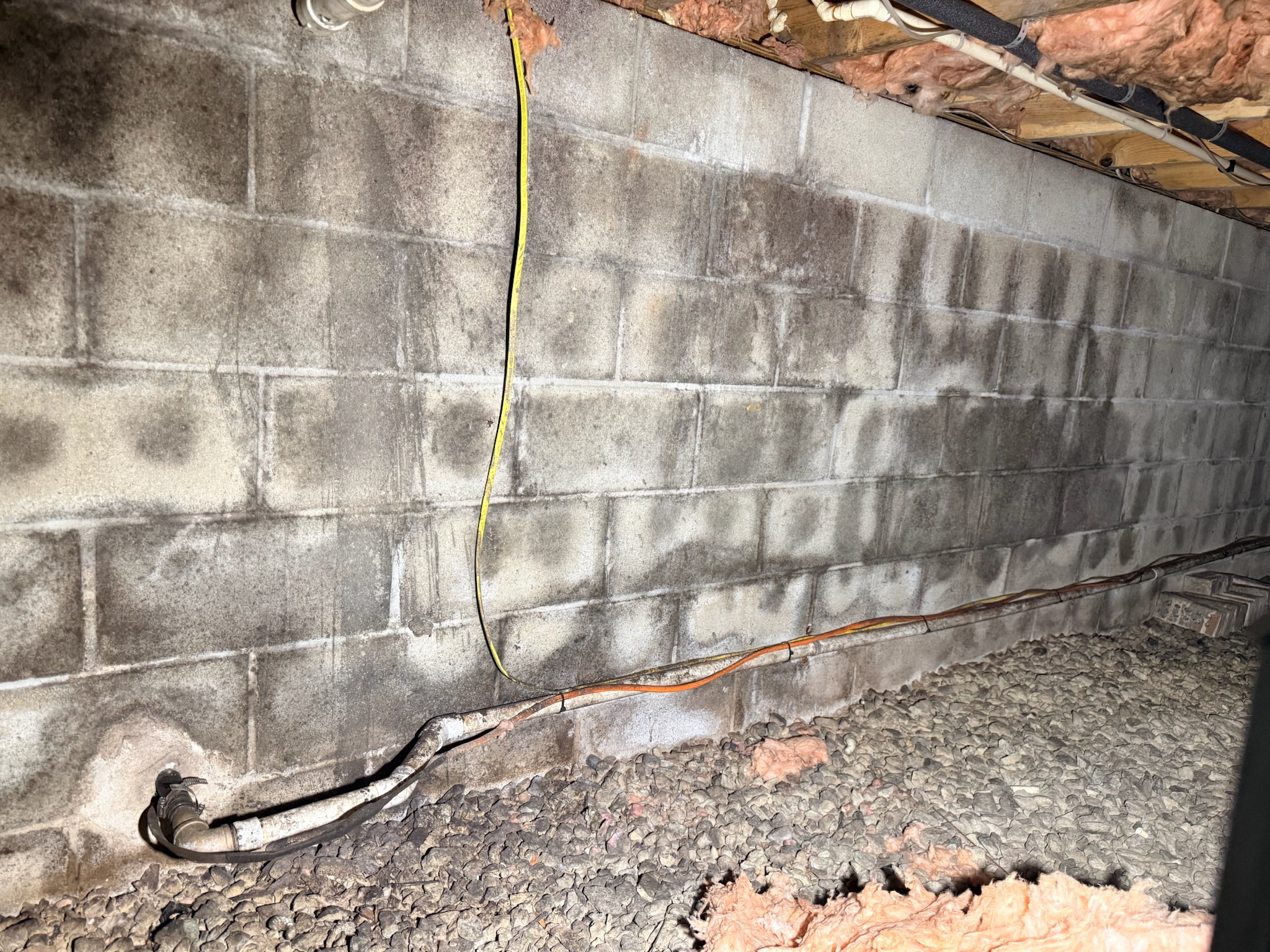
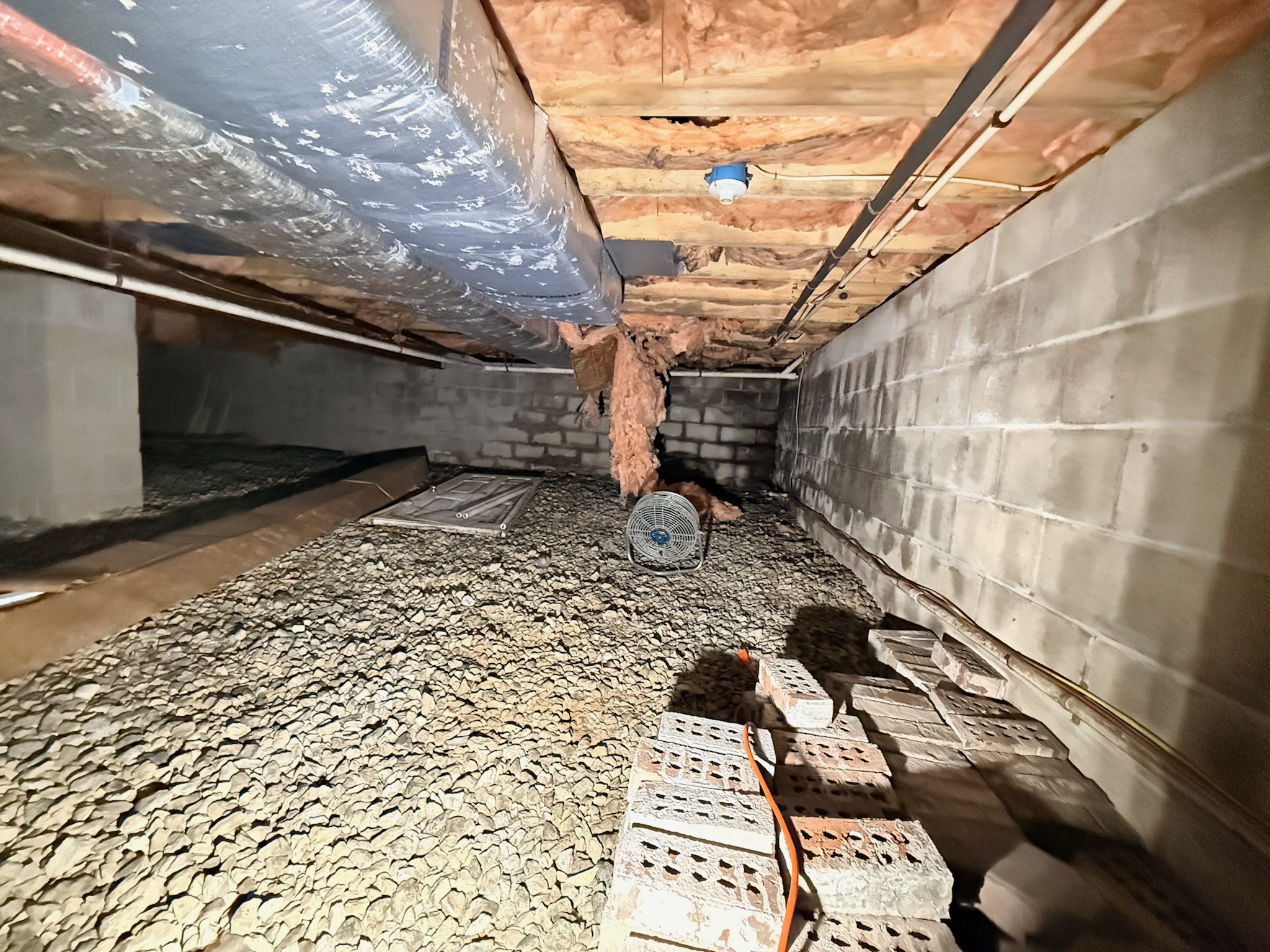
A closer look at the equipment, materials, and job site conditions involved in this kind of work.
Honest Answers
Sagging Floor Questions from
Maryland Homeowners
Call (410) 879-3360 if your floors are sagging, bouncing, or affecting doors and tile. We'll trace it to the cause.
My floor sags but I don't see anything obviously wrong. What's happening?
The process is usually slow, often taking years from initial moisture exposure to visible floor sagging, but by the time it's noticeable, meaningful structural capacity has already been lost. A first floor is supported by a system of floor joists spanning from the foundation walls to a central main beam, which is itself supported at intervals by posts on footings. Any failure in this system produces visible symptoms above, eventually.
In Maryland crawl spaces, failure typically begins with moisture: wood posts absorb moisture and decay where they contact concrete or soil, floor joists absorb ground moisture and atmospheric humidity and lose structural strength, and concrete block piers supporting the main beam settle unevenly as clay soil shifts with moisture content changes.
Why does my door stick or my tile crack if the problem is under the floor?
Because the floor system is one connected structure. When a joist loses strength or a support settles, the floor surface above it shifts, even slightly, and that shift transfers to everything attached to it: door frames rack out of square and start sticking, baseboards separate from the floor, and rigid tile grout cracks along the joist lines where the movement is concentrated. These symptoms above are how a structural problem below becomes visible without opening up the crawl space.
Is a slightly sloped floor actually serious, or is that just an old house?
It can be either, which is why a level or marble test alone isn't a diagnosis. Older homes sometimes have genuinely stable, decades-old settling that isn't actively progressing. A newer slope, or one that's gotten more noticeable recently, is more likely to reflect active moisture damage still underway. OBW's inspection distinguishes between the two by checking the actual condition of the joists and supports underneath, not just the slope itself.
How does OBW fix a sagging floor once it's confirmed?
We install adjustable steel support posts on new concrete footings to stabilize and lift the sagging floor structure, and repair or replace deteriorated floor joists and beams as needed. All structural repairs are paired with moisture control, vapor barrier, drainage, and dehumidification, so the repaired structure stays dry going forward.
Will the sagging just come back if you only fix the wood?
Very likely, yes. Repairing structure without addressing moisture guarantees a repeat failure, since whatever caused the original decay is still present and will act on the new lumber the same way. That's why OBW pairs every structural repair with moisture control as one project, not two separate decisions.
Why Oriole
Why Maryland Homeowners Trust
OBW with Sagging Floors
We Connect the Symptom to the Cause
A sticking door or cracked tile grout is a clue, not a diagnosis. OBW traces it to the specific joist or support failing underneath.
Maryland Crawl Space Experience
Humid seasons and Piedmont clay give Maryland crawl spaces predictable moisture-driven structural failure patterns. OBW has diagnosed them across every county we serve.
No Subcontracting
OBW's own crew installs every support post, structural repair, and encapsulation system, in house, start to finish.
Family-Owned Since 1953
Founded by Frank Pirog Sr. in 1953. Amber Pirog leads the company today. Written workmanship guarantee on every repair.
Reviews
What Our Maryland Neighbors Say
Structural Capacity Doesn't Come Back on Its Own.
Getting Started on Your
Sagging Floor Repair
By the time a floor sags noticeably, real structural capacity is already gone, and the moisture causing it is still there.
Free Inspection
OBW documents the floor symptoms and inspects the joists and supports beneath them to confirm the cause. Free, no obligation.
Written Repair Plan & Quote
You receive a written quote specifying the structural repair and paired moisture control, before any work is scheduled.
Repair & Verification
OBW's crew installs steel support posts, repairs damaged joists or beams, and installs moisture control. Written workmanship guarantee issued upon completion.
Floors Sagging, Bouncing, or Sloping?
Free inspection. We trace the symptom to its structural cause.
Family-owned since 1953 · MHIC #4247 · Written Workmanship Guarantee