
A Foundation Problem Standing in Your Lawn
Yard Drainage
Systems
in Maryland
Standing water in your yard after every rain isn't just a lawn problem, it's a foundation problem in progress.
Every storm that leaves your yard ponded for days means water is saturating the soil within feet of your foundation. OBW designs catch basins and channel drains specifically for Maryland's clay-heavy terrain, not a generic system built for soil we don't have.

Why Generic Solutions Fail Here
Yard Drainage in Maryland
Clay Needs a Different Approach
The Piedmont clay soils common throughout central Maryland have a permeability rate far below what most homeowners expect. When saturated, clay effectively becomes a barrier, water sits on top of it or moves laterally rather than infiltrating. Dry wells and French drains designed for sandy or loamy soils often fail within a few seasons in Maryland clay because there's nowhere for the collected water to go.
Effective yard drainage here requires one of two approaches: conveying water to a discharge point lower on the property where it can exit by gravity, or collecting it in a catch basin tied to a sump system that actively pumps it out. OBW assesses your specific lot, grade, and soil before recommending either.
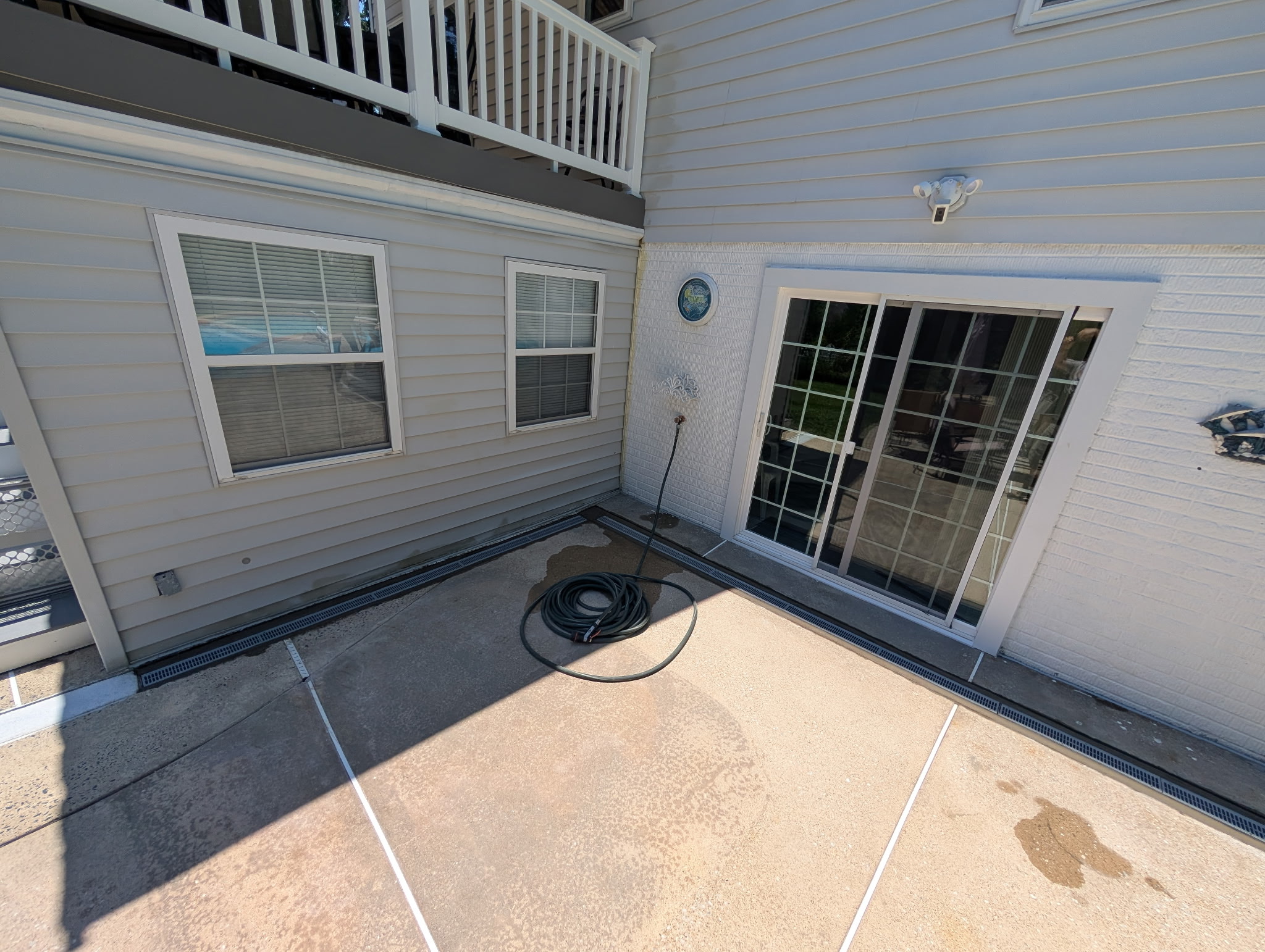
Paved areas like patios and driveways can't infiltrate water at all, making surface collection essential
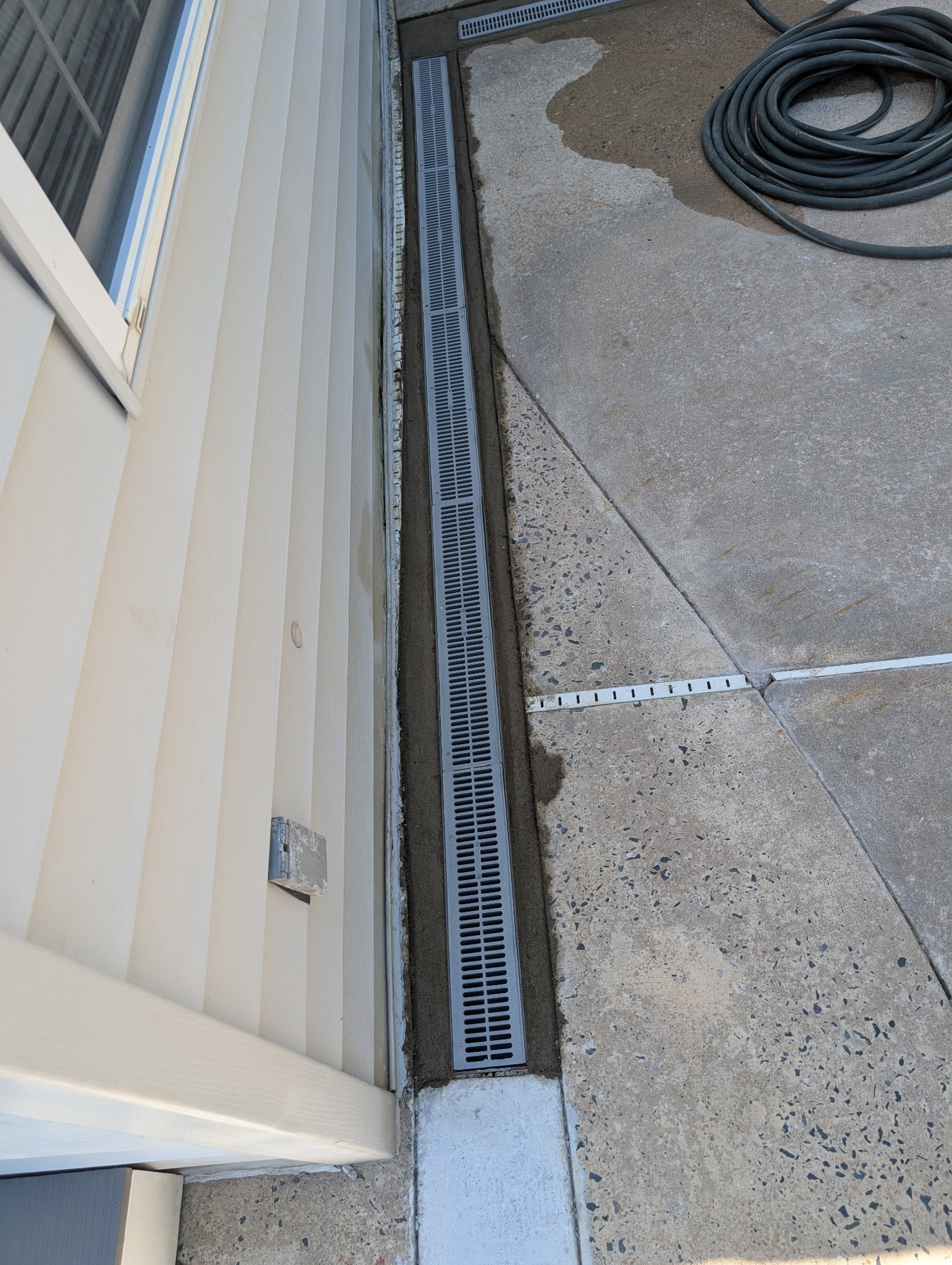
Signs Your Yard Needs a Drainage System
When Standing Water Is a
Foundation Risk, Not Just a Lawn Issue
Any one of these is worth addressing before the next storm adds to the saturation already happening near your foundation.
- Water pools in the yard for a day or more after every significant rain
- A paved driveway, patio, or walkway has nowhere for surface water to go
- A specific low spot along a fence line or wall collects water every storm
- The pooling is consistently within a few feet of the foundation wall
- Basement dampness or seepage started around the same time yard pooling did
What's Included
OBW's Yard Drainage
Services
Catch basins and channel drains, matched to your specific lot rather than a one-size system.
Site Assessment
We assess your lot, grade, and soil before recommending a catch basin, channel drain, or something else entirely.
Catch Basin Installation
A grated surface inlet sized to the drainage area, connected to rigid pipe sloped to daylight or a collection sump.
Channel Drain Installation
Continuous linear collection across fence lines, retaining wall bases, or driveway aprons, set in concrete or compacted gravel.
Underground Pipe Routing
Rigid pipe connects every collection point to a proper discharge, sloped correctly for Maryland's clay-heavy terrain.
Discharge Point Confirmation
We confirm the system exits by gravity at a lower point on the property, or ties into an active sump where gravity isn't an option.
Written Workmanship Guarantee
Every yard drainage installation is backed by a written workmanship guarantee. Ask your inspector for the terms that apply to your job.
The Process
How OBW Solves
Yard Drainage Problems
Map where the water is coming from. Collect it at the right point. Route it to a real discharge. Test it.
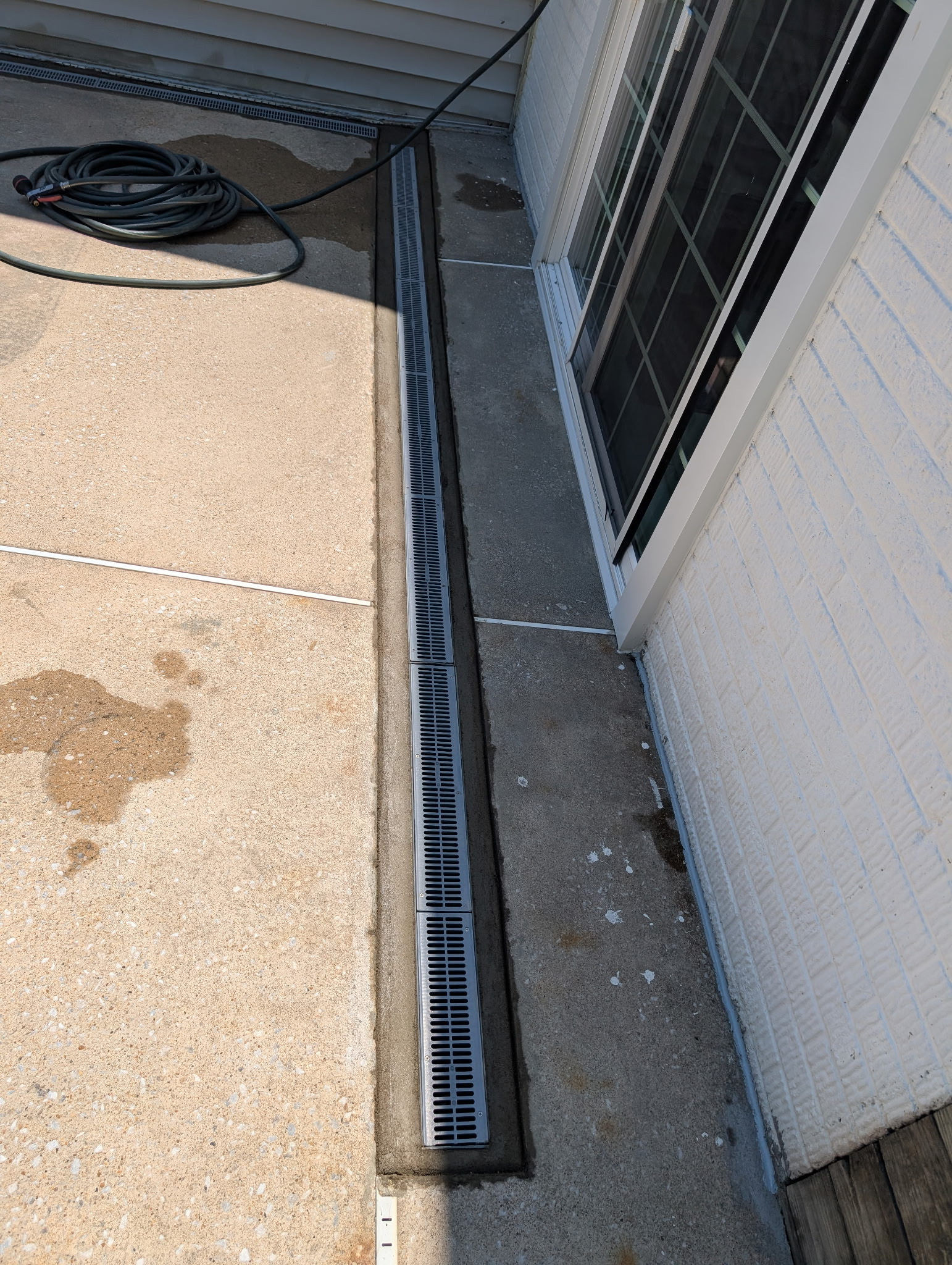
Assessment & Mapping
OBW maps where surface water is originating and pooling, and identifies whether a catch basin or channel drain fits the problem.
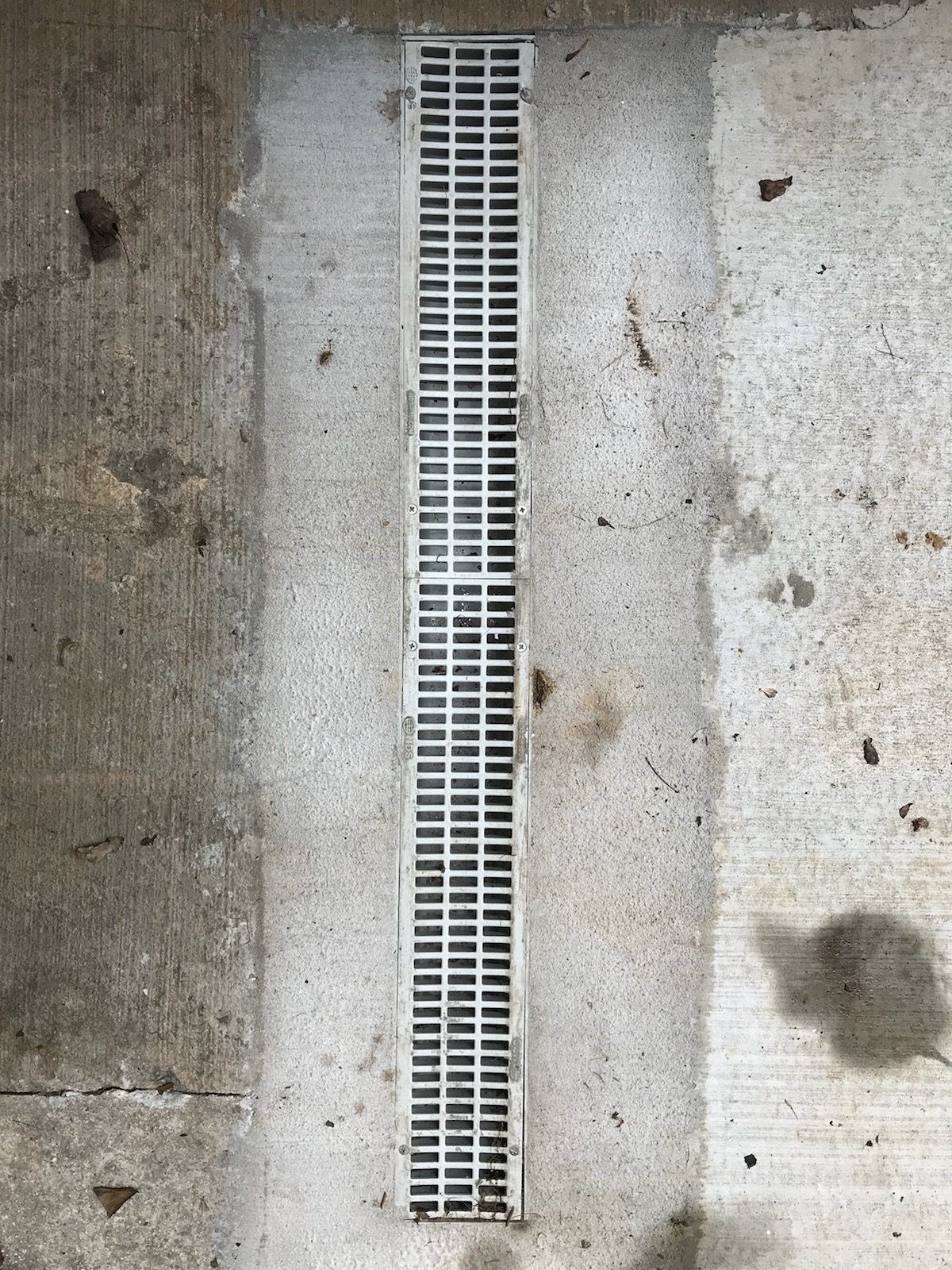
Basin or Channel Installation
The collection point is set at the correct low point, grated, and prepared to connect into underground piping.
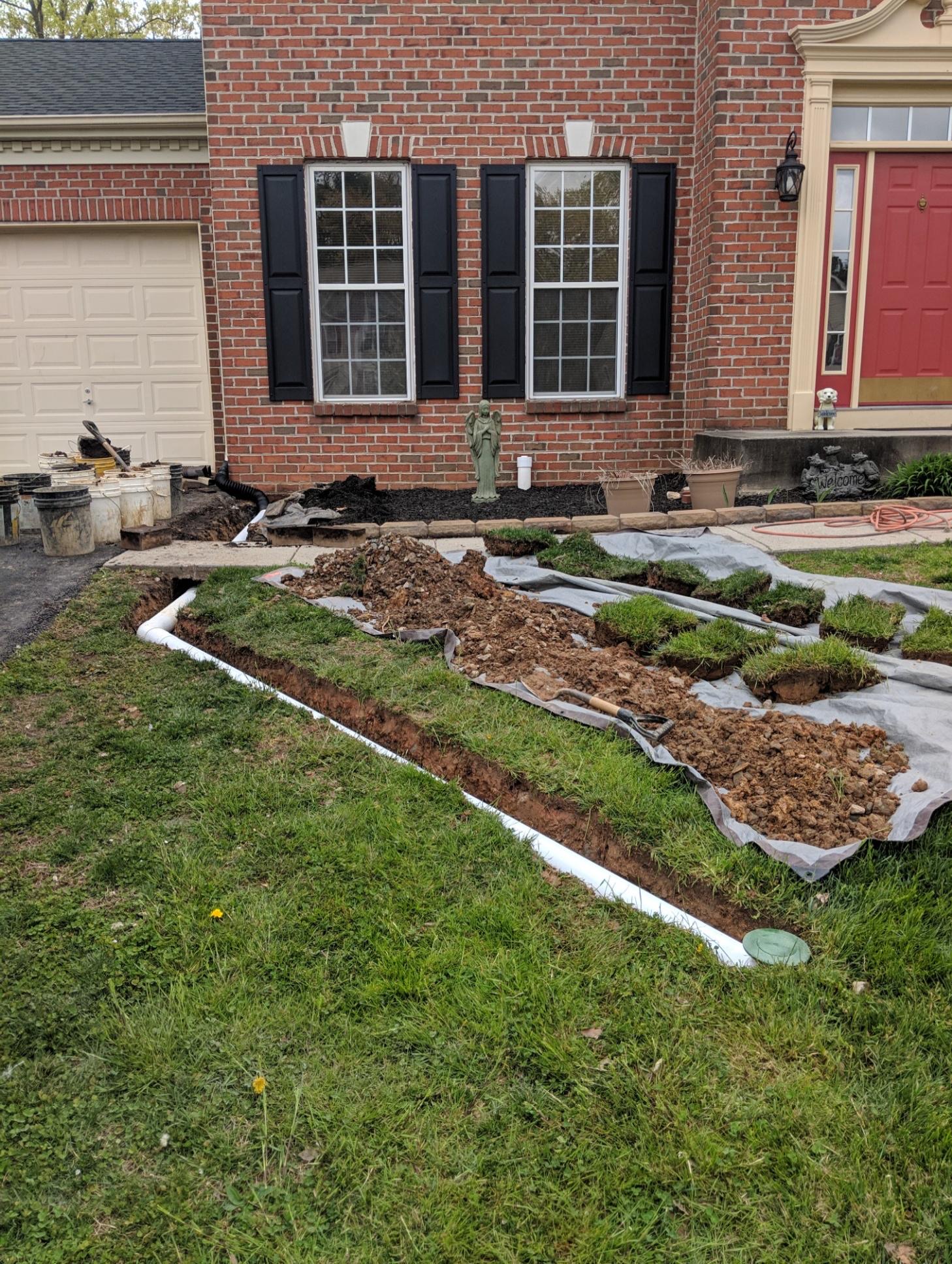
Pipe Routing
Rigid pipe is sloped and routed from the collection point to a confirmed discharge, daylight or a sump inlet.
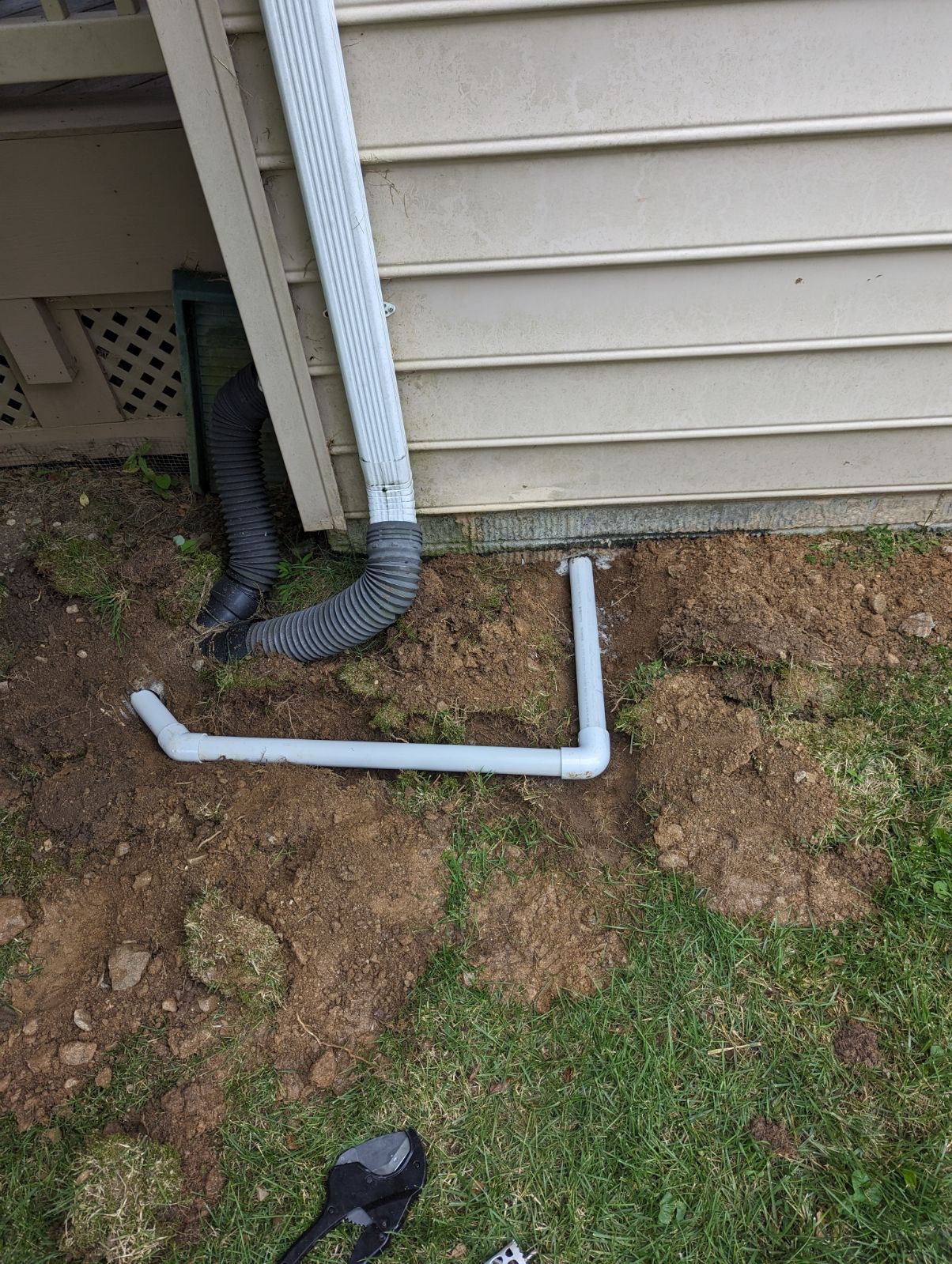
Test & Grade Restoration
The system is tested with water flow and the surrounding grade is restored before we consider the job complete.
Photos From the Field
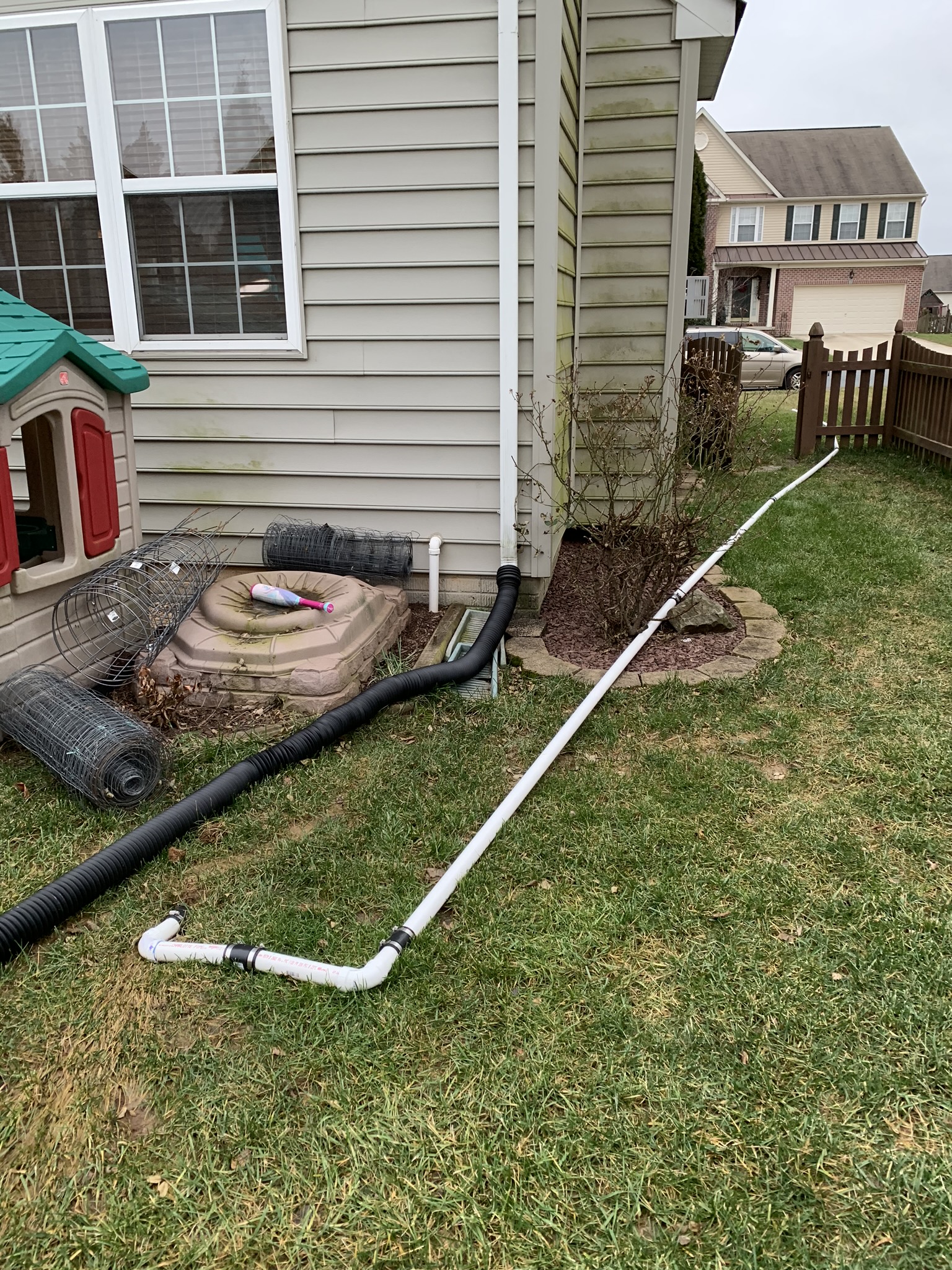
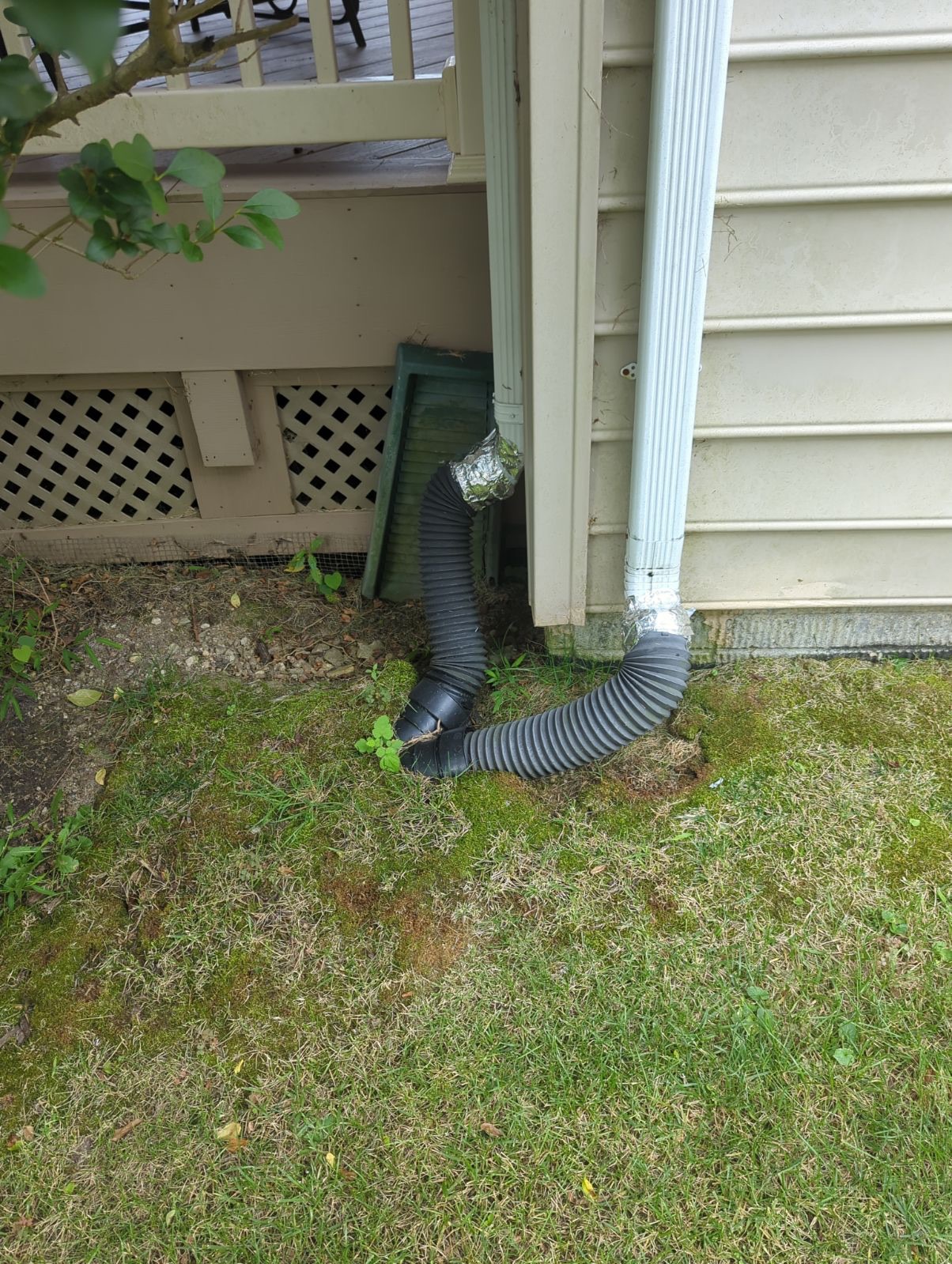
Job Site Photos
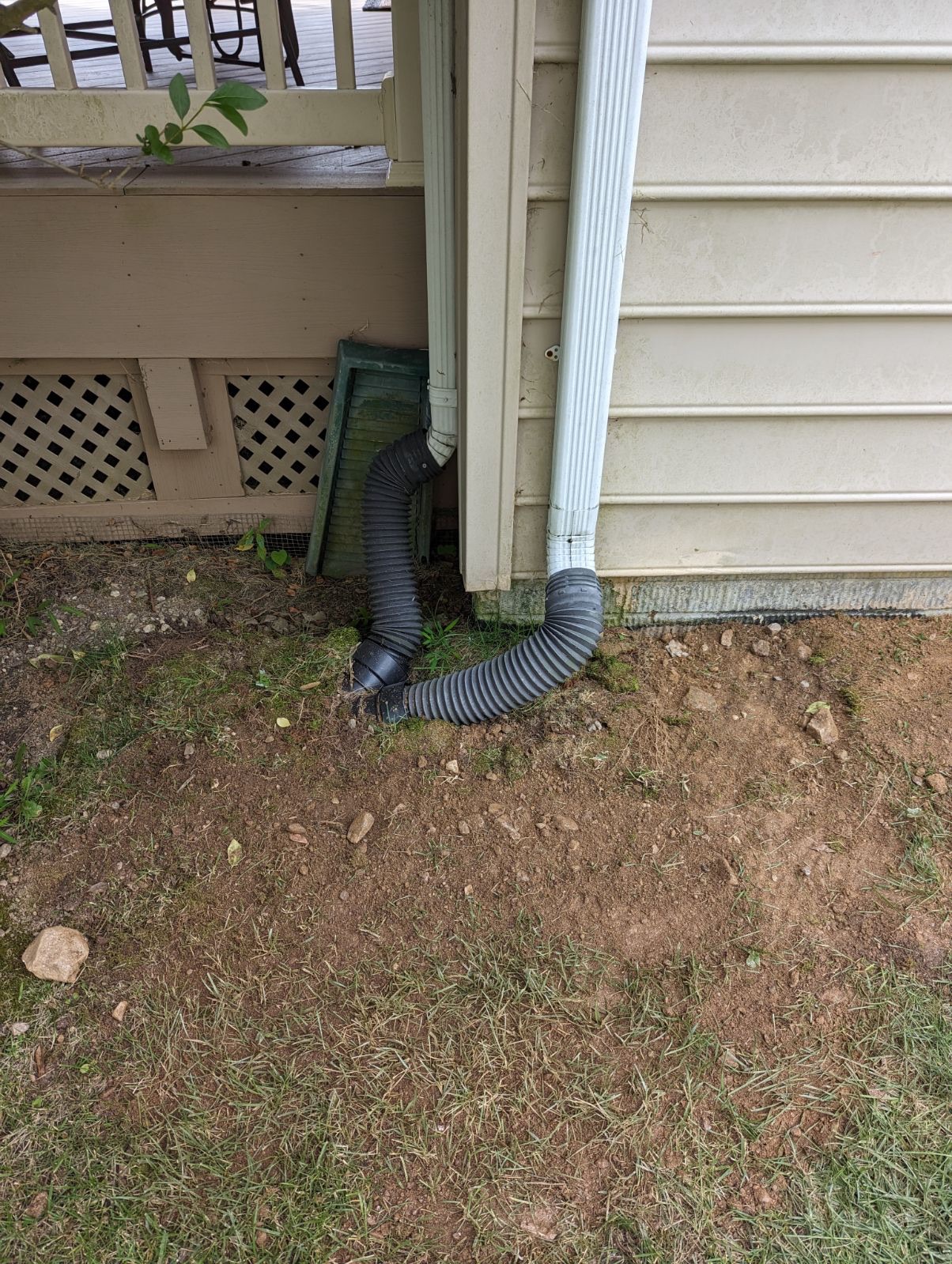
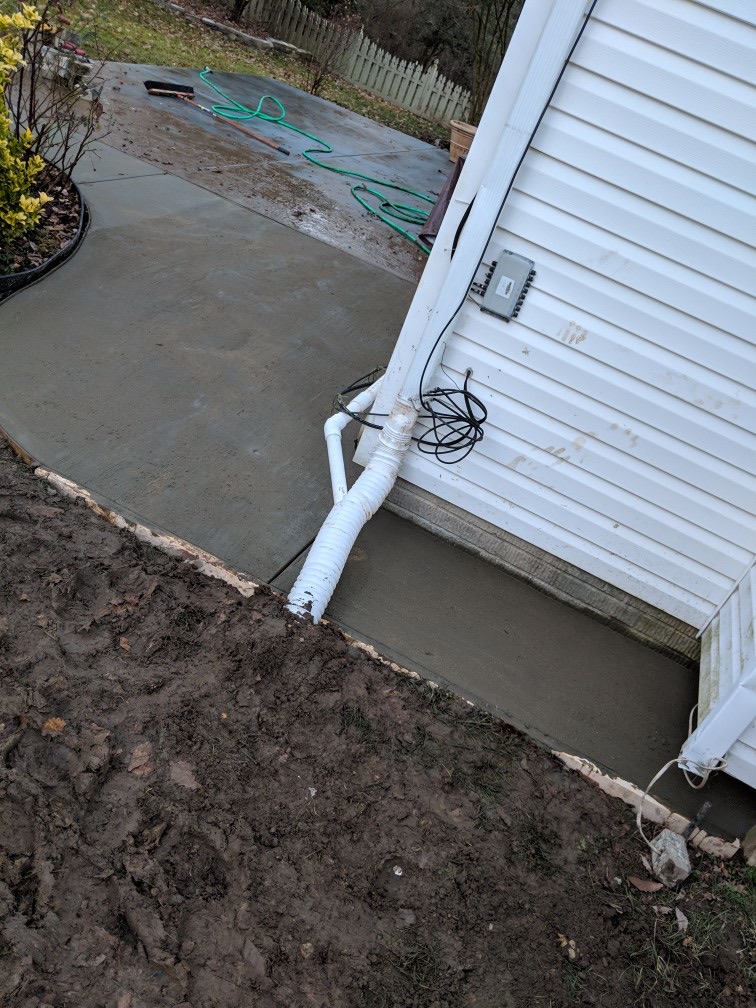
A closer look at the equipment, materials, and job site conditions involved in this kind of work.
Honest Answers
Yard Drainage Questions
from Maryland Homeowners
Call (410) 879-3360 if your yard is holding water after every rain. Our inspectors will identify the right fix for your specific lot.
Why do generic yard drainage solutions fail in Maryland?
The Piedmont clay soils common throughout central Maryland have a permeability rate far below what most homeowners expect. When saturated, clay effectively becomes a barrier, water sits on top of it or moves laterally rather than infiltrating. Dry wells and French drains designed for sandy or loamy soils often fail within a few seasons in Maryland clay because there's nowhere for the collected water to go.
Effective yard drainage in Maryland requires either conveying water to a discharge point lower on the property where it can exit by gravity, or collecting it in a catch basin tied to a sump system that actively pumps it out. OBW assesses your specific lot, grade, and soil before recommending either.
What's a catch basin, and where does it make sense?
A catch basin is a surface inlet, typically a grated box set at grade, that collects sheet flow and channels it into an underground pipe. We size the basin to the drainage area it needs to serve, connect it to rigid pipe sloped to daylight or to a collection sump, and set the grate at the low point of the affected area. Catch basins are particularly effective in paved areas like driveways and concrete patios where surface water can't infiltrate at all.
What about a linear low point, like along a fence line or a driveway apron?
That's where a channel drain fits better than a single catch basin. For linear low points, along a fence line, at the base of a retaining wall, or across a driveway apron, a channel drain provides continuous surface collection across the full problem length. We set linear drain bodies in concrete or compacted gravel and connect them to an underground pipe system.
Is this the same as grading or a French drain?
No, and the distinction matters for which fix actually solves your problem. This page covers catch basins and channel drains, surface collection systems for water that's already pooling on top of the ground. If the real issue is that your yard slopes toward the house rather than away from it, that's a grading and swale correction, covered on its own page. If groundwater is pushing against your foundation from below rather than pooling on the surface, that's a French drain. OBW assesses which one your yard actually needs before recommending anything.
How do you decide which drainage approach fits my yard?
We assess your specific lot, grade, and soil conditions on site. A paved driveway with nowhere for water to go needs a catch basin. A linear low spot along a wall or fence needs a channel drain. A yard that's simply sloped wrong needs grading. Every recommendation is backed by a written workmanship guarantee, terms vary by service, ask your inspector.
Why Oriole
Why Maryland Homeowners Trust
OBW with Yard Drainage
Designed for Maryland Clay
Generic drainage systems built for sandy soil fail in Piedmont clay within seasons. OBW designs around what our soil actually does.
Right Fix, Not the Easiest Sell
A catch basin, channel drain, or grading correction each solve a different water problem. OBW diagnoses before recommending.
No Subcontracting
OBW's own crew installs every catch basin, channel drain, and pipe connection, in house, start to finish.
Family-Owned Since 1953
Founded by Frank Pirog Sr. in 1953. Amber Pirog leads the company today. Written workmanship guarantee on every installation.
Reviews
What Our Maryland Neighbors Say
Stop the Cycle of Pooling Water.
Getting Started on Your
Yard Drainage System
We'll identify where surface water is originating, map its path, and design a system that gets it away from your home permanently.
Free Inspection
OBW assesses your lot, grade, and soil to identify the right drainage approach. Free, no obligation.
Written Drainage Plan & Quote
You receive a written quote specifying the catch basins, channel drains, and piping your yard needs, before any work is scheduled.
Installation & Testing
OBW's crew installs the system and tests it with water flow before restoring the grade. Written workmanship guarantee issued upon completion.
Yard Holding Water After Every Storm?
Free inspection. Designed for Maryland's clay, not a generic system.
Family-owned since 1953 · MHIC #4247 · Written Workmanship Guarantee