
How a Dry Basement Starts to Fail
Signs Your Maryland Basement Needs Waterproofing
Basement problems rarely start with a flood. They start small, a musty smell, a damp wall, a hairline crack, and build over one or two wet Maryland seasons until the damage is hard to ignore. OBW's inspectors see these signs every day and trace each one back to its actual source in the soil and drainage around your foundation.
Schedule a Free Inspection (410) 879-3360
Seven Signs, Three Root Causes
Find Your Sign
Jump straight to the sign you're seeing. Each page covers what causes it, how OBW diagnoses it, and what the fix actually involves.
Water and Flooding
Basement Flooding
A flooded basement traced to its actual entry point, not treated as a one-time accident.
Wet Basement Walls
Water finding the path of least resistance through the cove joint or a hairline crack.
Sump Pump Failure
Sump pumps fail quietly, running until they stop protecting the basement at all.
Moisture, Mold, and Odor
Water and Flooding Warning Signs
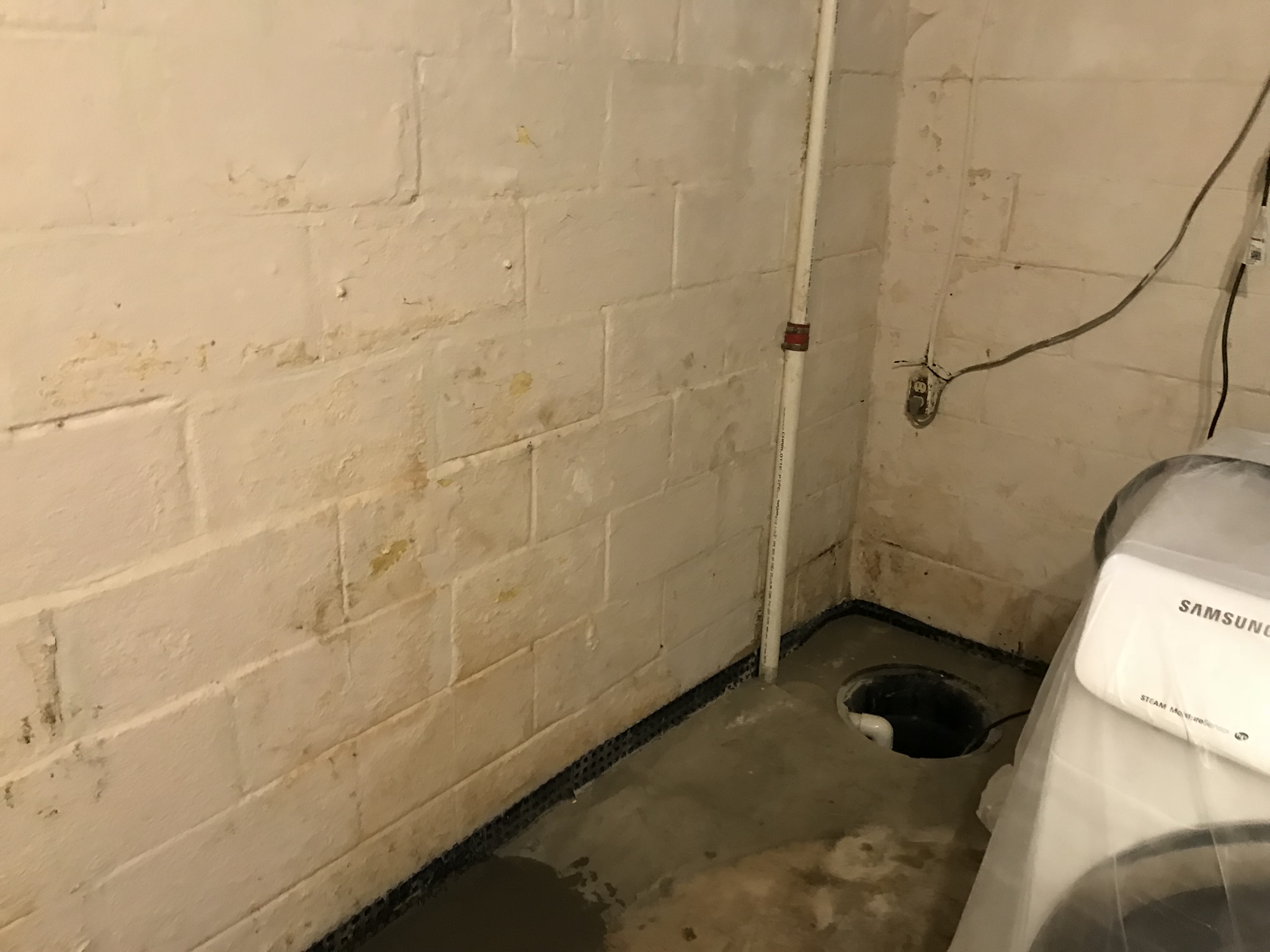
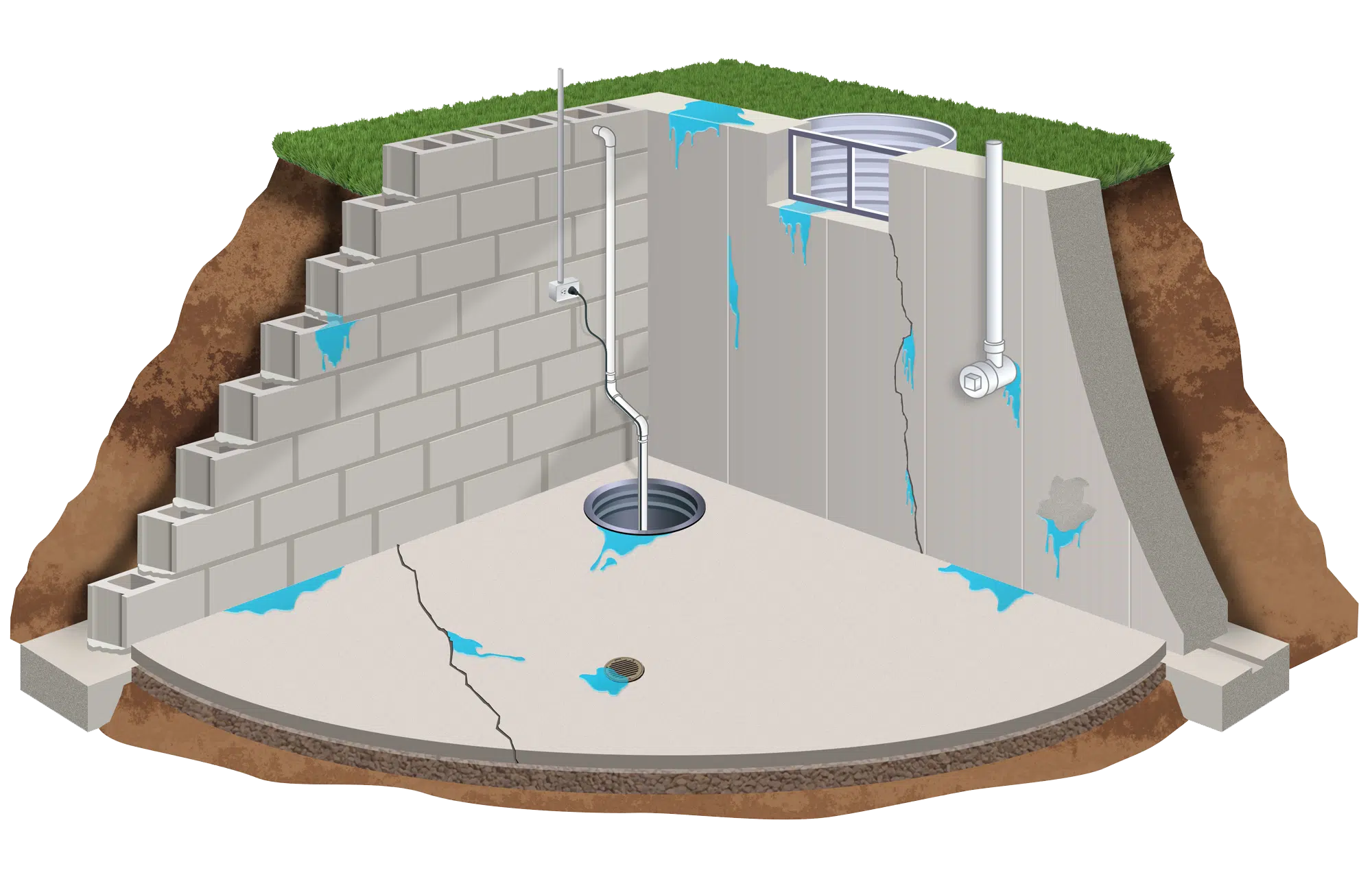
- Standing water on the basement floor, especially after heavy rain; the most obvious sign, usually preceded by smaller seepage that went unaddressed
- Water pooling at the cove joint, where the floor meets the wall; this is the most common entry point in Maryland's clay-heavy soils
- A sump pump running constantly or not at all, either points to a system that's overwhelmed or one that's already failed
- Water stains or tidelines on walls or the floor, evidence of a flood that already happened, even if the basement looks dry today
- Wet spots that track back to a specific wall, often the first sign of a crack or joint letting water through under pressure
Moisture, Mold, and Odor Warning Signs
- Musty odors, especially noticeable when you first walk downstairs; the smell shows up before mold is visible
- Visible mold growth on walls, framing, or stored belongings, a sign that basement humidity has stayed elevated for a while
- Condensation on pipes, ductwork, or windows, indoor air holding more moisture than it should
- A damp, clammy feeling in the basement air, even without any standing water in sight
- Corrosion on metal fixtures, appliances, or ductwork, chronic humidity accelerates rust
Structural and Cosmetic Warning Signs
- Peeling, bubbling, or flaking paint on basement walls, moisture moving through the masonry breaks the paint's bond from behind
- New or widening cracks in the foundation wall, especially horizontal or stair-step cracks, which can also be entry points for water
- Wet or discolored drywall in a finished basement, drywall hides a leak longer than exposed block or concrete would
- A soft or spongy feel to baseboards or drywall near the floor, a sign that moisture has been wicking upward for some time
- Warped or buckling flooring, laminate, engineered wood, or vinyl planks reacting to moisture from below
When to Call OBW
Any one of these signs is worth a look. Several of them together usually mean water has been finding its way in for longer than you'd guess. A free OBW inspection tells you exactly where the water is coming from, whether interior drainage will solve it or the problem calls for exterior work, and what it will cost before any work is scheduled. Our inspectors give you a straight answer based on what they find in your basement, not a sales script. Family-owned since 1953, backed by a written workmanship guarantee.
Seeing this problem in your home?
Family-owned since 1953. Honest, consultative guidance. Backed by a written workmanship guarantee. MHIC 4247.
Schedule Your Free Inspection (410) 879-3360