
A Lower-Resistance Path Than Your Wall
French Drain
Installation
in Maryland
Maryland's clay soils absorb rainfall slowly and hold it for days, creating persistent hydrostatic pressure against your foundation.
A properly designed French drain intercepts that groundwater before it reaches your foundation, and redirects it safely away. OBW builds every drain to the depth and material spec Maryland's clay and frost line actually require.

How It Works in Maryland Clay Specifically
A Lower-Resistance Path
for Groundwater
A French drain is a sloped trench filled with gravel and a perforated pipe that collects groundwater and moves it in a controlled direction, typically to daylight at a lower elevation, into a dry well, or to a sump basin. The principle is simple: give water a lower-resistance path than the one through your foundation wall.
In Maryland's Piedmont region, the native soil is a dense, finely grained clay with poor drainage. French drains here need to be designed with that in mind: the trench must be deeper than the frost line, 24 to 30 inches in Maryland, the gravel must be clean and free of fine material that would clog over time, and the pipe must be wrapped in filter fabric to prevent clay infiltration. A French drain installed without these considerations will fail within a few seasons.
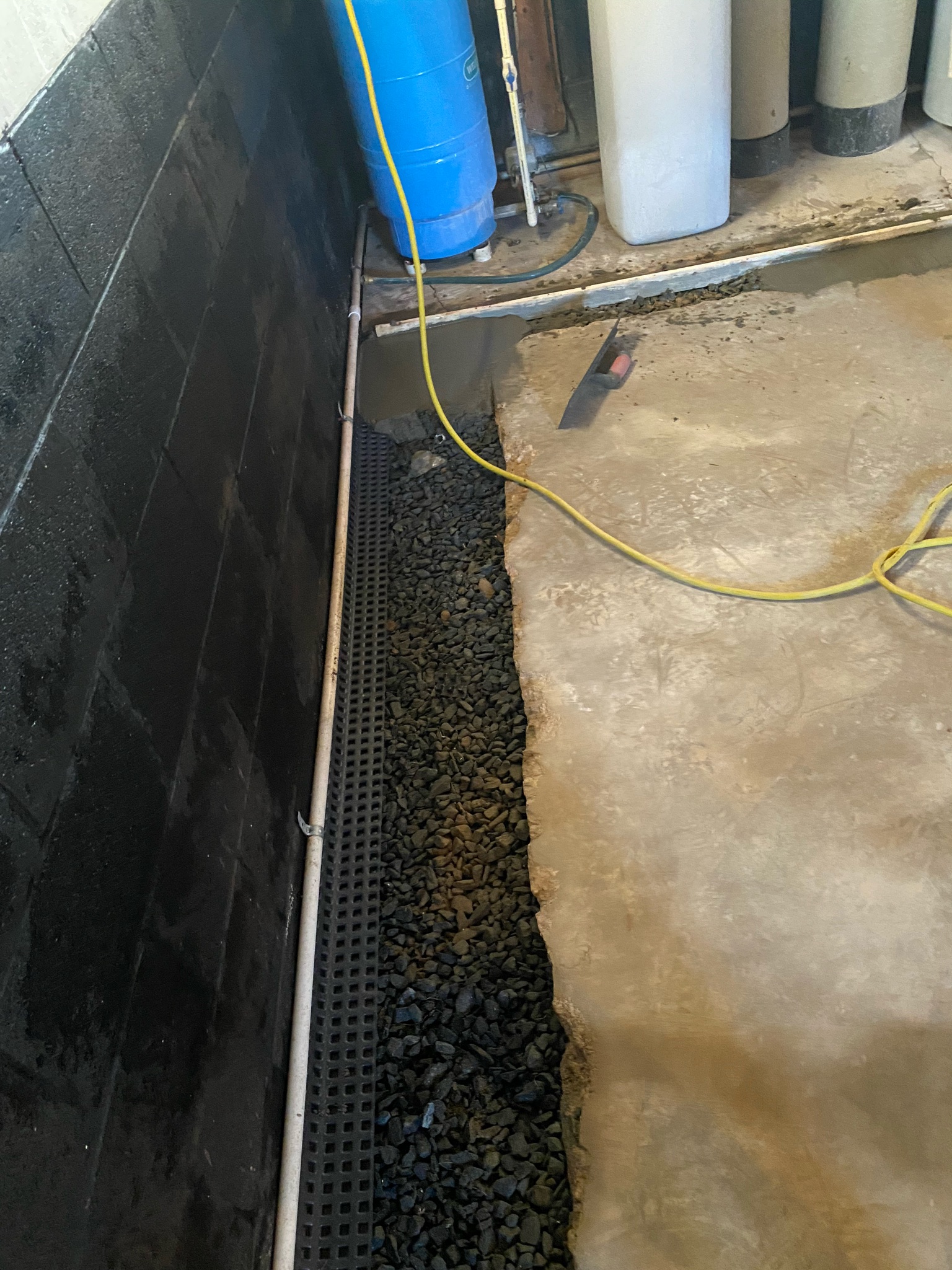
Clean gravel and filter-wrapped pipe keep Maryland's fine clay particles from clogging the system over time
Signs You Need a French Drain
When Groundwater, Not Surface
Water, Is the Real Problem
These signs point to groundwater pressure specifically, distinct from a surface pooling or grading issue.
- Water pools in your yard for days after rain, particularly near the foundation
- Soil along one side of your home stays visibly wet longer than other areas
- Basement wall cracks show water staining that correlates with rainfall
- Neighbors uphill are adding drainage that will redirect water toward your property
- A landscaping project changed the grading so water now flows toward rather than away from the foundation
What's Included
OBW's French Drain
Installation Services
Built to the depth and material spec Maryland's clay and frost line require, not a shortcut version.
Trench Below the Frost Line
Excavated 24 to 30 inches deep, below Maryland's frost line, so freeze-thaw cycling doesn't disturb the system.
57-Stone Gravel Bed
A continuous bed of clean gravel, free of fine material that would clog the system over time.
Perforated Pipe in Filter Sock
4-inch perforated pipe wrapped in filter fabric to prevent Maryland clay from infiltrating the drain.
Confirmed Outfall
Connected to a proper daylight discharge point or sump inlet, never left with nowhere for water to go.
Weed Barrier & Topsoil Finish
The trench is finished with weed barrier fabric and topsoil to restore the surface cleanly.
Written Workmanship Guarantee
Every French drain installation is backed by a written workmanship guarantee. Ask your inspector for the terms that apply to your job.
The Process
How OBW Installs a
French Drain
Assess the site. Excavate to proper depth. Set gravel and pipe. Connect the outfall and restore the surface.
Site Assessment
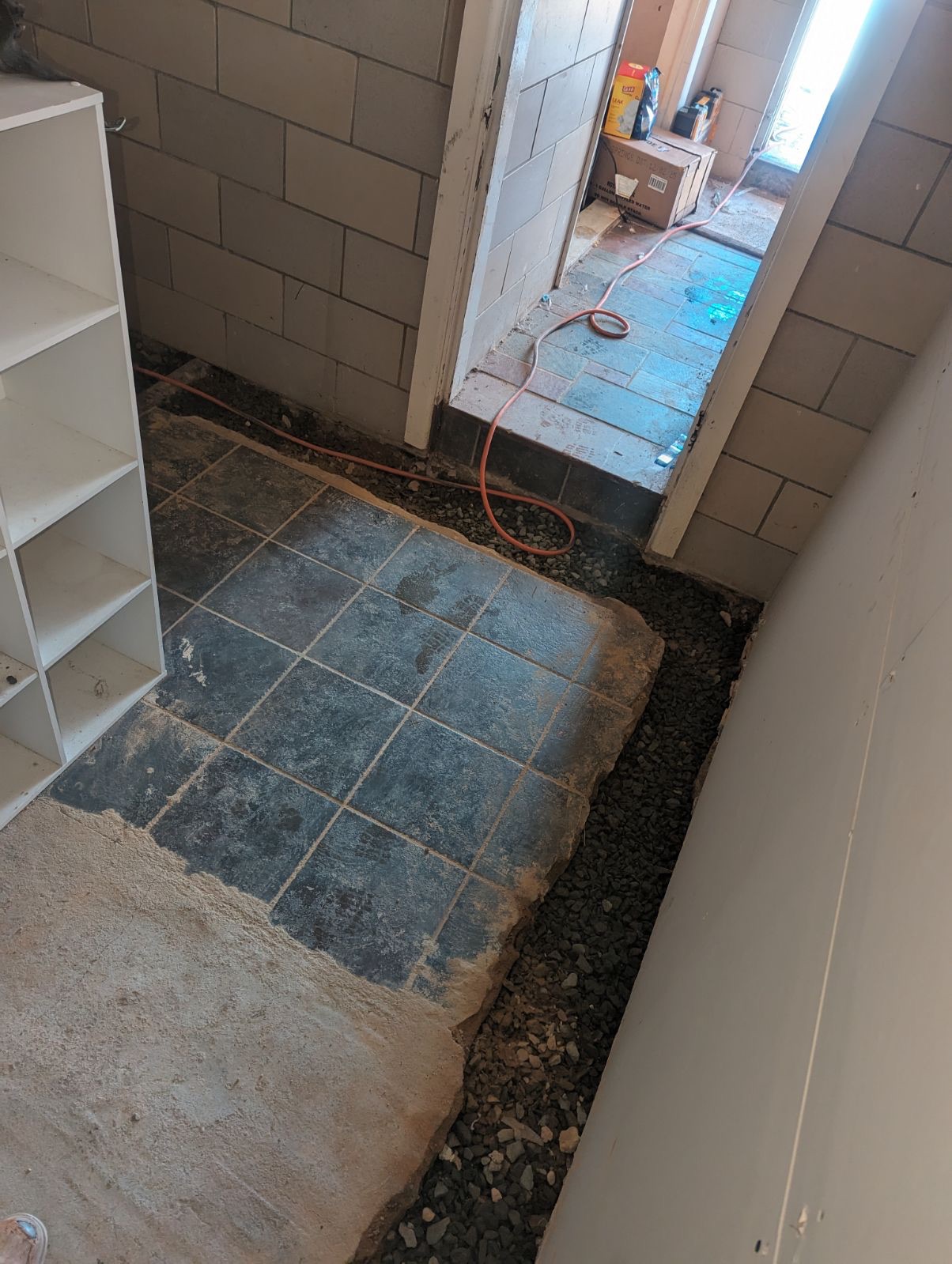
OBW assesses grading, soil, and water source to confirm a French drain is the right fix versus interior drainage or grading correction.
Excavation Below Frost Line
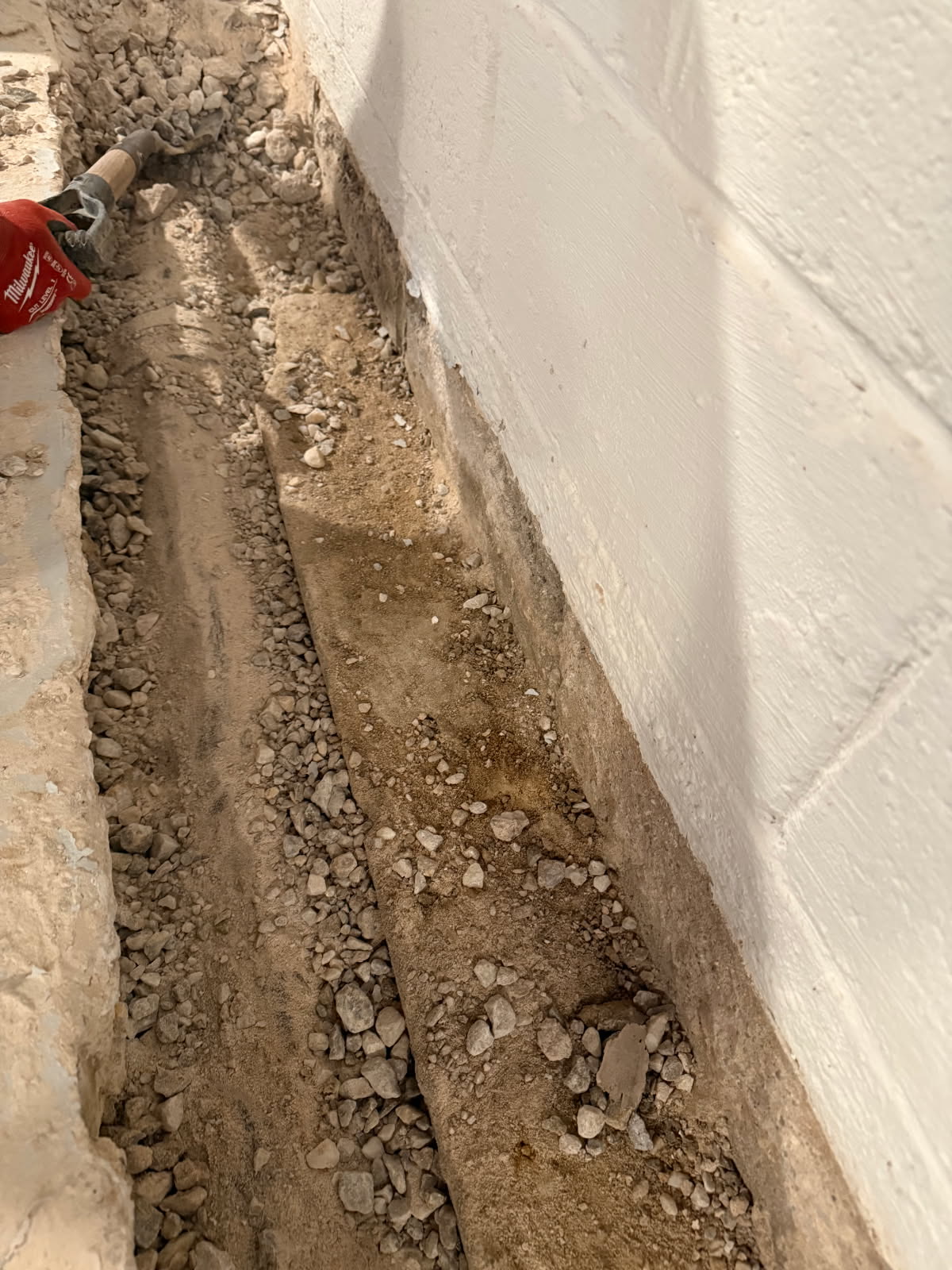
The trench is excavated to 24 to 30 inches, below Maryland's frost line, along the foundation or affected grade.
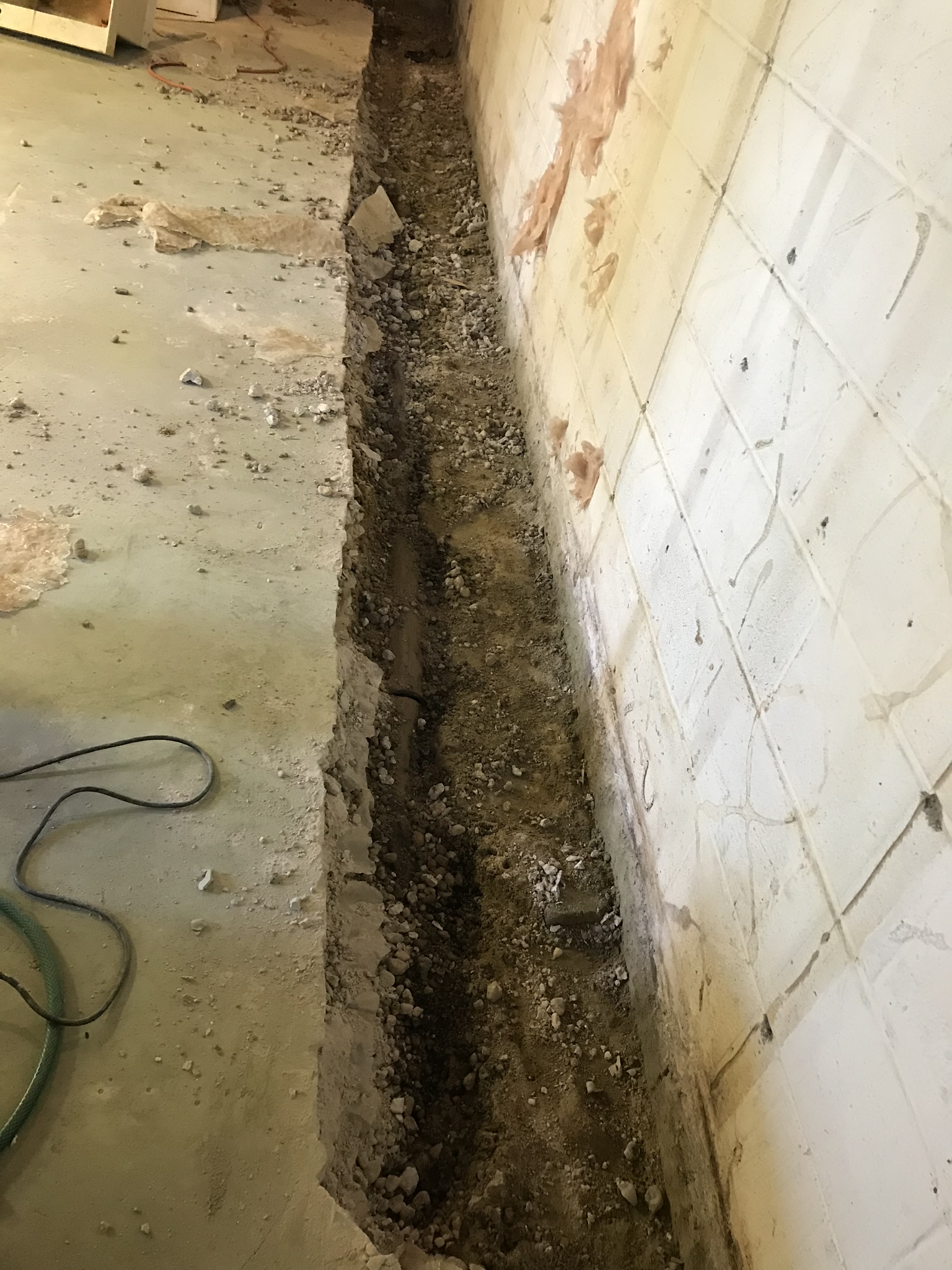
Gravel & Pipe Installation
57-stone gravel is laid, the perforated pipe wrapped in filter sock is set, and clean stone backfills to within 6 to 8 inches of grade.
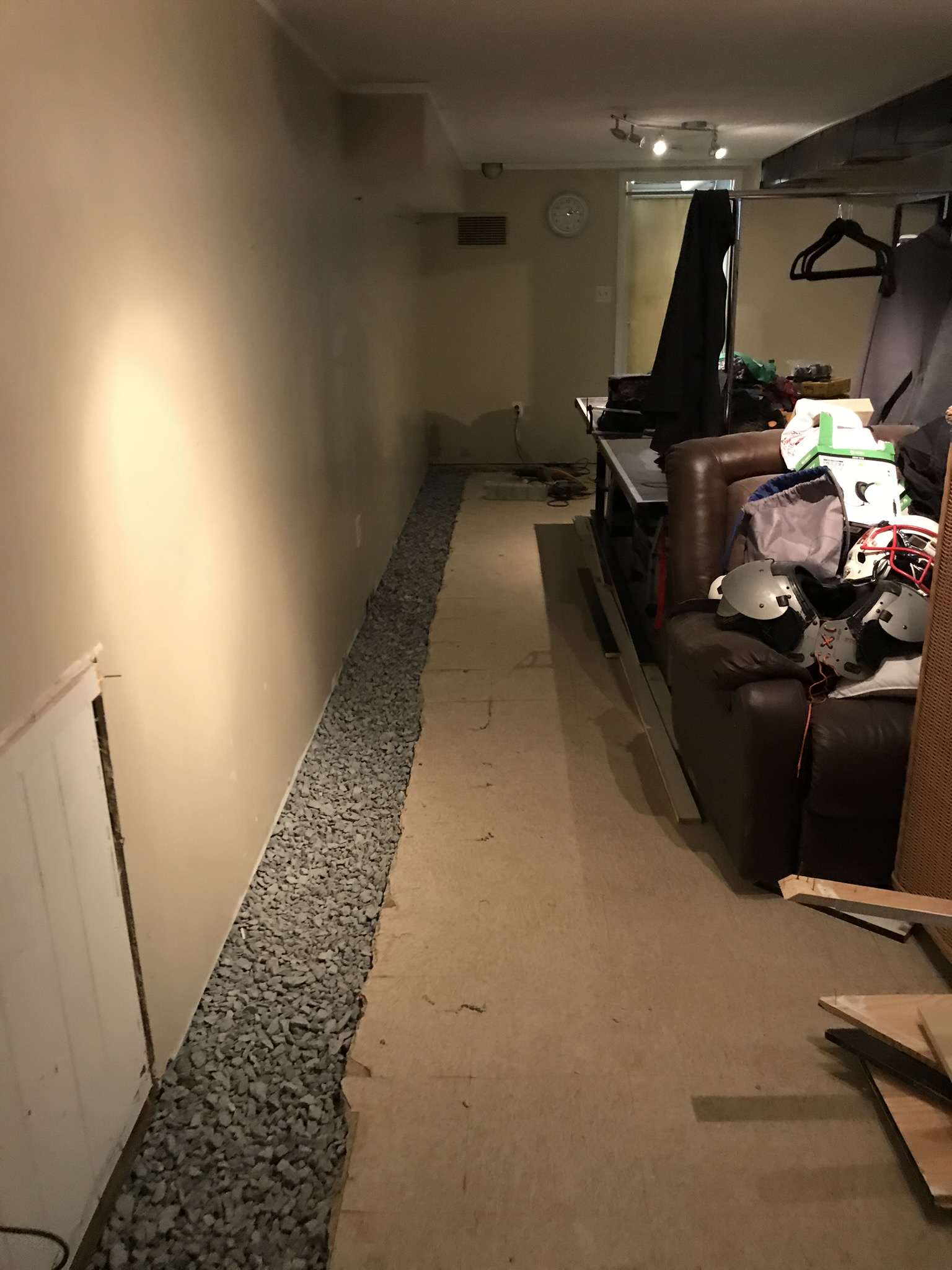
Outfall Connection & Finish
The outfall is connected to daylight or a sump inlet, and the trench is finished with weed barrier fabric and topsoil.
Photos From the Field
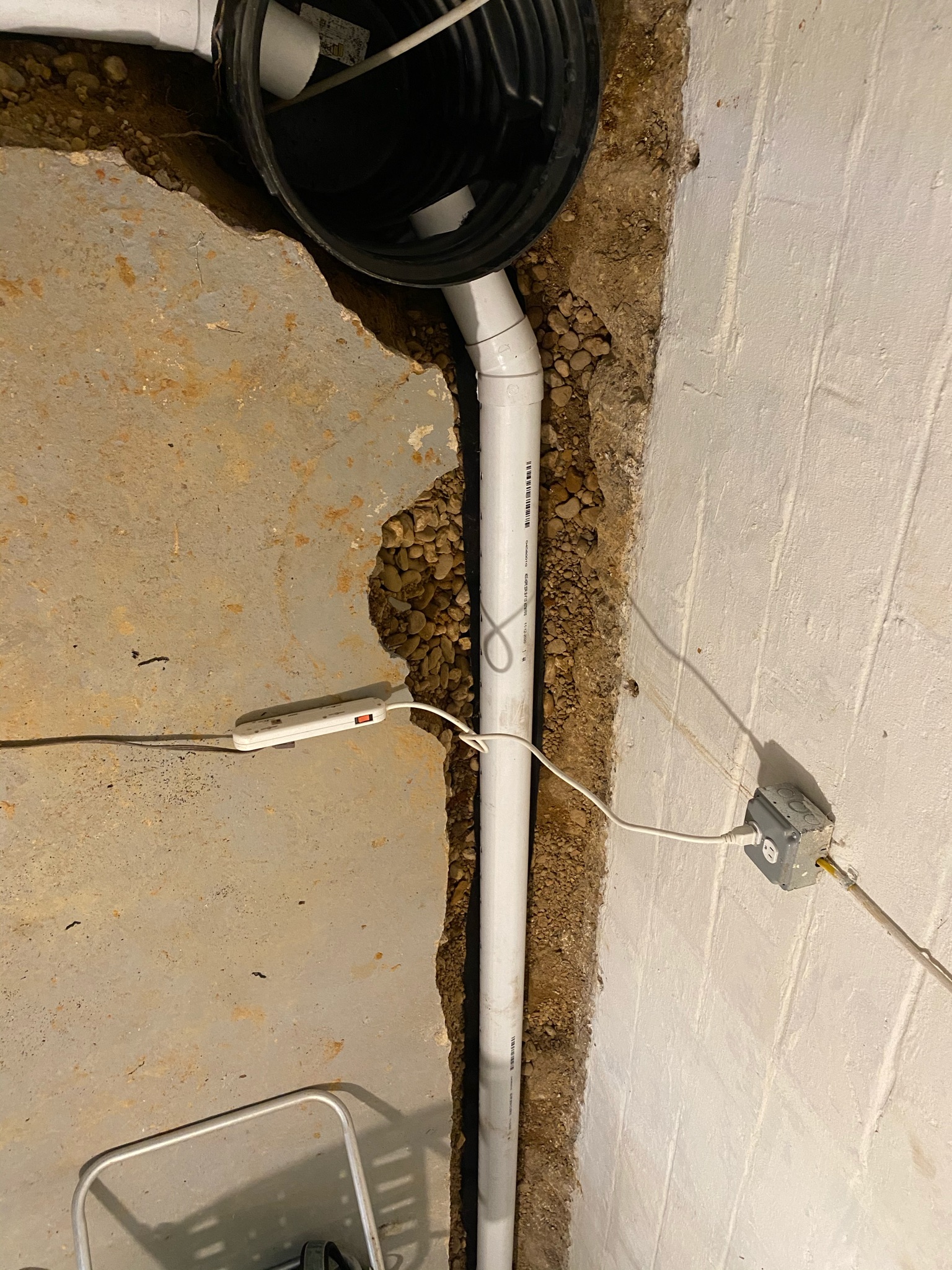
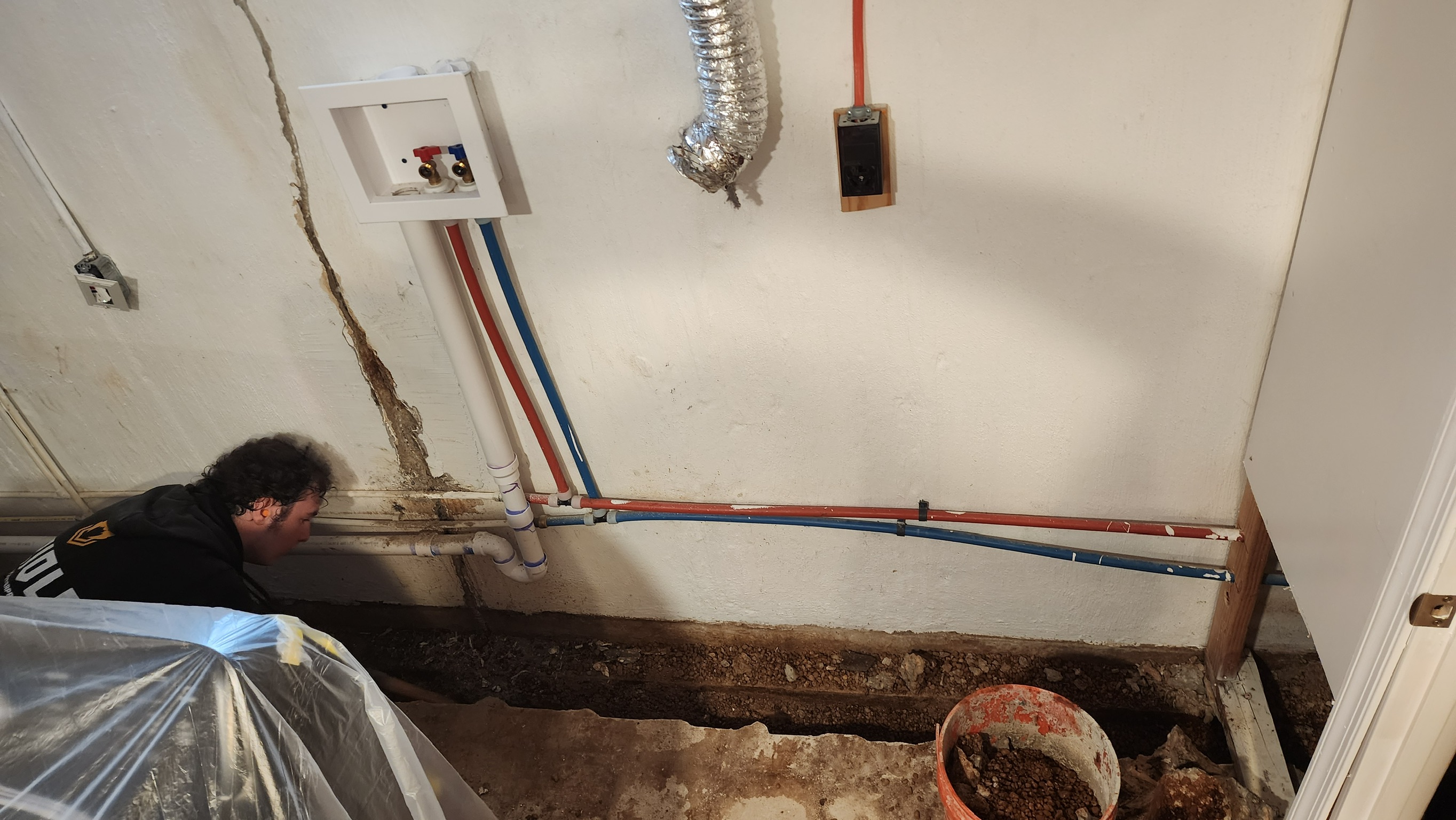
Job Site Photos
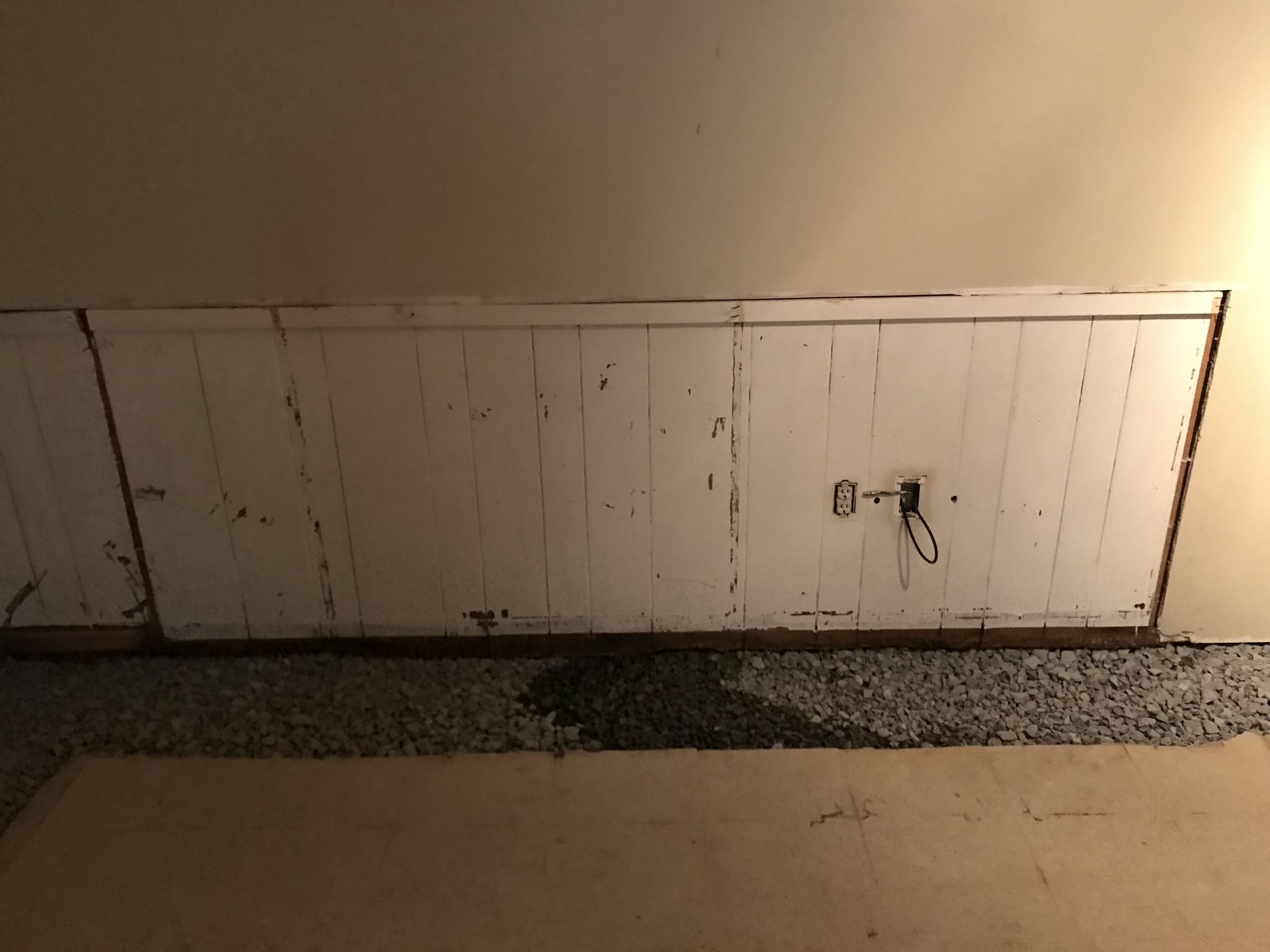
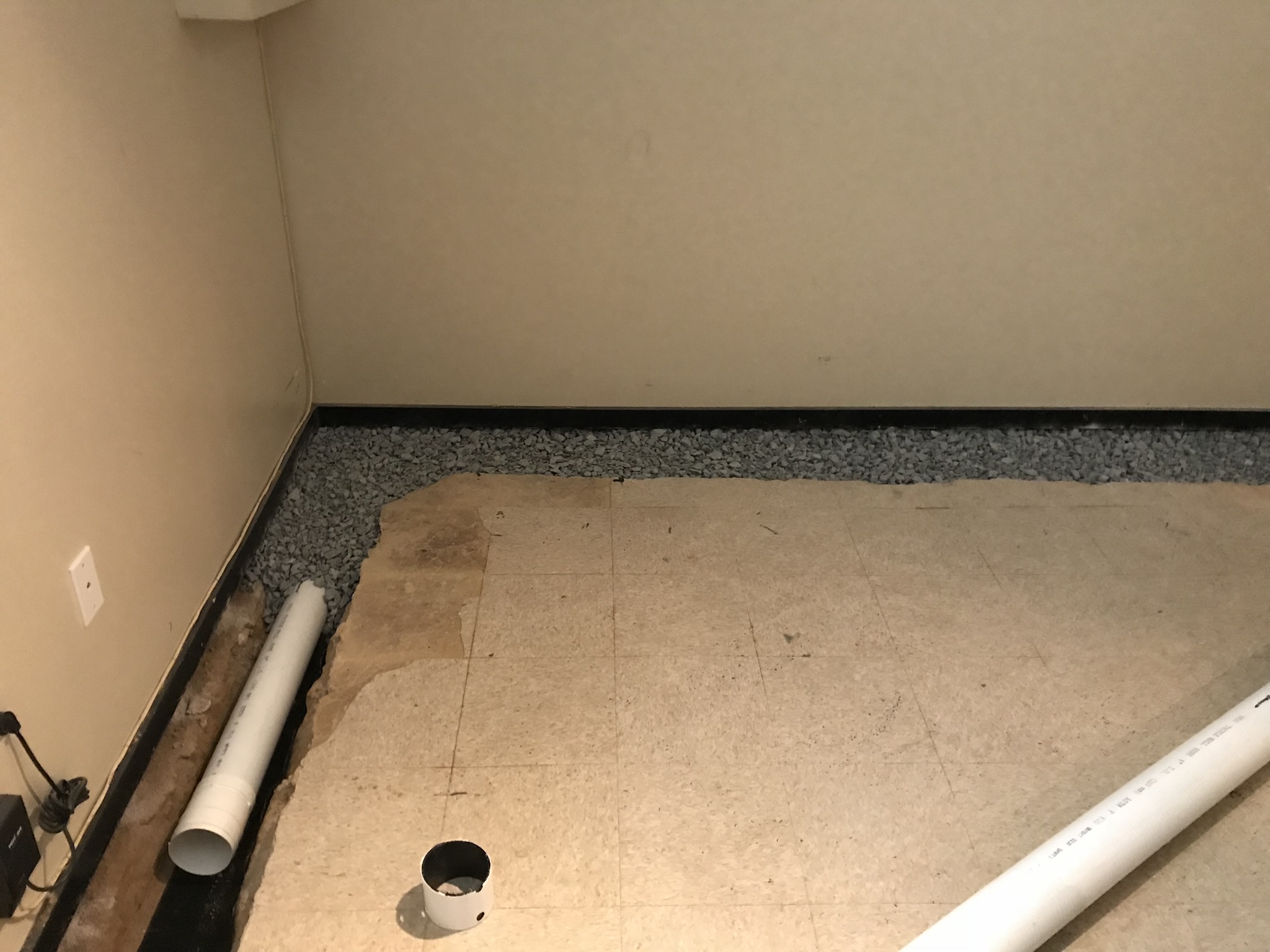
A closer look at the equipment, materials, and job site conditions involved in this kind of work.
Honest Answers
French Drain Questions
from Maryland Homeowners
Call (410) 879-3360 if water pools near your foundation for days after rain. Our inspectors will assess your grading, soil, and water source before recommending anything.
How does a French drain actually work in Maryland clay?
A French drain is a sloped trench filled with gravel and a perforated pipe that collects groundwater and moves it in a controlled direction, typically to daylight at a lower elevation, into a dry well, or to a sump basin. The principle is simple: give water a lower-resistance path than the one through your foundation wall.
In Maryland's Piedmont region, which covers most of Baltimore, Harford, Carroll, and Cecil counties, the native soil is a dense, finely grained clay with poor drainage. French drains here need the trench deeper than the frost line, 24 to 30 inches, clean gravel free of fine material that would clog over time, and the pipe wrapped in filter fabric to prevent clay infiltration. A French drain installed without these considerations fails within a few seasons.
Should I get an exterior French drain or interior drainage?
An exterior French drain placed at footing depth is the most effective way to relieve hydrostatic pressure, since it intercepts groundwater before it contacts the wall. Interior drainage systems manage water that has already entered the foundation. For foundations with active wall cracks driven by exterior water pressure, OBW recommends addressing the exterior first. Where excavating around the full perimeter isn't practical, dense landscaping, proximity to neighboring structures, or finished garage floors, interior drainage is the appropriate solution. We assess your specific site conditions and recommend the right combination, not just the easiest job to sell.
What's actually in the ground once the French drain is installed?
OBW excavates along the foundation or at the affected grade, lays a continuous bed of 57-stone gravel, sets 4-inch perforated pipe wrapped in filter sock, and backfills with clean stone to within 6 to 8 inches of grade. We finish with a weed barrier fabric and topsoil, and connect the outfall to a proper daylight discharge point or sump inlet. Downspout leaders and surface water sources are addressed as part of the same project where relevant.
What signs suggest I actually need a French drain?
Water pooling in your yard for days after rain, particularly near the foundation. Soil along one side of your home staying visibly wet longer than other areas. Basement wall cracks with water staining that correlates with rainfall. Downspouts discharging at grade with no runoff path. Neighbors uphill adding drainage that redirects water toward your property. A landscaping project that changed the grading so water now flows toward the foundation instead of away.
Why does depth matter so much for a French drain in Maryland?
The trench has to sit below the frost line, 24 to 30 inches in Maryland, or freeze-thaw cycling will disturb the pipe and gravel bed over successive winters. A drain that's too shallow also intercepts less of the groundwater actually moving toward the foundation at footing depth. Every French drain OBW installs is backed by a written workmanship guarantee, terms vary by service, ask your inspector.
Why Oriole
Why Maryland Homeowners Trust
OBW with French Drains
Built for Maryland's Frost Line
A French drain that's too shallow fails to freeze-thaw within a few winters. OBW excavates to the depth Maryland's climate actually requires.
Exterior or Interior, Whichever Fits
OBW recommends exterior French drains or interior drainage based on your site conditions, not whichever job is easier to sell.
No Subcontracting
OBW's own crew handles every excavation, gravel bed, and pipe install, in house, start to finish.
Family-Owned Since 1953
Founded by Frank Pirog Sr. in 1953. Amber Pirog leads the company today. Written workmanship guarantee on every installation.
Reviews
What Our Maryland Neighbors Say
Start With a Proper Site Assessment.
Getting Started on Your
French Drain Installation
French drain design depends on your property's specific grading, soil, and water source, not a one-size template.
Free Inspection
OBW assesses your grading, soil, and water source to confirm whether an exterior French drain or interior drainage fits better. Free, no obligation.
Written Installation Plan & Quote
You receive a written quote specifying the trench depth, gravel, and outfall your property needs, before any work is scheduled.
Installation & Restoration
OBW's crew excavates, installs, and confirms the outfall before restoring the surface. Written workmanship guarantee issued upon completion.
Water Pooling Near Your Foundation for Days After Rain?
Free inspection. Built to Maryland's frost line and clay soil, not a generic spec.
Family-owned since 1953 · MHIC #4247 · Written Workmanship Guarantee