
Width, Displacement, and Pattern Matter
Floor Cracks
in Your
Maryland Home
A crack in a basement or garage floor slab is common enough that most homeowners assume it's nothing. Often it is.
The difference between a harmless shrinkage crack and one that signals the soil beneath the slab is moving comes down to a few specific details: width, displacement, and pattern. OBW measures before recommending a fix.

Width, Displacement, and Pattern
Shrinkage Cracks vs.
Settlement Cracks
Concrete slabs crack as they cure, and these shrinkage cracks are common and generally not structural. They tend to be hairline width, run in no particular pattern, and don't show displacement, meaning one side of the crack isn't higher than the other. A settlement crack behaves differently: it's typically wider, a quarter inch or more, shows displacement across the crack, follows a pattern consistent with soil movement below the slab, or shows up alongside other signs like sloping floors or wall cracks elsewhere in the house.
In Maryland, slab settlement cracking usually traces back to soil conditions beneath the slab: a void that's formed as soil erodes or washes out, fill material that was never fully compacted, or Piedmont clay that has shrunk and pulled away from the slab during a dry stretch.

Slab crack repair addressing the actual cause found underneath, not just the visible crack

What Causes a Slab to Crack from Settlement
Warning Signs a Floor Crack
Traces Back to Settlement
A crack that's widening over time, or that's paired with a section of floor that feels noticeably lower than the rest, is worth having assessed rather than just patched over.
- A crack wider than a quarter inch, or one that's visibly widened over the past year
- One side of the crack sitting noticeably higher or lower than the other
- A section of floor near the crack that feels noticeably lower than the rest
- Wall cracks or sloping floors elsewhere in the same room or on the same side of the house
- A crack that follows a pattern rather than the random hairline map of a curing slab
What's Included
OBW's Floor Crack
Diagnosis & Repair
Sealing vs. stabilizing is a different repair, and the crack itself tells you which one it needs.
Crack Width & Displacement Measurement
We measure crack width and check for displacement across it, the two clearest signals of shrinkage versus settlement.
House-Wide Signal Check
Sloping floors, wall cracks, and other settlement signs elsewhere in the house are checked to confirm what's causing the slab crack.
Void & Soil Assessment
Where settlement is suspected, we identify whether a void, uncompacted fill, or shrinking clay is behind the movement.
Crack Sealing
Stable shrinkage cracks are sealed against moisture, a straightforward fix once settlement has been ruled out.
Void Filling & Slab Stabilization
Where a void is confirmed, filling it supports the slab from underneath. Foam work is not part of Oriole's service line, so your inspector will point you to a concrete lifting specialist for that step.
Written Workmanship Guarantee
Slab repair work is backed by a written workmanship guarantee. Ask your inspector for the terms that apply to your job.
The Process
How OBW Diagnoses
a Floor Slab Crack
Measure the crack. Check the rest of the house. Seal it or stabilize the cause underneath, depending on what's found.

Crack Measurement
OBW measures the crack's width and checks for displacement, the first split between a harmless shrinkage crack and one tied to settlement.
House-Wide Signal Check
The rest of the house is checked for sloping floors, wall cracks, or other signs that would confirm a settlement cause.
Cause Identification
Where settlement is confirmed, the specific cause, a void, uncompacted fill, or shrinking clay, is identified before choosing a repair method.
Sealing or Stabilization
Stable cracks are sealed. Settlement-driven cracks get void filling or stabilization addressing the actual cause underneath.
Photos From the Field
Job Site Photos
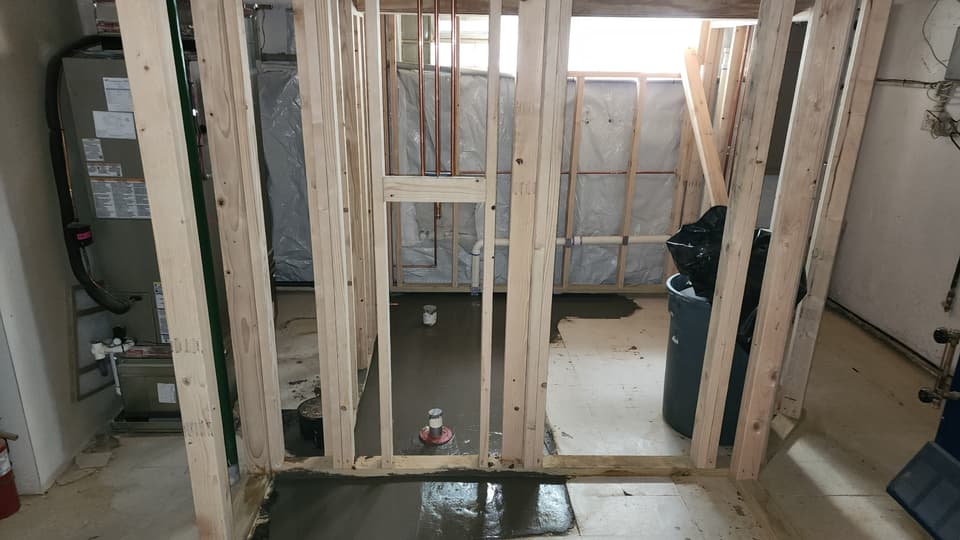
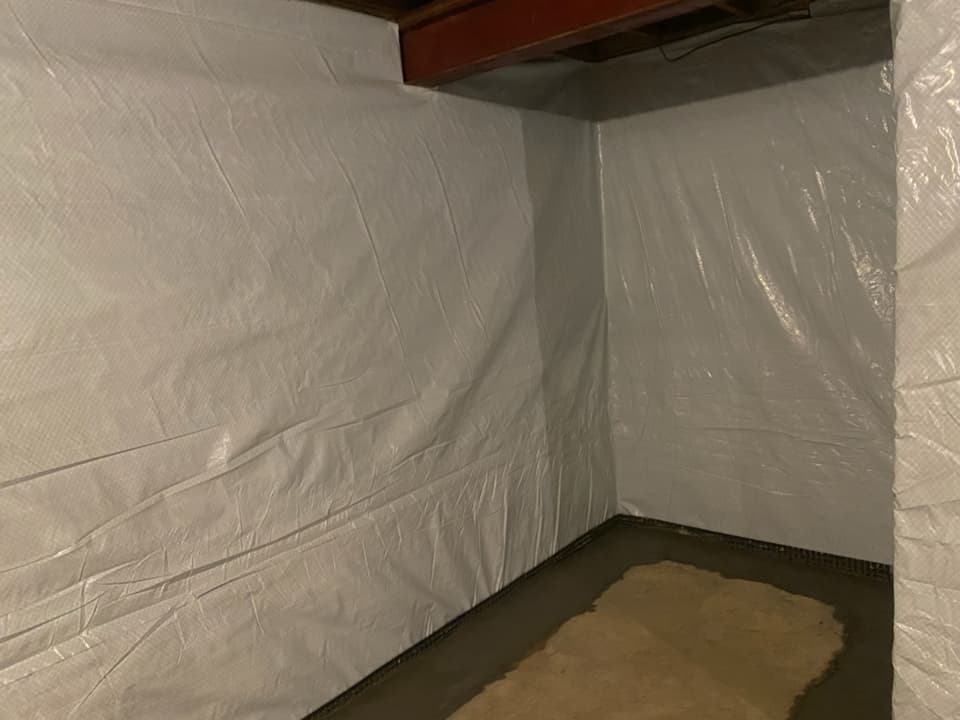
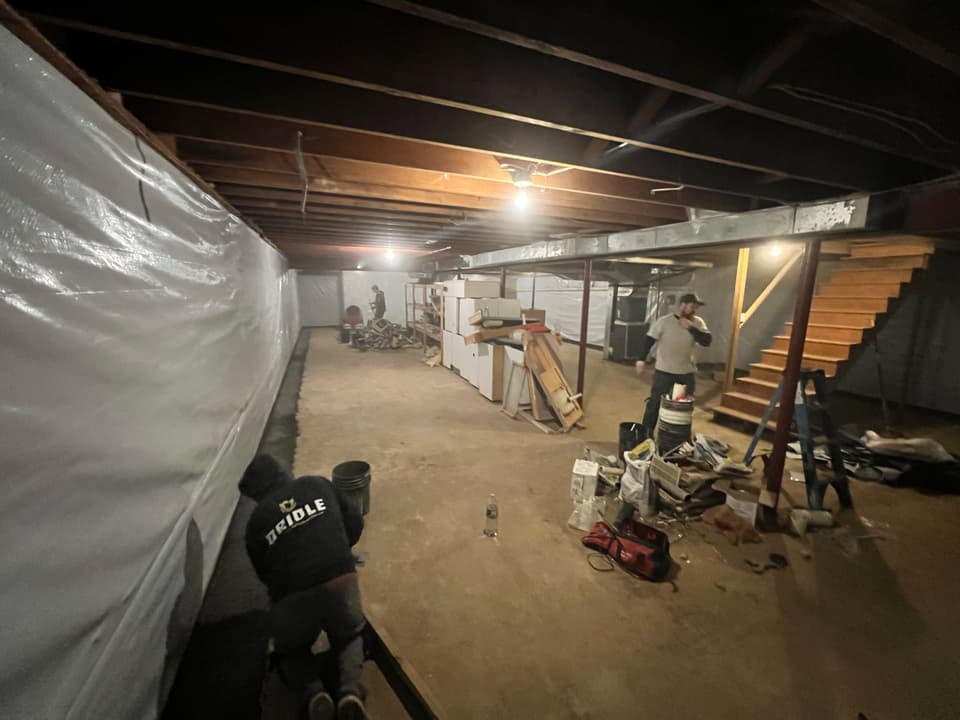
A closer look at the equipment, materials, and job site conditions involved in this kind of work.


Straight Answers
Floor Crack Questions from
Maryland Homeowners
Call (410) 879-3360 if you're unsure whether a floor crack is worth worrying about. We'll measure it and tell you honestly.
How do I tell a harmless crack from one that means something's moving under my slab?
Concrete slabs crack as they cure, and these shrinkage cracks are common and generally not structural. They tend to be hairline width, run in no particular pattern, and don't show displacement, meaning one side of the crack isn't higher than the other.
A settlement crack behaves differently. It's typically wider, a quarter inch or more, shows displacement across the crack, follows a pattern consistent with soil movement below the slab, or shows up alongside other signs like sloping floors or wall cracks elsewhere in the house. If you're only looking at the crack itself and not what else is happening nearby, you're missing half the picture.
What's actually happening under the slab when a crack is settlement related?
In Maryland, slab settlement cracking usually traces back to soil conditions beneath the slab: a void that's formed as soil erodes or washes out, fill material that was never fully compacted, or Piedmont clay that has shrunk and pulled away from the slab during a dry stretch. A crack that's widening over time, or that's paired with a section of floor that feels noticeably lower than the rest, is worth having assessed rather than just patched over.
Can I just seal the crack and move on?
If it's a stable shrinkage crack, yes, sealing against moisture is a relatively simple fix. A crack tied to settlement needs the underlying cause addressed first, whether that's a void beneath the slab or ongoing soil movement, or the repair reopens as the soil keeps moving. Sealing a settlement crack without addressing what's under it just delays the next crack.
Does OBW use foam for slab cracks?
Where the cause is a void beneath the slab, polyurethane foam injection can fill that void and support the slab from underneath, which is an appropriate use of foam. Foam is a tool for concrete lifting, slab repair, and void filling, not a substitute for structural underpinning when a wall or foundation section itself needs support. OBW matches the diagnosis to what the inspection actually finds and says which method the slab needs. Foam work itself is not part of OBW's service line; where the cause is structural rather than a void, the repair is.
What does OBW check before recommending a fix?
We measure the crack width, check for displacement across it, and look at the pattern of the crack itself, then check the rest of the house for signs that point to the same underlying cause: sloping floors, wall cracks, or other settlement signs. OBW's free inspection distinguishes a stable shrinkage crack from a settlement crack before recommending anything. Backed by a written workmanship guarantee, terms vary by service, ask your inspector.
Why Oriole
Why Maryland Homeowners Trust
OBW with Floor Cracks
We Tell You Which Kind It Is
Most floor cracks are harmless. OBW measures before assuming, so you're not paying for stabilization a shrinkage crack doesn't need.
Maryland Soil Experience
Piedmont clay shrinkage, uncompacted fill, and soil erosion each produce settlement cracks differently. OBW has diagnosed all three across every county we serve.
No Subcontracting
OBW's own crew handles diagnosis, sealing, and stabilization, in house, start to finish.
Family-Owned Since 1953
Founded by Frank Pirog Sr. in 1953. Amber Pirog leads the company today. Written workmanship guarantee on every repair.
Reviews
What Our Maryland Neighbors Say
A Widening Crack Doesn't Stop on Its Own.
Getting Started on Your
Floor Crack Assessment
If the cause is a void or shifting soil, the crack keeps widening until that's addressed directly.
Free Inspection
OBW measures the crack for width and displacement and checks the rest of the house for related signs. Free, no obligation.
Written Diagnosis & Quote
You receive a written quote specifying sealing or stabilization based on what's actually found, before any work is scheduled.
Repair & Verification
OBW's crew seals or stabilizes the crack and confirms the underlying cause is addressed. Written workmanship guarantee issued upon completion.
Not Sure If a Floor Crack Is a Problem?
Free inspection. We measure it and tell you honestly whether it needs more than a seal.
Family-owned since 1953 · MHIC #4247 · Written Workmanship Guarantee