A Flex Repair, Not Rigid Epoxy
Basement Crack
Repair
in Maryland
Maryland block walls need a flex repair, not rigid epoxy injection that re-cracks
OBW's proprietary Artery method: V-groove, stainless wire mesh, hydraulic cement. Mechanically reinforced rather than adhesively bonded. Built for Maryland's freeze-thaw cycles. Lifetime transferable warranty on every repair.

Why the Repair Method Matters in Maryland
What OBW's Artery Crack
Repair Actually Does
A basement wall crack is not just a cosmetic problem. In Maryland's clay-soil environment, a cracked foundation wall is an active water entry point, and clay holds saturation for days after a storm, pressing that water against your wall under hydrostatic pressure.
Rigid epoxy works on static poured-concrete cracks in stable soil. Maryland block and cinder-block foundations are not static. They flex with the seasonal expansion and contraction of Piedmont clay. Rigid epoxy in a moving wall re-cracks, often within one to two seasons.
OBW's Artery method uses a V-groove, stainless wire mesh matrix, and hydraulic cement. The mesh bridges the crack. The cement accommodates minor flex. The result is a repair that holds through Maryland winters and wet springs, not one that opens again after the first freeze-thaw cycle.
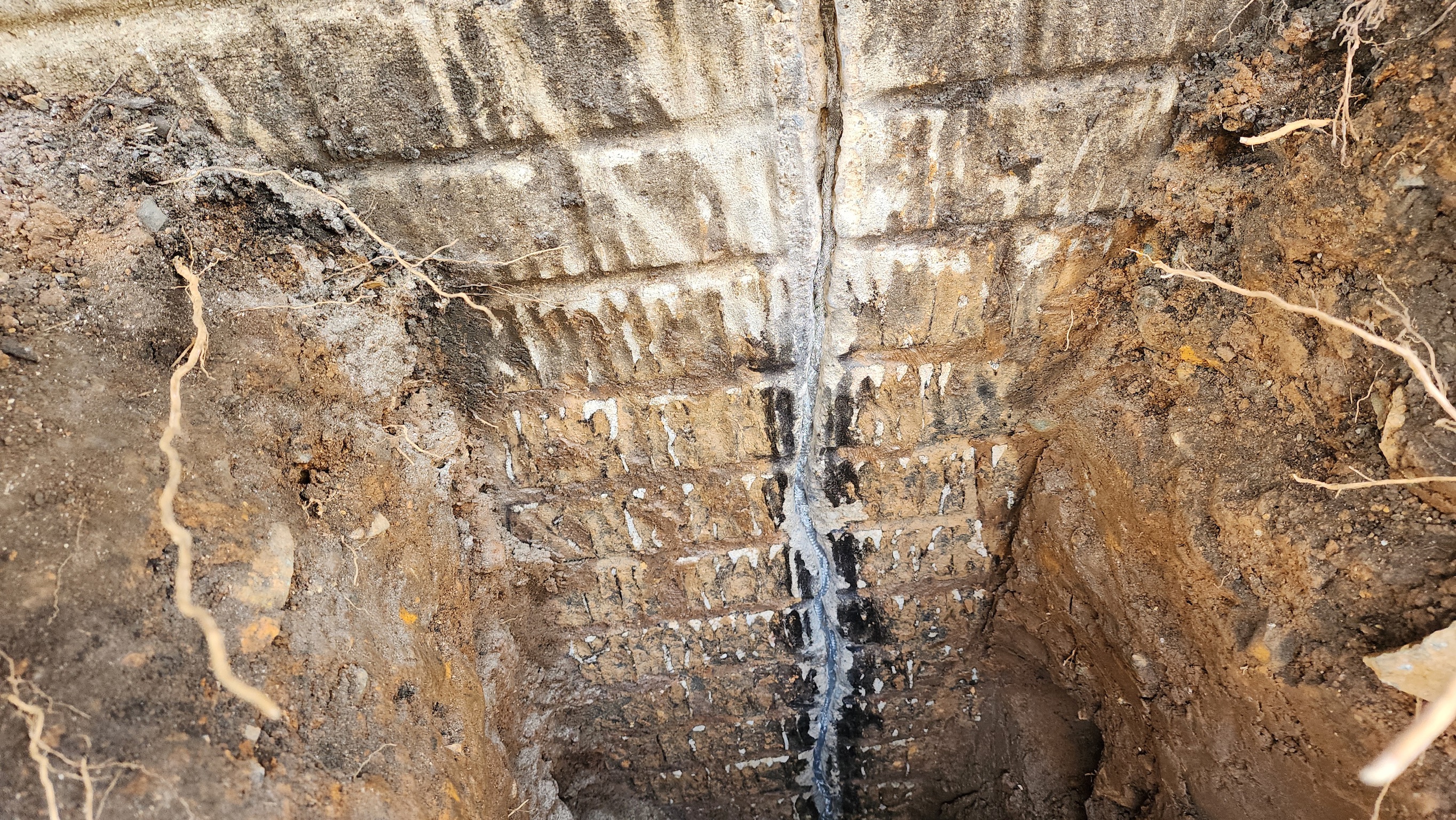
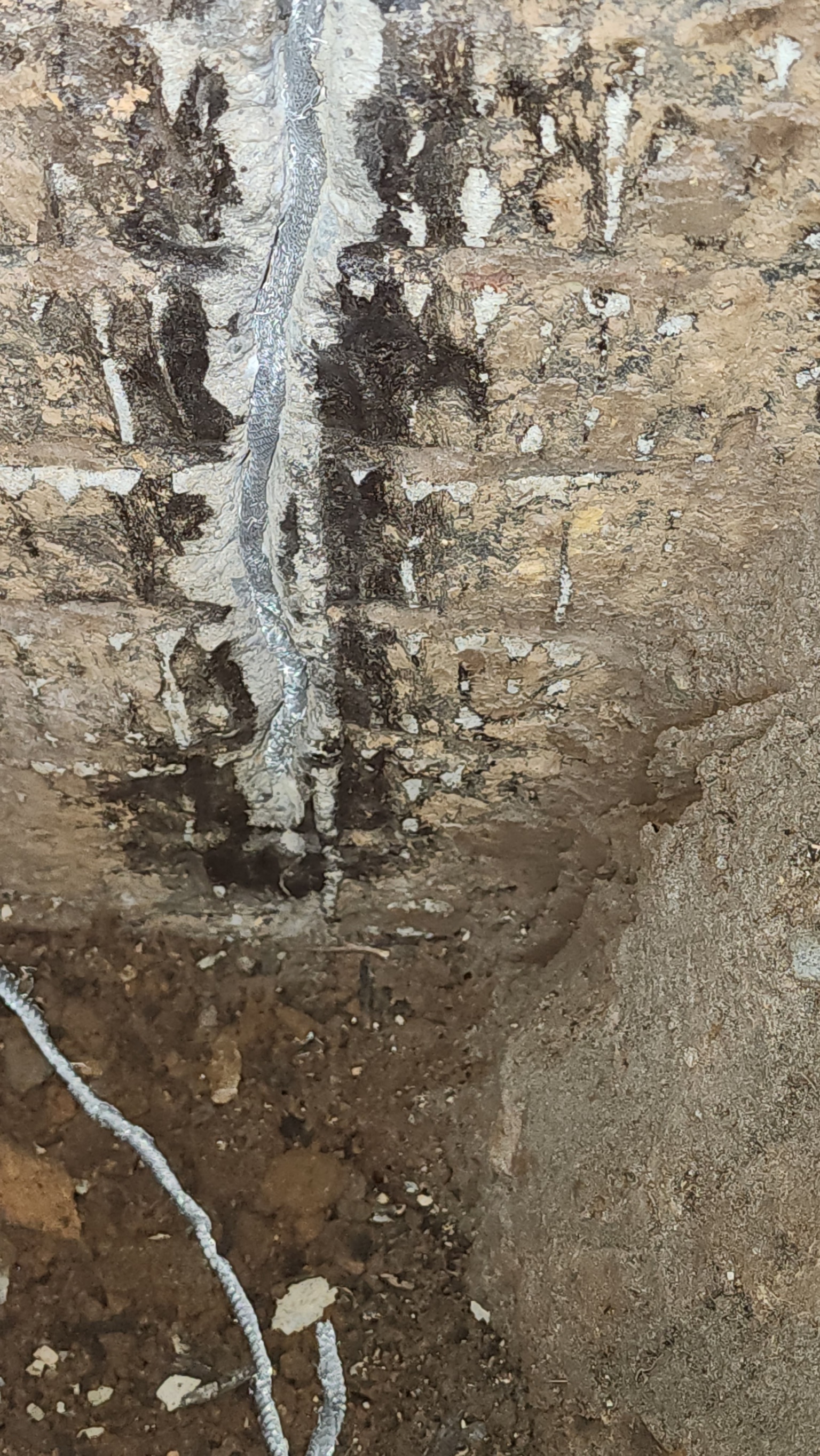
Active water entry through vertical block wall crack, a common OBW starting point
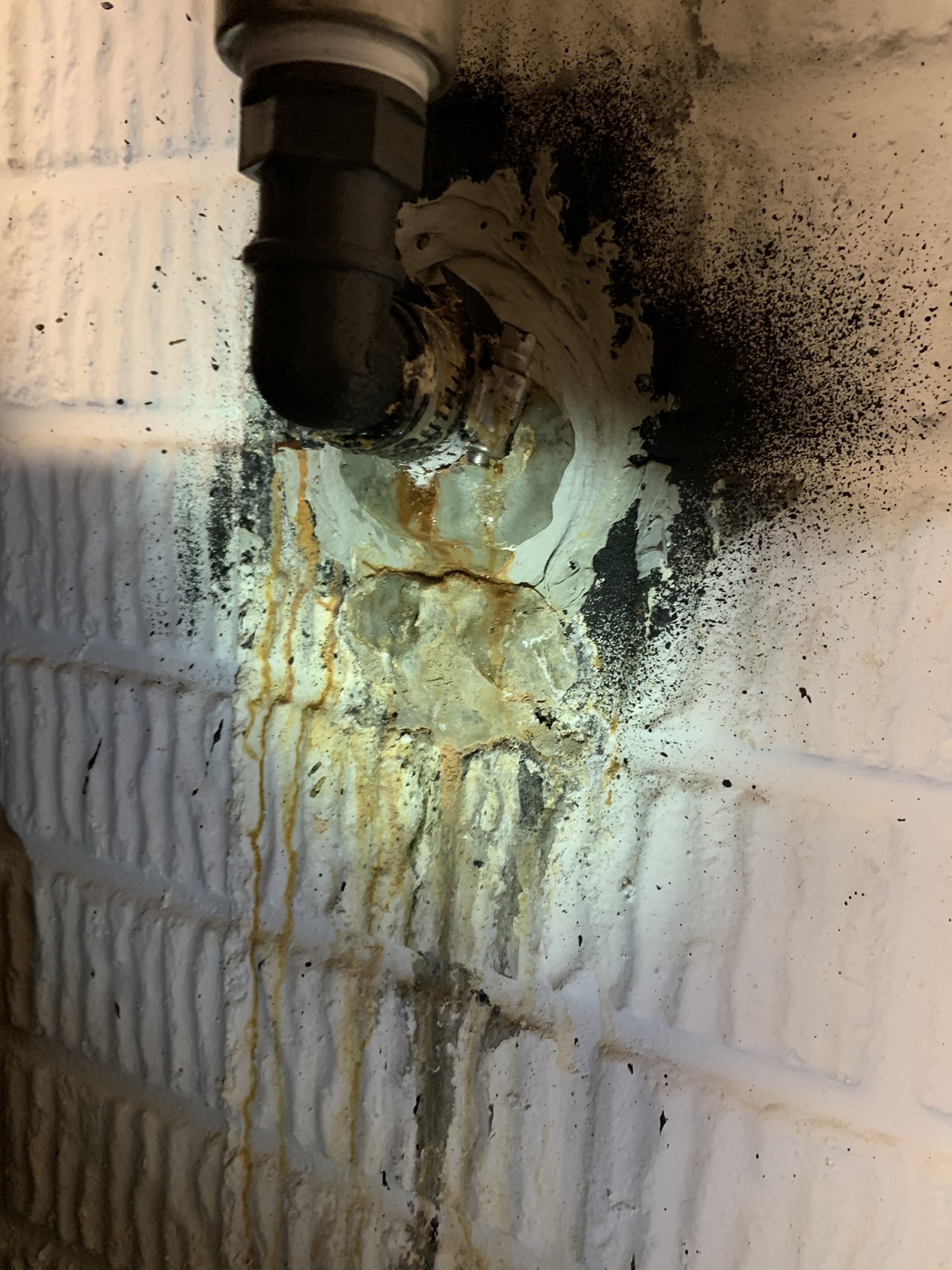
Cracks Don't Heal on Their Own
Warning Signs Your Basement
Wall Crack Needs Attention
Maryland homeowners often monitor cracks for months. By the time water damage is visible, the crack has widened and water has saturated surrounding framing and insulation.
- Water weeping or seeping through a vertical or diagonal crack after rain
- White mineral staining (efflorescence) directly below a crack line
- A prior epoxy repair that has re-cracked or opened again seasonally
- Horizontal crack mid-wall (lateral soil pressure, may require structural repair)
- Step cracking in block mortar joints, with or without visible wall movement
What You Get
What OBW's Crack Repair Includes
Every Artery repair is the same high standard, no abridged version for smaller cracks, no upsells.
V-Groove Crack Preparation
The crack face is ground to a V-profile to maximize bonding surface area and allow the mesh and cement to seat properly, not just sit on top of the crack face.
Stainless Wire Mesh Embedment
Stainless wire mesh is pressed into the groove before cement application. This flex matrix bridges the crack and prevents the repair from re-cracking under seasonal wall movement.
Hydraulic Cement Fill (Not Epoxy)
Hydraulic cement is packed in layers, flush to the wall surface. It sets against active water infiltration and accommodates minor seasonal flex in Maryland block walls, epoxy cannot.
Structural Assessment
Every repair starts with a determination: is this a water entry crack or a structural movement crack? The answer changes the scope. We tell you which category before any work begins.
Concrete Surface Finishing Flush to Wall
The finished repair surface is smooth and flush. Ready for paint or drywall, no visible ridge, no patch outline that telegraphs through finish coatings.
Lifetime Transferable Warranty on Crack Repair
Every Artery crack repair carries OBW's Lifetime Transferable Guarantee. It conveys to the next homeowner automatically, a documented real estate disclosure asset.
One Visit. Done Right.
How OBW's Artery Method
Repairs a Basement Crack
Four steps. No shortcuts. The same sequence every time, because a crack repair that fails in year two costs more than doing it right in year one.
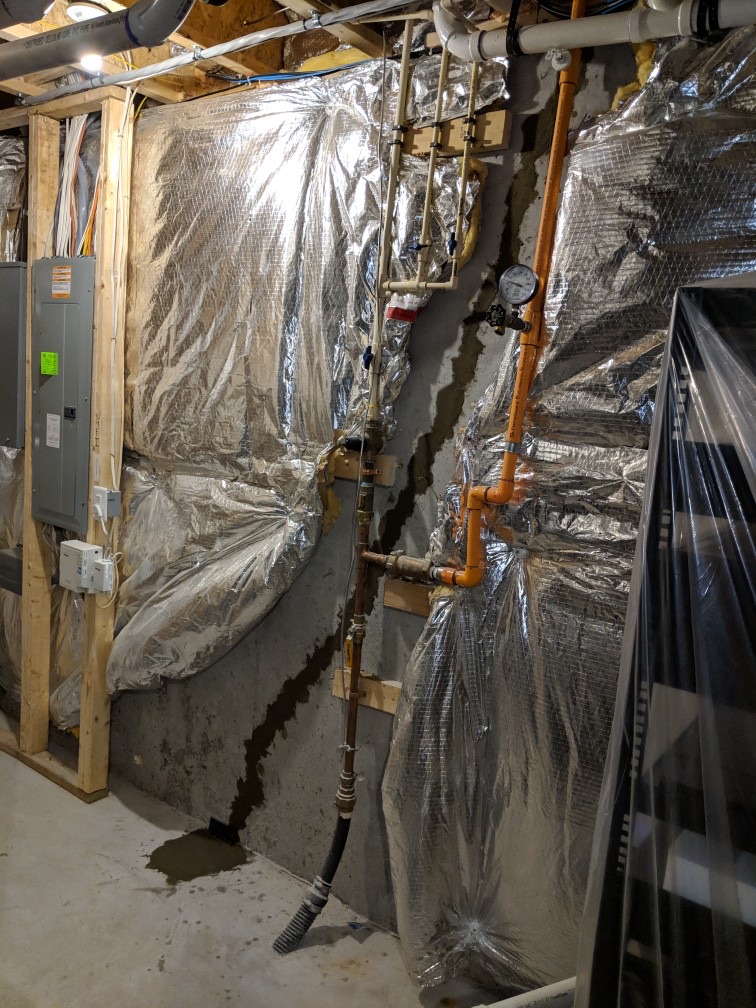
Crack Assessment & Documentation
Inspector photographs and measures the crack: width, length, orientation, and signs of active movement. Determines crack category, water entry vs structural. Documents any prior repair attempts.
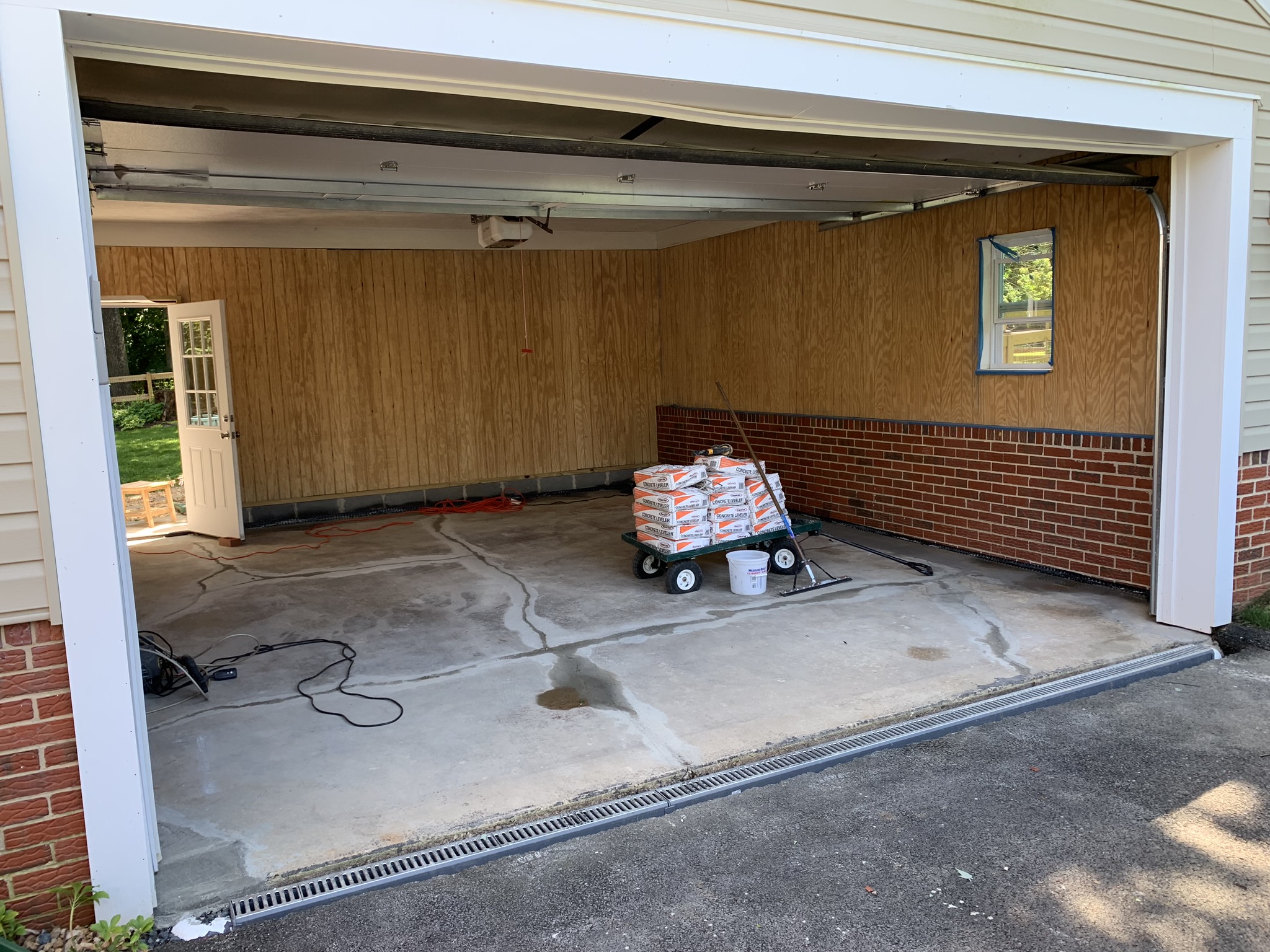
V-Groove Preparation
The crack face is ground to a V-profile to increase bonding surface area and allow the mesh and cement to seat properly rather than just sitting on top of the crack face.
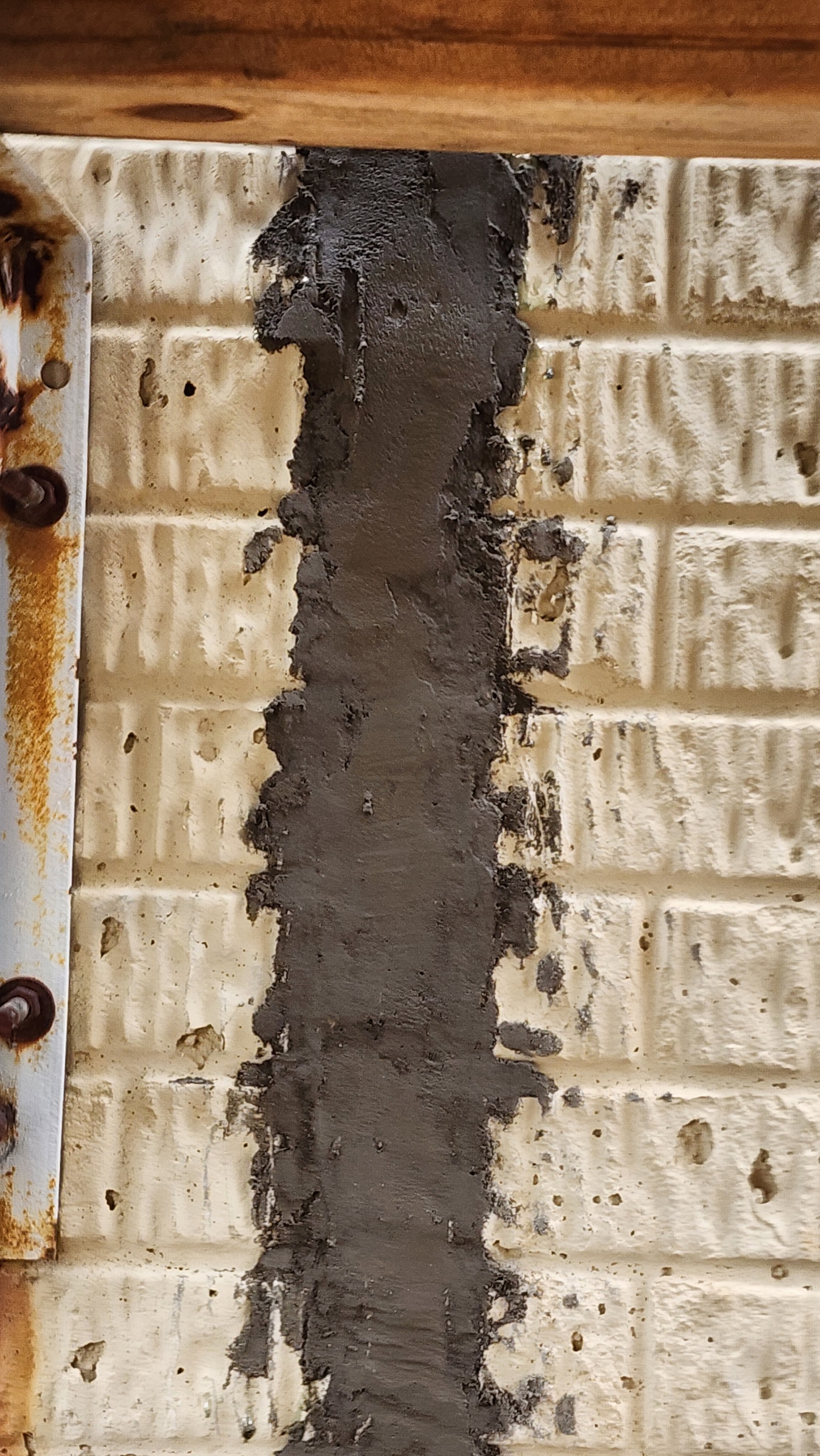
Stainless Mesh Embedment
Stainless wire mesh is pressed into the groove before cement application. This is the flex matrix, it bridges the crack and prevents the repair from propagating under seasonal wall movement.
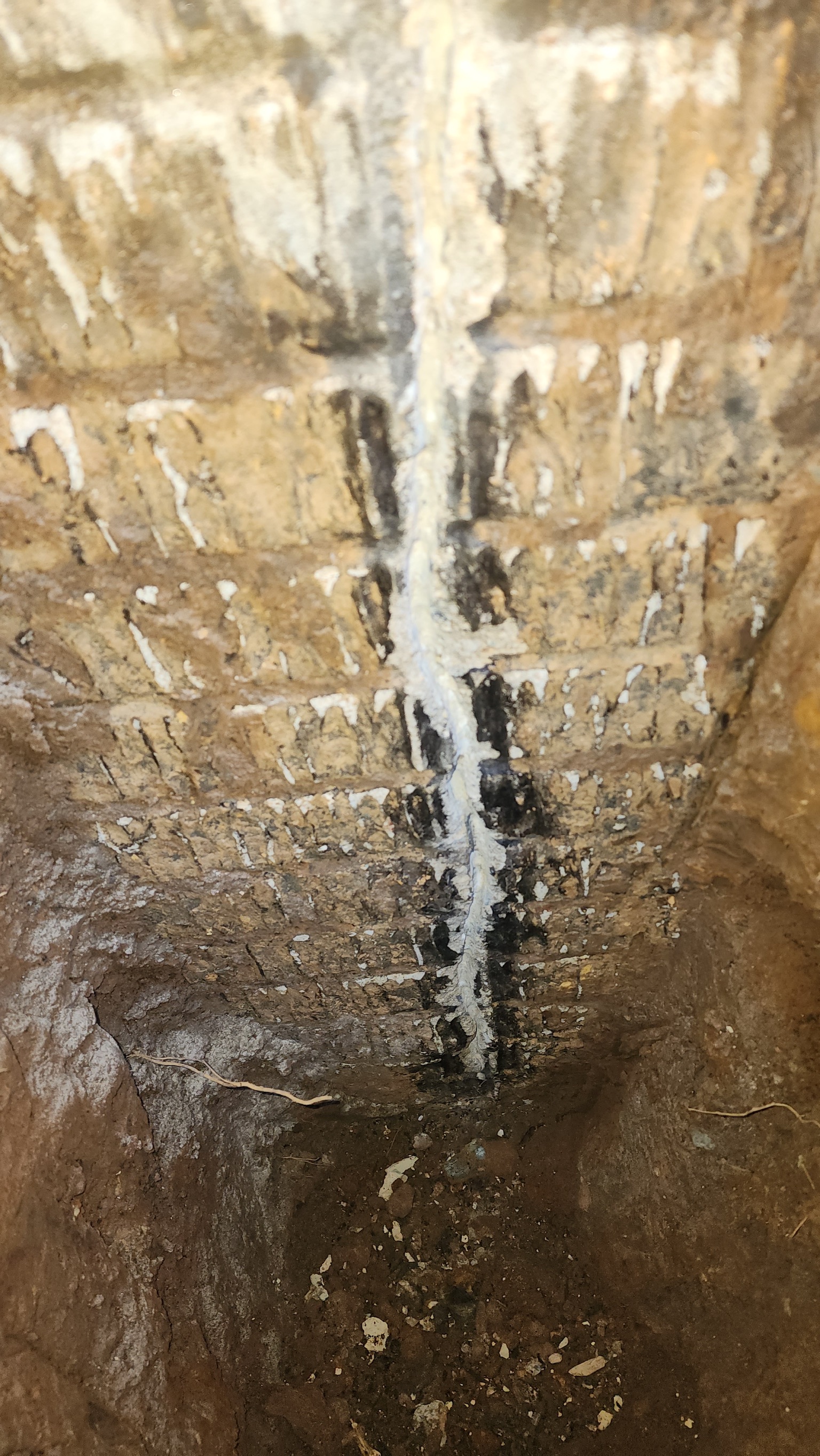
Hydraulic Cement Fill & Cure
Hydraulic cement is packed in layers, flush to the wall surface. It sets against active water infiltration. Final surface is smooth and ready for paint or drywall.
Photos From the Field
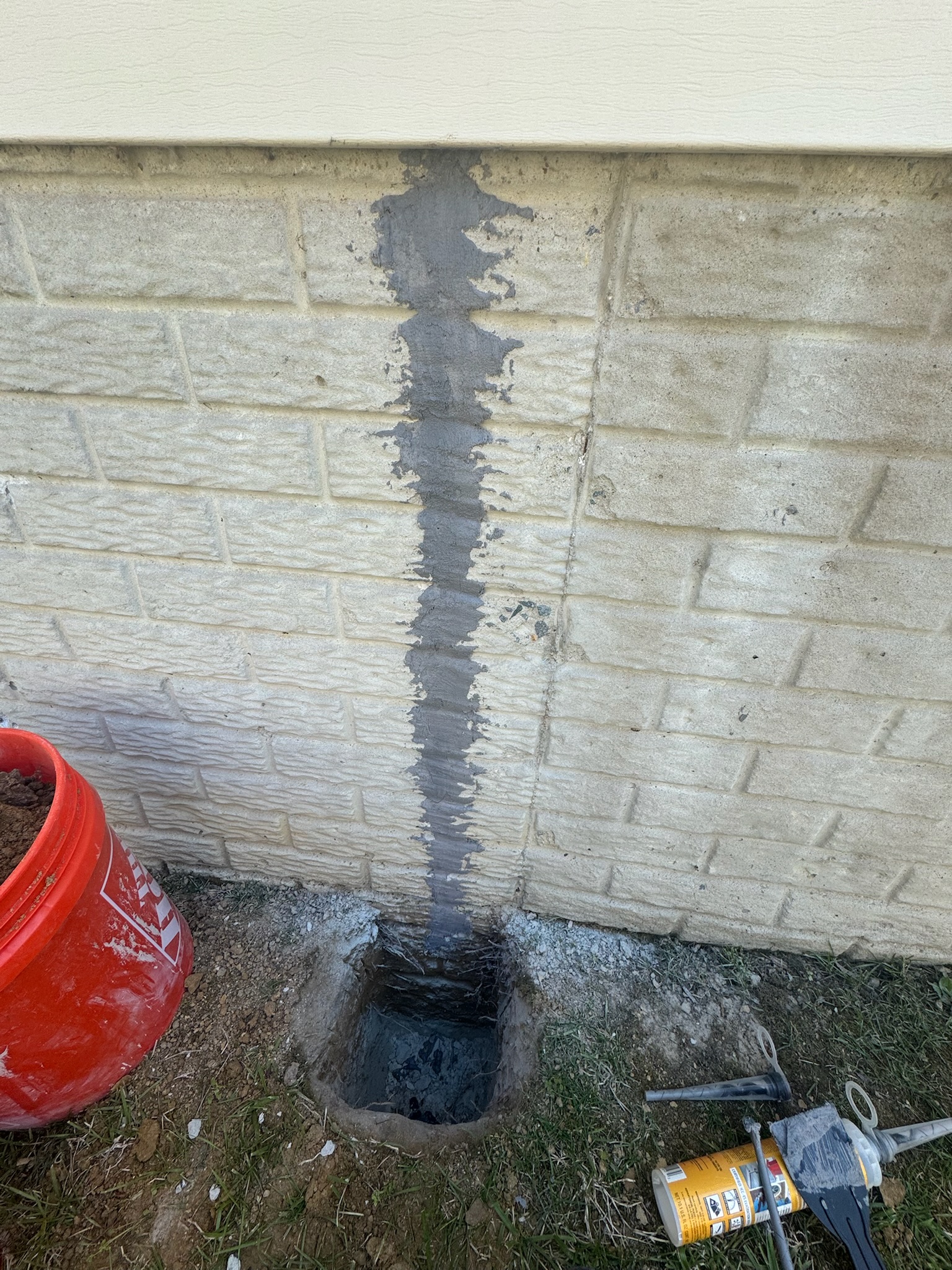
Job Site Photos
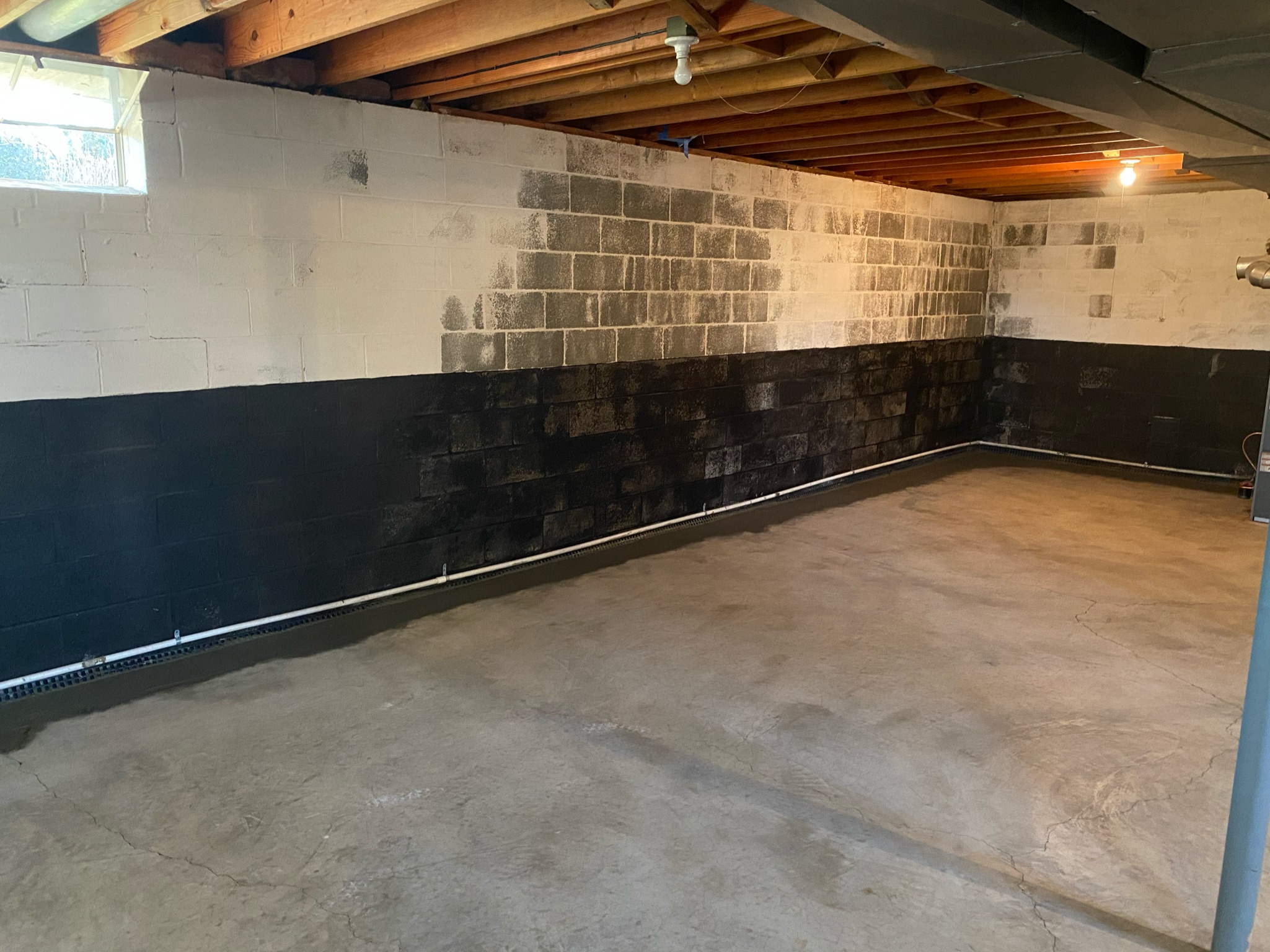
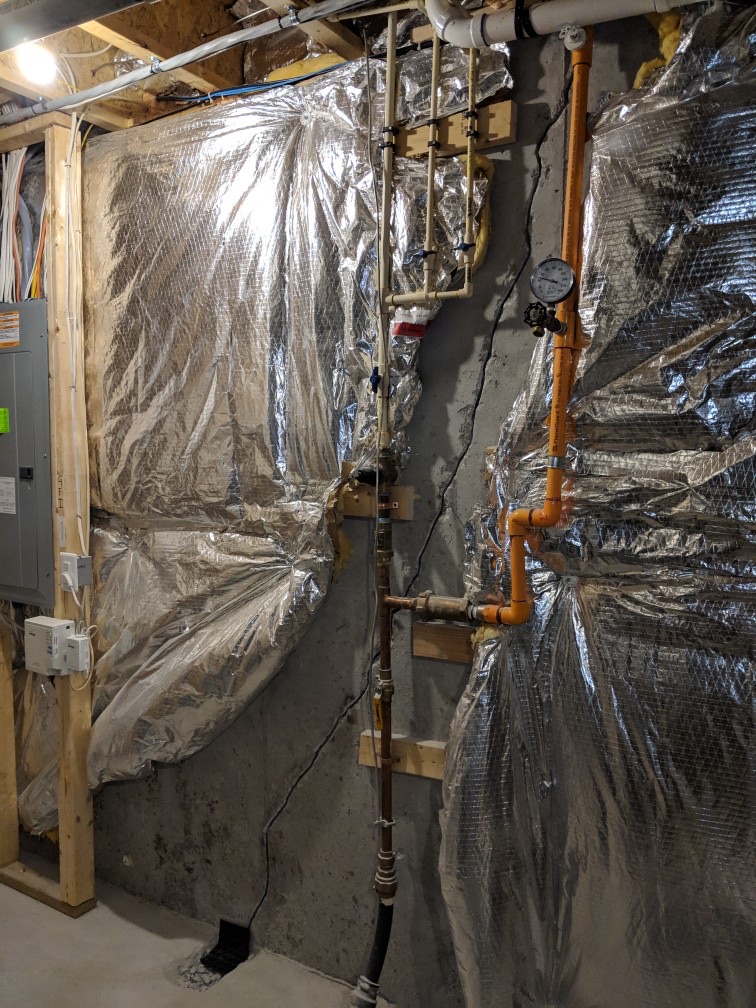
A closer look at the equipment, materials, and job site conditions involved in this kind of work.
Honest Answers. No Sales Pitch.
Common Questions About
Basement Crack Repair
If your question isn't here, call (410) 879-3360. Our inspectors answer questions and give honest, consultative guidance.
What's the difference between OBW's Artery method and epoxy crack injection?
Epoxy injection fills a crack under pressure with rigid epoxy resin. It works well on poured concrete walls where the crack is static, the wall isn't moving and won't move again. Maryland block and cinder block foundations are a different story. Block walls flex seasonally with freeze-thaw cycles and clay soil expansion. Rigid epoxy in a moving wall re-cracks, often along the repair line or adjacent to it.
OBW's Artery method V-grooves the crack face, embeds stainless wire mesh as a flex matrix, and fills with hydraulic cement that can accommodate minor seasonal movement. The repair is mechanically reinforced rather than just adhesively bonded. Both methods fill the crack, the Artery method stays filled over multiple freeze-thaw cycles in Maryland's climate.
Is every basement crack structural?
No, and this distinction matters for how the repair is scoped. Vertical cracks are almost always a water entry problem, not a structural one, they form when poured concrete cures and shrinks, or when block mortar joints deteriorate. Horizontal cracks mid-wall are a different category: they indicate lateral soil pressure bending the wall inward, which is a structural issue requiring wall stabilization (carbon fiber or wall anchors) in addition to crack sealing.
Step cracks in block walls can be either, depending on whether they're accompanied by wall movement. OBW inspectors measure crack width, check for movement indicators, and tell you honestly what category your crack falls into before quoting anything.
How do I know if a crack is getting worse?
Cracks that are widening show fresh concrete dust, rust staining from exposed rebar, or gaps that change width seasonally. A simple monitoring method: place a thin piece of tape or pencil marks across the crack at two points and date them. If the crack moves past the marks over a few months, it's active.
OBW inspectors use feeler gauges to document existing width and can note whether prior repairs have re-cracked. If you've had a crack "repaired" before and it opened again, that tells us something about the repair method and the underlying movement.
Can you repair cracks in a finished basement without tearing out all the drywall?
It depends on where the crack is. We need access to the foundation wall surface to V-groove and treat it. For finished basements, that typically means removing a section of drywall at the crack location, not the full wall, but enough to work. The width of the access cut depends on the crack length and whether we need to route interior drainage alongside the repair.
After the crack work is done, the concrete is flush and drywall can be reinstalled by a carpentry contractor.
What causes basement wall cracks in Maryland specifically?
Maryland's Piedmont and coastal plain geology puts most residential foundations in expansive clay soil. In dry periods, clay shrinks and pulls away from the foundation. In wet periods, particularly Maryland's wet springs, clay expands and presses in. This cycle repeats every year. Block walls also deteriorate at mortar joints over decades, creating entry points for water and crack propagation.
Freeze-thaw cycles (Maryland averages 50 to 80 freeze-thaw events per winter in most counties) accelerate both. Poured concrete walls crack at stress concentrations: window corners, pipe penetrations, and points where the wall thickness changes.
70 Years of Maryland Foundations
Why Maryland Homeowners Choose
Oriole Over National Brands
Three generations of the Pirog family have been fixing Maryland basement walls since Frank Pirog Sr. founded Oriole in 1953.
Honest, Consultative Guidance
Our inspectors take a consultative approach, guidance first, not a sales pitch. You get an honest assessment of what your crack actually needs, without pressure to add scope you don't need.
Lifetime Transferable Guarantee
OBW's crack repair warranty transfers to the next homeowner at no charge. A documented disclosure asset when you sell, national franchises don't offer this.
Maryland-Specific Engineering
The Artery method is designed for Piedmont clay soils and Maryland's freeze-thaw cycles. Rigid epoxy injection fails in Maryland block walls. Our method doesn't.
Family-Owned Since 1953
Frank Pirog Sr. founded Oriole over 70 years ago. Today Amber Pirog leads the same family company with the same standard: diagnose it right and fix it once.
Reviews
What Our Maryland Neighbors Say
Ready When You Are. No Pressure.
Three Steps to a Repaired
Maryland Foundation Wall
From first call to finished repair, most OBW crack jobs are scheduled and complete within one to two weeks.
Get My Free Inspection
A local OBW inspector visits your home, measures and categorizes the crack, checks for structural indicators, and assesses the full scope, at no charge and no obligation.
Get Your Written Estimate
You receive a written, itemized quote the same day as your inspection. A specific price per crack, not a vague range and not a minimum that balloons on-site.
We Handle the Work
Our crew completes the Artery repair, finishes the surface flush to the wall, and walks you through the Lifetime Transferable Warranty before they leave.
Ready to Fix That Crack for Good?
Free inspection. Written estimate same day. No pressure, honest, consultative guidance.
Family-owned since 1953 · MHIC #4247 · Lifetime Transferable Guarantee