Driven by Your Home's Own Weight
Push
Piers
in Maryland
Driven using your home's own weight as resistance, OBW's in-house underpinning method for Maryland foundations
Push piers are hydraulically driven to competent bearing soil using the structure's own weight to advance them, then connected to the foundation to transfer its load off unstable Piedmont clay. OBW installs push piers in-house as our primary underpinning method.

Push Piers vs. Helical Piers
Two Underpinning Methods,
Not Interchangeable
Push piers and helical piers both transfer a settled foundation's load to deeper, more stable soil, but they get there differently, and the difference determines which one fits a given foundation. Push piers are hydraulically jacked into the ground using the structure's own weight as resistance against a foundation bracket. That makes them well suited to heavier residential structures, which is most of what OBW encounters on Maryland foundation repair jobs.
Helical piers are screwed in with a torque motor instead of relying on structure weight, which makes them the better fit for lighter structures or certain access-limited situations, covered separately in our helical pier guide. OBW's own in-house underpinning work uses push piers; our inspectors will tell you plainly when a settlement pattern calls for a different method instead.
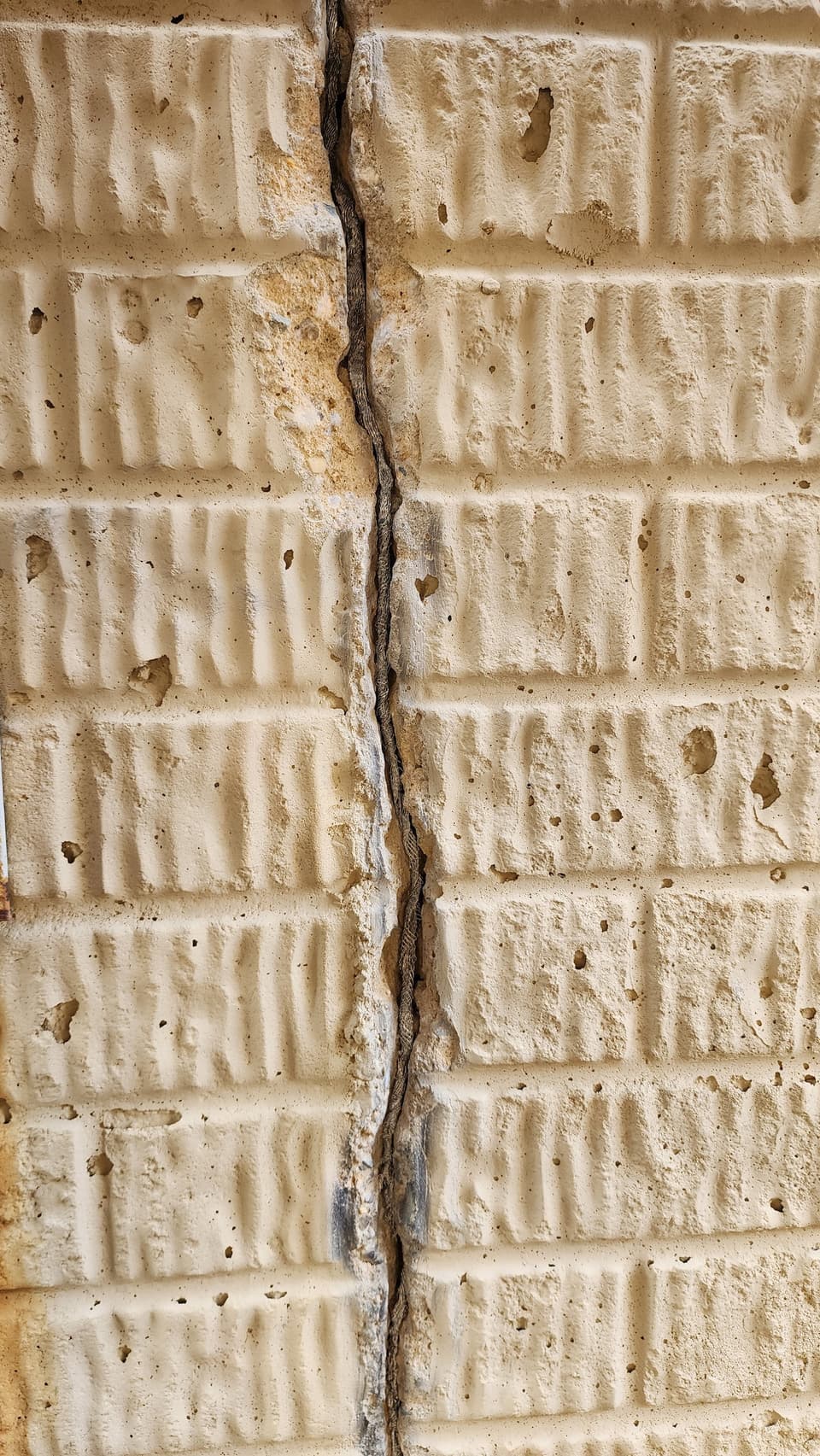
Differential settlement, the condition push piers are installed to correct
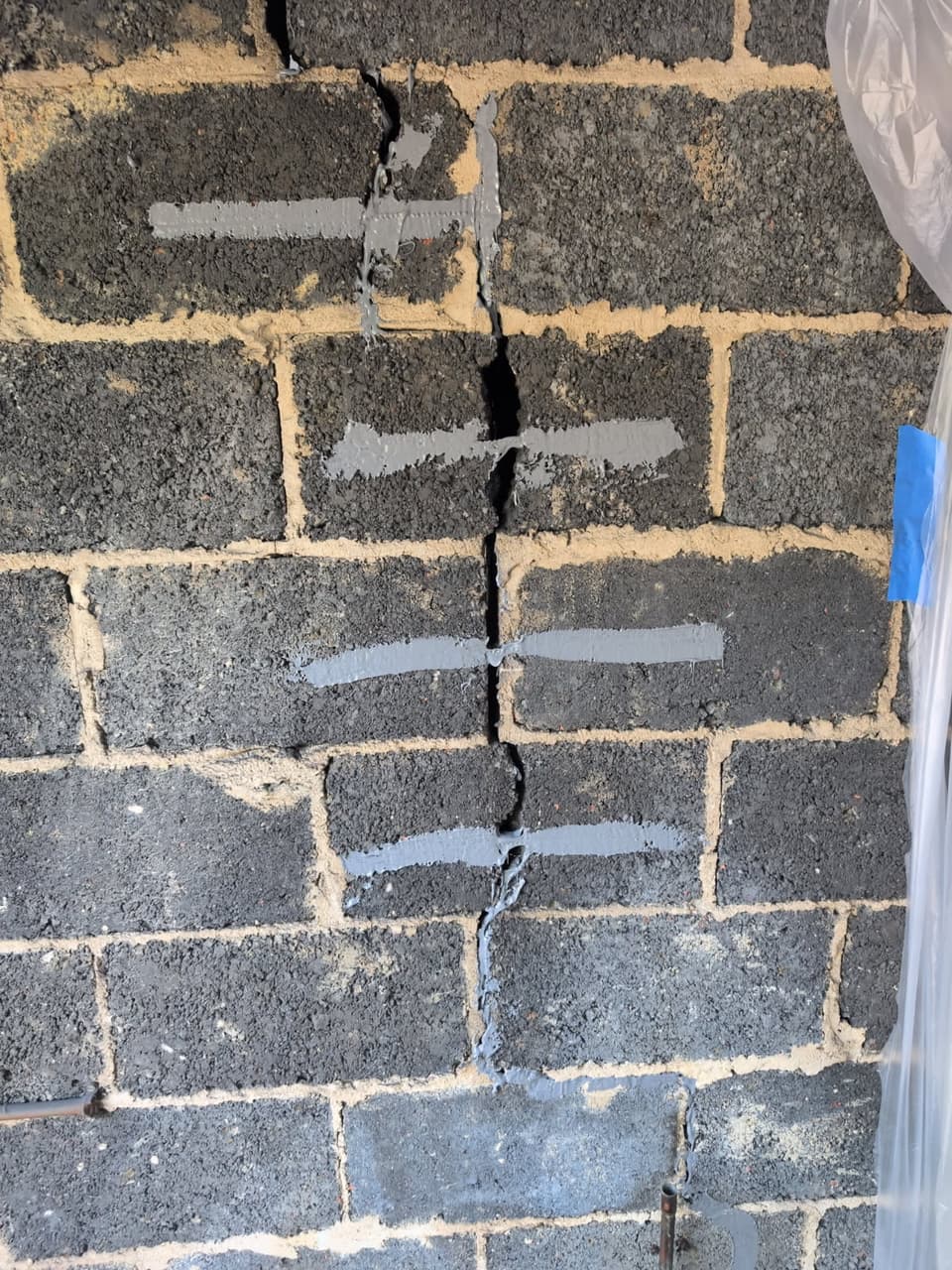
Settlement Gets Worse Without Intervention
Signs Your Foundation
May Need Push Piers
- Diagonal or stair-step cracks at window and door openings
- Floors sloping toward a corner or exterior wall
- Doors and windows binding progressively worse over time
- Separation between the foundation wall and the floor slab at the perimeter
What's Included
OBW's Push Pier Process
Settlement Assessment and Layout
A foundation inspection identifies settlement locations, measures differential movement, and determines pier count and spacing.
Bracket Installation
Steel brackets are attached to the footing at each pier location, engineered for your specific foundation type.
Hydraulic Pier Advancement
Each push pier is driven using the structure's own weight as resistance until pressure readings confirm competent bearing soil.
Lift Phase (Where Appropriate)
Hydraulic pressure is applied incrementally across all piers to restore elevation where lift is achievable and appropriate.
No Subcontracting
OBW's own crew performs every push pier installation in-house, from assessment through completion.
Written Workmanship Guarantee
Push pier installations are backed by a written workmanship guarantee, terms vary by service, ask your inspector.
Honest Answers. No Sales Pitch.
Push Pier Questions from
Maryland Homeowners
How are push piers different from helical piers?
Push piers are hydraulically driven into the ground using the weight of the structure itself as resistance, jacked against a bracket on the foundation footing until the pier reaches competent bearing soil. Because they rely on the structure's own weight to advance, push piers work best on heavier structures, houses with masonry or block foundations, that provide enough resistance to drive against.
Helical piers are screwed into the ground with a hydraulic torque motor instead, so they don't depend on the structure's weight to advance. That makes helical piers an option for lighter structures, additions, porches, or sites where a heavier structure's weight isn't available as resistance, or where limited access favors a smaller torque-driven rig over the equipment push piers require.
OBW installs push piers in-house as our own underpinning method for residential Maryland foundations. Helical piers are covered in a separate educational guide for situations where that method is the better fit.
How deep do push piers go, and can they lift a settled foundation?
Depth depends on local soil conditions, in central Maryland this is commonly 15 to 35 feet below grade, though it varies by site. Installation is monitored by hydraulic pressure, which correlates to soil bearing capacity, the pier advances until the reading confirms it has reached competent soil.
Yes, in many cases push piers can restore some or all of a foundation's original elevation. Once piers are installed and connected to a foundation bracket, hydraulic pressure lifts the structure incrementally. How much lift is achievable depends on how long the settlement has been occurring and whether the structure has already adjusted to its settled position. OBW is upfront about lift expectations before any work begins.
Do push piers require a lot of yard access or excavation?
Small excavations are needed at each pier location to expose the footing, but push piers don't require the broad open yard area that some wall anchor systems need. Most residential push pier jobs run one to two days on-site, and most homeowners remain in the house throughout the installation.
70 Years of Maryland Foundations
Why Maryland Homeowners Choose
OBW for Push Pier Installation
Honest, Consultative Guidance
If push piers aren't the right fit for your settlement pattern, we'll tell you and explain which method is.
Written Workmanship Guarantee
Every push pier installation is backed by a written workmanship guarantee, terms vary by service, ask your inspector.
No Subcontracting Ever
OBW's own crew performs every push pier installation in-house. The person who assessed your foundation is on-site for the work.
Family-Owned Since 1953
Founded by Frank Pirog Sr. in 1953. Amber Pirog leads the company today.
Is Your Foundation Settling?
Free inspection. Written estimate. Written workmanship guarantee on OBW's push pier installations, terms vary by service, ask your inspector which coverage applies.
Family-owned since 1953 · MHIC #4247 · Written Workmanship Guarantee