A Family of Methods, Not One
Foundation
Underpinning
in Maryland
The general category of methods that extend a settling foundation's support down to soil that can actually bear the load
Underpinning isn't one method, it's a family of them: push piers, helical piers, concrete piers, and micro piles all transfer a foundation's load to more stable soil, each suited to different conditions. OBW diagnoses your specific settlement before recommending which one applies.

A Category, Not a Single Method
What Underpinning Means
for a Maryland Foundation
When a foundation settles because the soil beneath it can no longer bear the structure's weight, surface repairs, crack sealing, wall reinforcement, can't stop the movement. Underpinning solves the actual load problem by extending support down or out to soil that can bear it. Every method under this umbrella accomplishes that, but they get there differently, and the differences matter for which one fits your home.
Maryland's Piedmont clay is the usual reason underpinning becomes necessary: shrink-swell cycling and long-term consolidation under load reduce the bearing capacity of shallow soils that older footings were built on. OBW's inspectors look at settlement pattern, soil conditions, and site access before recommending a specific method.
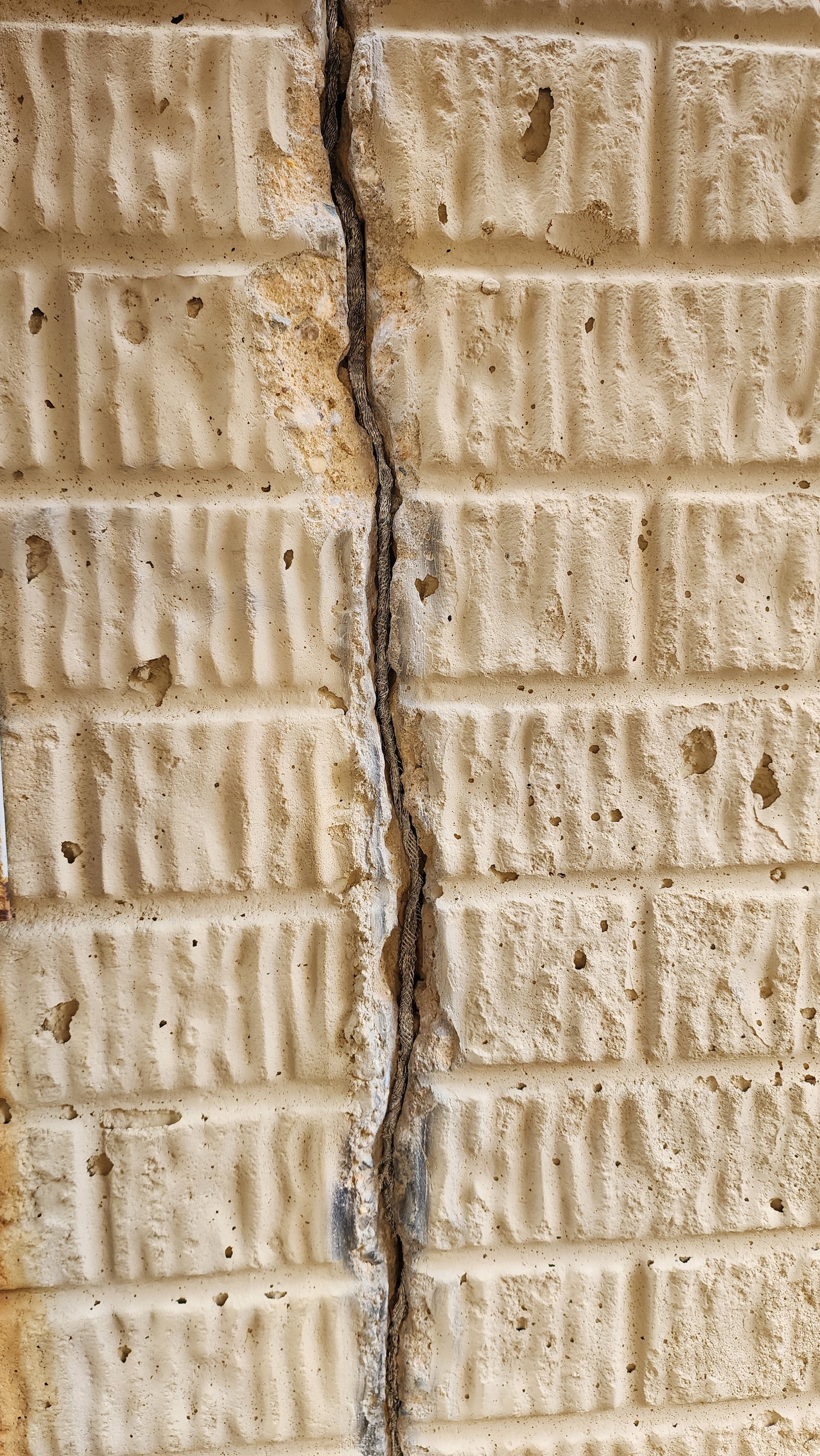
Differential settlement, the condition underpinning is designed to correct
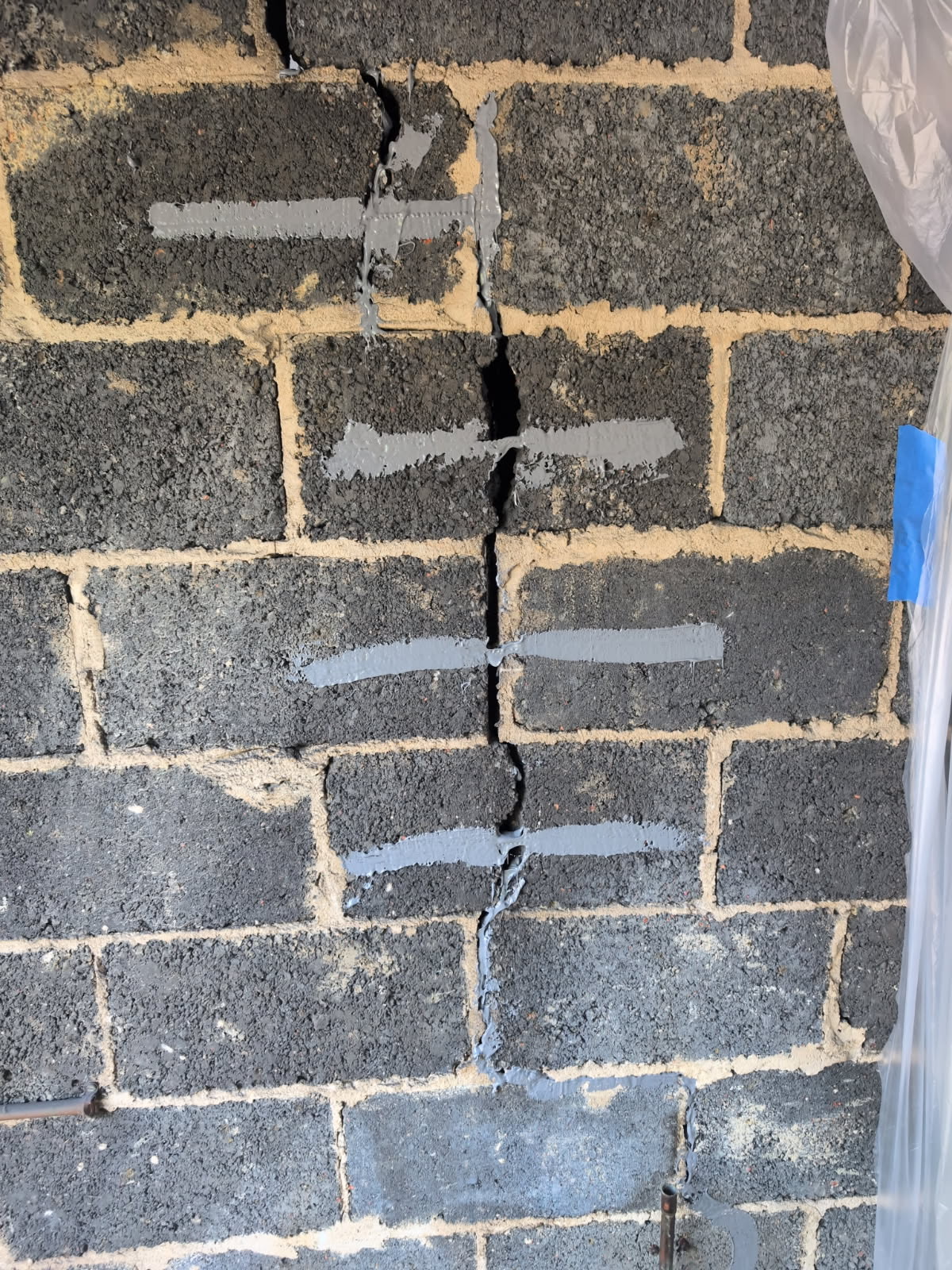
Matching the Method to the Site
What Determines Which
Underpinning Method Fits
- Structure weight, heavier structures give push piers more resistance to drive against
- Yard access, tight or obstructed sites limit which equipment can be used
- Depth to competent soil, deeper requirements favor certain pier types
- Foundation and construction type, block, poured concrete, or slab each favor different bracket and pier configurations
Underpinning Methods
The Underpinning Family
Push Piers
Hydraulically driven using the structure's own weight as resistance. OBW's in-house underpinning method for many Maryland settlement patterns.
Helical Piers
Screwed into the ground with a torque motor. An option for lighter structures or limited-access sites, explained in our educational guide.
Concrete and Slab Piers
Alternative pier types suited to specific soil and slab conditions, detailed on their own pages.
Micro Piles
Small-diameter, high-capacity piles for very tight access, historic homes and rowhomes in particular.
Common Questions
Underpinning Questions from
Maryland Homeowners
What is foundation underpinning?
Underpinning is the general term for any method that extends or strengthens a foundation's support so it reaches soil capable of bearing the structure's load, when the soil directly beneath the original footing no longer can. It's a category, not a single method, push piers, helical piers, concrete piers, and micro piles are all underpinning techniques, each suited to different soil conditions, access constraints, and structure types.
Underpinning is specifically a repair concept, addressing a foundation that's already settled or is at risk of settling further. It is not part of new construction, OBW does not build new foundations.
How does OBW decide which underpinning method to use?
The decision starts with diagnosis: how much has the foundation settled, is the settlement active or historical, what's the soil condition at depth, and what's the site access like. A foundation with good yard access and a heavier structure might be a straightforward push pier job. A historic Baltimore rowhome with tight interior access might call for micro piles instead.
OBW's inspectors walk through that reasoning with you rather than defaulting to one method for every job. Where a job's scope or soil conditions call for a method or specialization outside what OBW installs in-house, we will say so honestly.
Why Oriole
Why Maryland Homeowners Trust
OBW's Underpinning Guidance
Diagnosis Before Method
We identify the cause and site conditions before recommending which underpinning method applies to your foundation.
Written Workmanship Guarantee
OBW's own underpinning installations are backed by a written workmanship guarantee, terms vary by service, ask your inspector.
Honest About Fit
If your settlement calls for a method or specialization outside what OBW installs in-house, we'll tell you honestly.
Family-Owned Since 1953
Founded by Frank Pirog Sr. in 1953. Amber Pirog leads the company today.
Is Your Foundation Settling?
Free inspection. Honest recommendation on which underpinning method, if any, fits your foundation.
Family-owned since 1953 · MHIC #4247 · Written Workmanship Guarantee