Stacked Precast, Same Bearing Depth
Concrete
Piers
in Maryland
Stacked precast concrete sections driven to bearing soil, an alternative underpinning method to steel piers
Concrete piers reach competent bearing soil the same way push piers do, driven down until the soil can bear the load, but built from stacked precast concrete sections rather than a continuous steel shaft. OBW explains how the tradeoffs compare to our in-house push pier method.

Precast Segments vs. a Continuous Shaft
How Concrete Piers
Compare to Steel Piers
Concrete piers accomplish the same underpinning goal as push or helical piers, transferring a settled foundation's load to soil that can actually bear it, but the pier itself is built differently. Precast concrete cylinder sections are stacked and driven one on top of the next, building the pier down to bearing depth in segments rather than as one continuous steel shaft.
The practical tradeoff is load capacity: concrete piers generally carry less load per pier than steel piers of similar diameter, so more of them are typically needed to support the same section of foundation. Whether that's the right choice depends on soil conditions and cost, which is why OBW's inspection compares options rather than defaulting to one method.
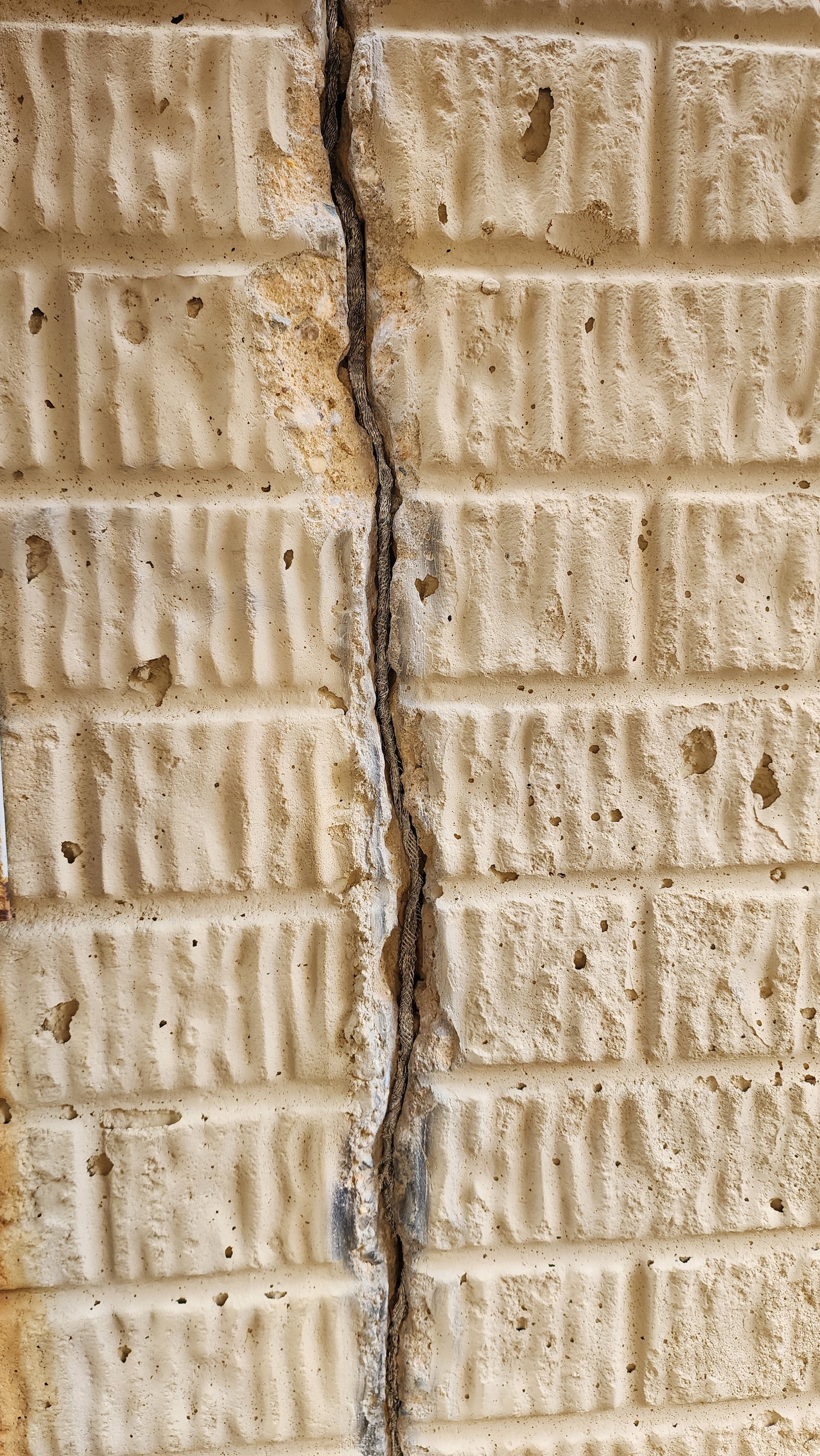
Foundation settlement, the condition both concrete and steel piers address
What to Weigh
Concrete Piers vs.
OBW's Push Piers
- Load capacity per pier, generally lower for concrete than steel
- Pier count needed to support the settled section
- Soil conditions at your specific site and depth to bearing strata
What This Guide Covers
Understanding Concrete Piers
Precast Concrete Sections
Concrete piers are built from stacked precast cylinder segments rather than a single continuous steel shaft.
Driven to Bearing Soil
Sections are pressed or driven in sequence until the assembled pier reaches soil capable of bearing the structure's load.
Load Capacity Tradeoffs
Generally lower per-pier capacity than steel piers, often requiring more piers for the same load, a factor OBW weighs against push piers during diagnosis.
Honest Comparison to OBW's Method
Our inspectors explain how concrete piers compare to the push piers OBW installs in-house, so you understand the tradeoffs before choosing.
Common Questions
Concrete Pier Questions from
Maryland Homeowners
How are concrete piers different from push piers or helical piers?
Concrete piers are built up from precast concrete cylinder sections, driven or pressed into the ground one section at a time and stacked until the pier reaches competent bearing soil. Push piers and helical piers use a continuous steel shaft instead, driven hydraulically or screwed in with a torque motor.
Concrete piers generally carry lower load capacity per pier than steel piers of comparable diameter, which typically means more piers are needed to support the same structure. Whether that tradeoff makes sense depends on soil conditions, cost, and the specific structure, which is why OBW's inspection compares the options for your situation rather than defaulting to one pier type.
Does OBW install concrete piers?
OBW's own in-house underpinning work uses push piers for the majority of Maryland residential settlement patterns. This guide explains concrete piers as an underpinning method you may encounter when comparing quotes or researching options, and our inspectors can discuss when a concrete pier approach might be recommended by a specialist for a specific soil or structural condition.
Why Oriole
Why Maryland Homeowners Trust
OBW's Pier Guidance
Honest Comparisons
We explain how concrete piers compare to our own push pier method so you can make an informed decision.
Written Workmanship Guarantee
OBW's own in-house underpinning work is backed by a written workmanship guarantee, terms vary by service, ask your inspector.
No Subcontracting
OBW's own crew performs every push pier installation in-house.
Family-Owned Since 1953
Founded by Frank Pirog Sr. in 1953. Amber Pirog leads the company today.
Is Your Foundation Settling?
Free inspection. Honest comparison of underpinning methods for your foundation.
Family-owned since 1953 · MHIC #4247 · Written Workmanship Guarantee