When the Soil Moves, So Do You
Foundation
Leveling
in Maryland
Maryland clay soils compress and shrink with the seasons. When the soil moves, the foundation follows, until it's stabilized.
Push piers transfer the load of your settled foundation from unstable clay to competent bearing strata. Stabilization and, where appropriate, lift back toward original position. Written workmanship guarantee, terms vary by service, ask your inspector. No subcontracting.

When the Ground Moves, the Foundation Follows
What Foundation Leveling
Addresses in Maryland
Foundation settlement occurs when the soil bearing the weight of the foundation consolidates, washes away, or loses density. In Maryland, the most common cause is the expansive Piedmont clay that underlies most of the Baltimore metro area, Harford County, and Carroll County. This clay swells when wet and shrinks when dry, a cycle repeated every spring and summer for decades.
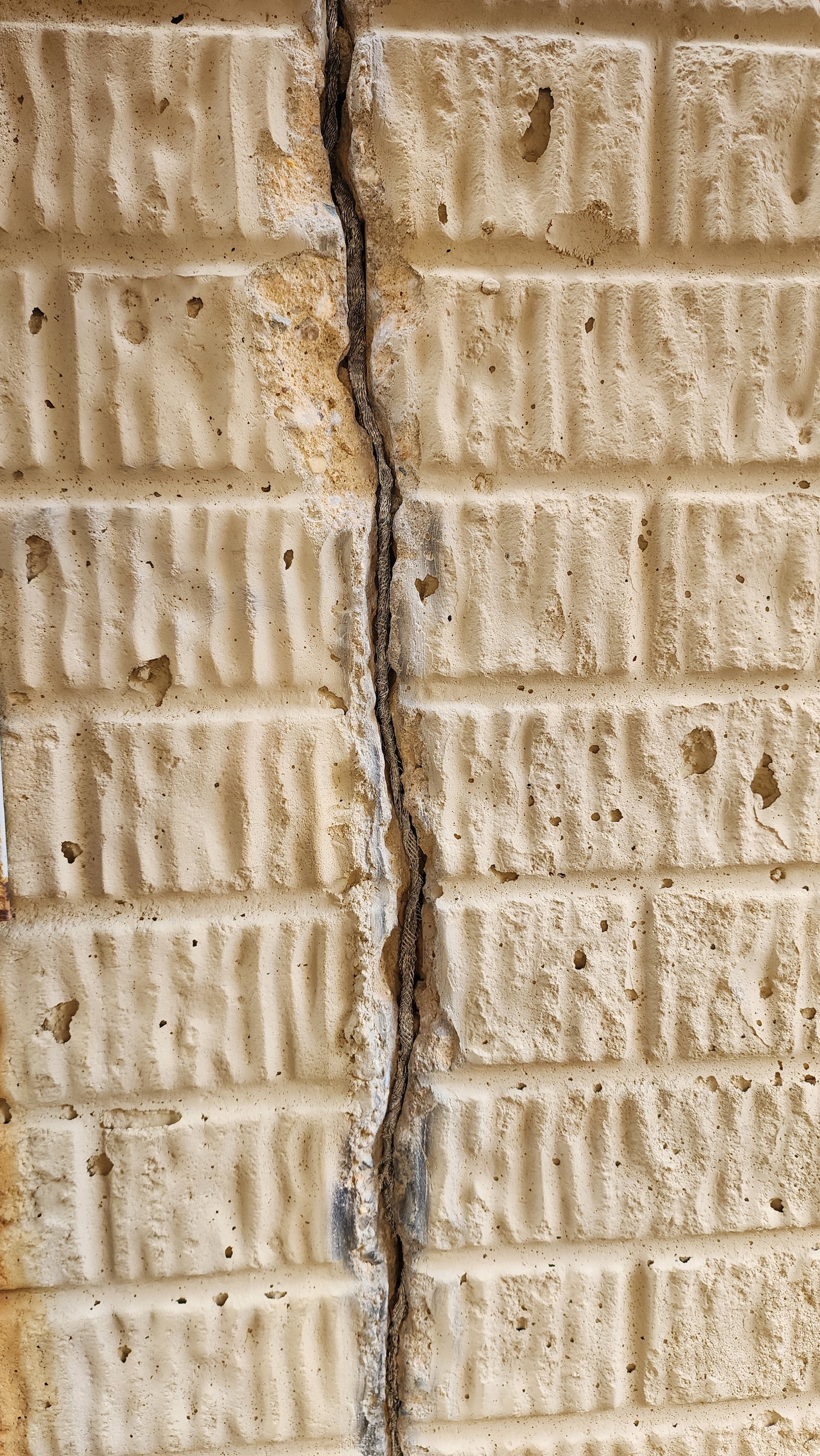
The result is differential settlement: one corner of a foundation drops more than the others, causing diagonal cracks from window corners, sloping floors, and doors that no longer latch. A foundation that settles uniformly, all four corners at the same rate, is less of a structural concern. Differential settlement is what creates structural distress.
OBW addresses settled foundations with pier underpinning, driven below the unstable clay layer to reach competent bearing material. Once the pier is at depth and load is transferred, the settled section is stabilized, and in many cases partially or fully lifted back toward its original position. This work brings decades of Maryland foundation and waterproofing experience to your settlement.
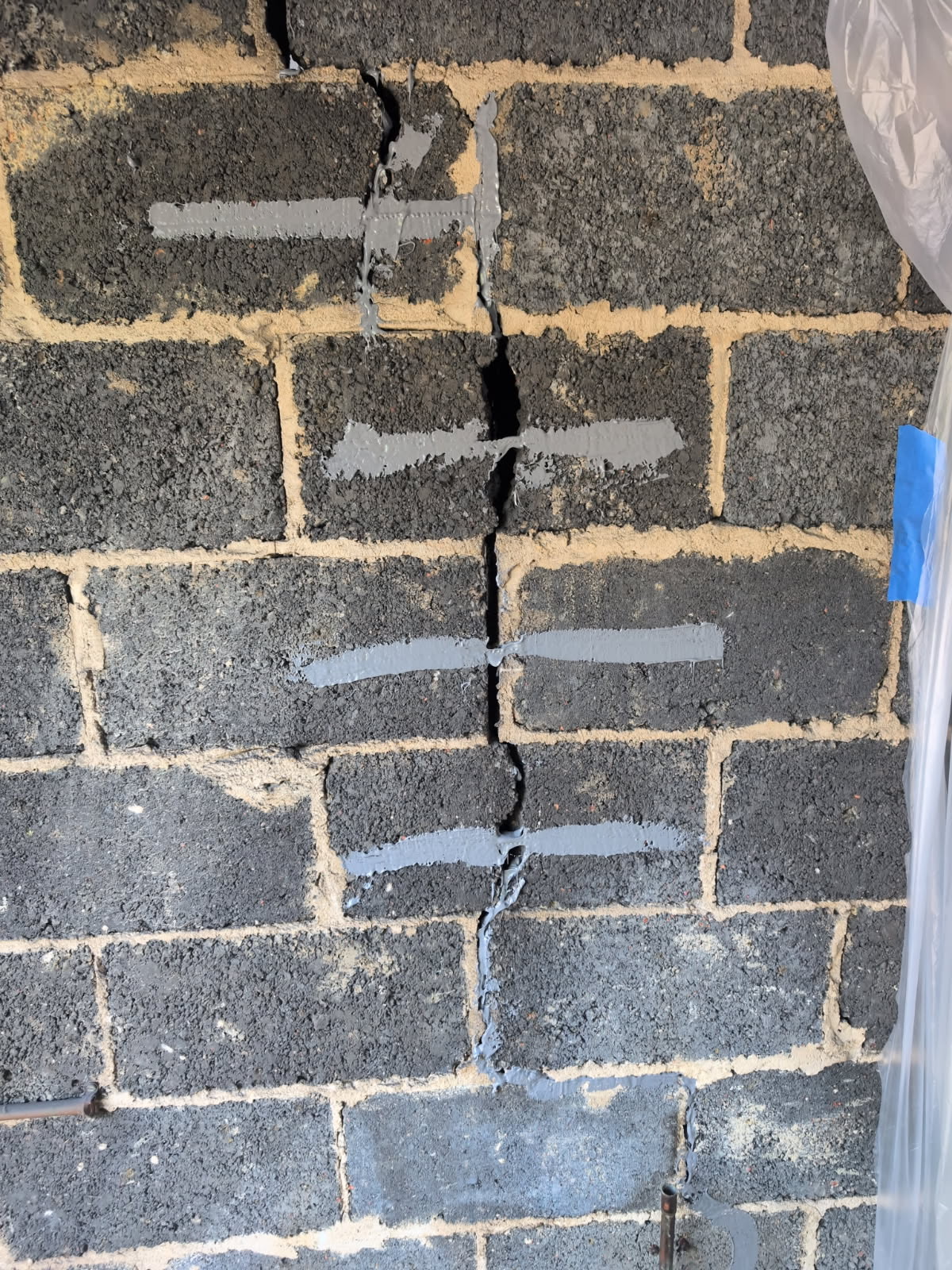
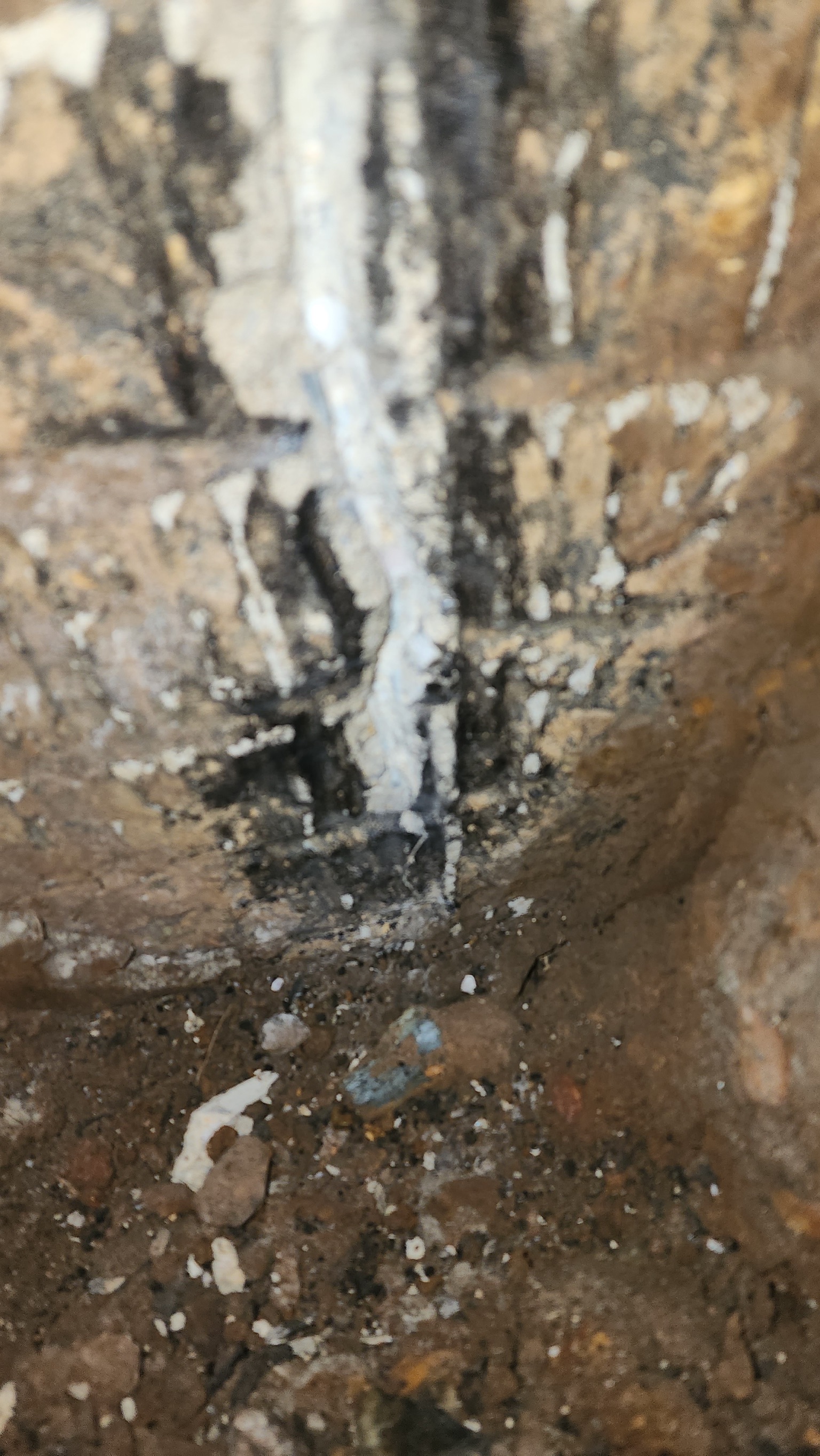
Vertical crack in a block foundation wall, the settlement evidence assessed before piering is specified
Signs Your Foundation Has Settled
Warning Signs That Warrant
a Leveling Assessment
Settlement rarely announces itself as a crack in the foundation first. More often it shows up in the living space before the basement or crawl space becomes obvious.
- Floors that slope noticeably toward an exterior wall or corner
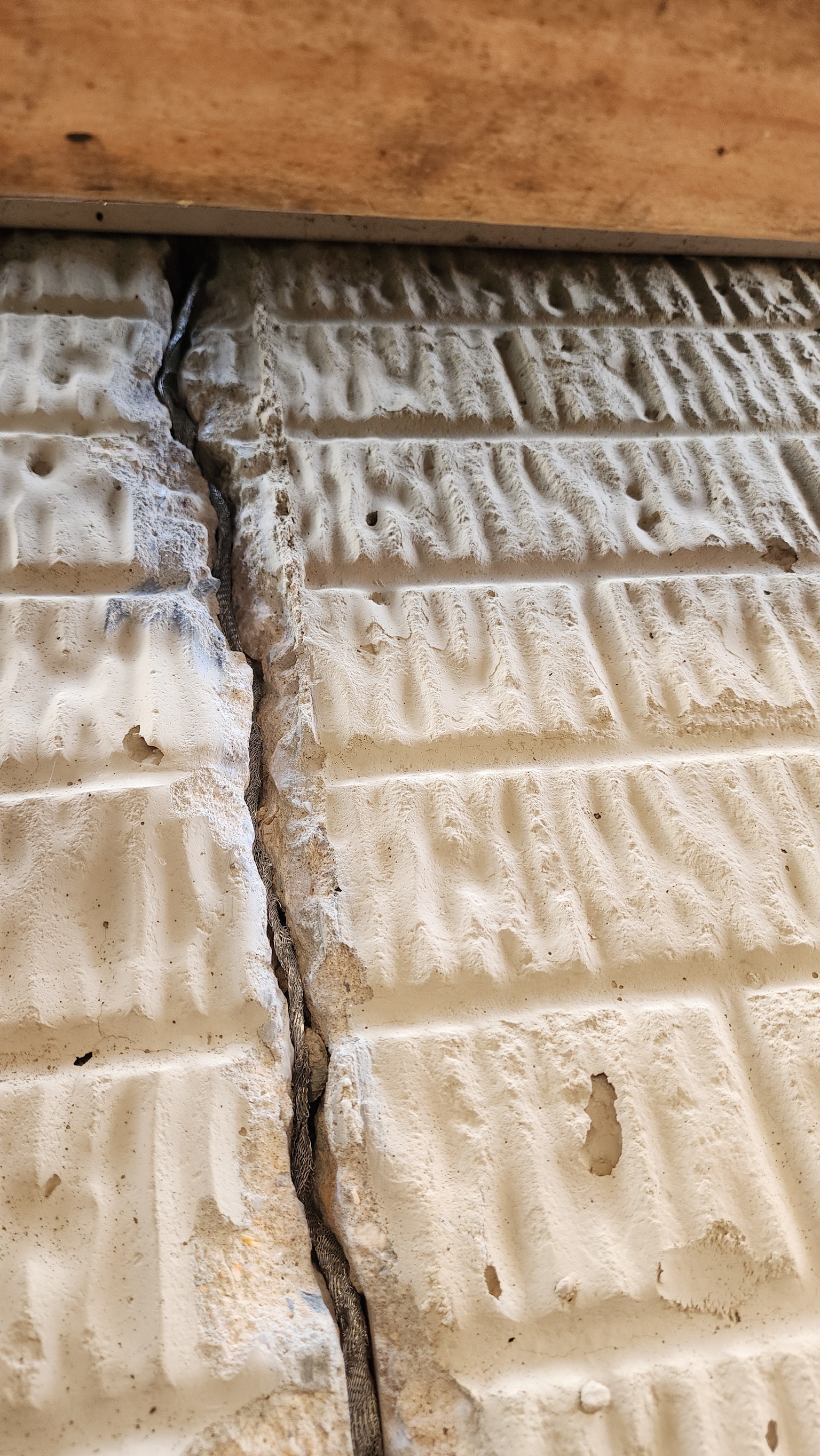
- Diagonal cracks running from the corners of windows and door frames at 45 degrees
- Gaps opening between the foundation wall and the floor slab
- Stair-step cracking in mortar joints of concrete block foundations
- Chimneys or exterior additions pulling away from the main structure
What the Job Includes
OBW's Foundation Leveling Services
Every leveling job starts with a thorough assessment. No pier is installed without a clear diagnosis of cause and a specific plan for that foundation.
Push Pier Installation
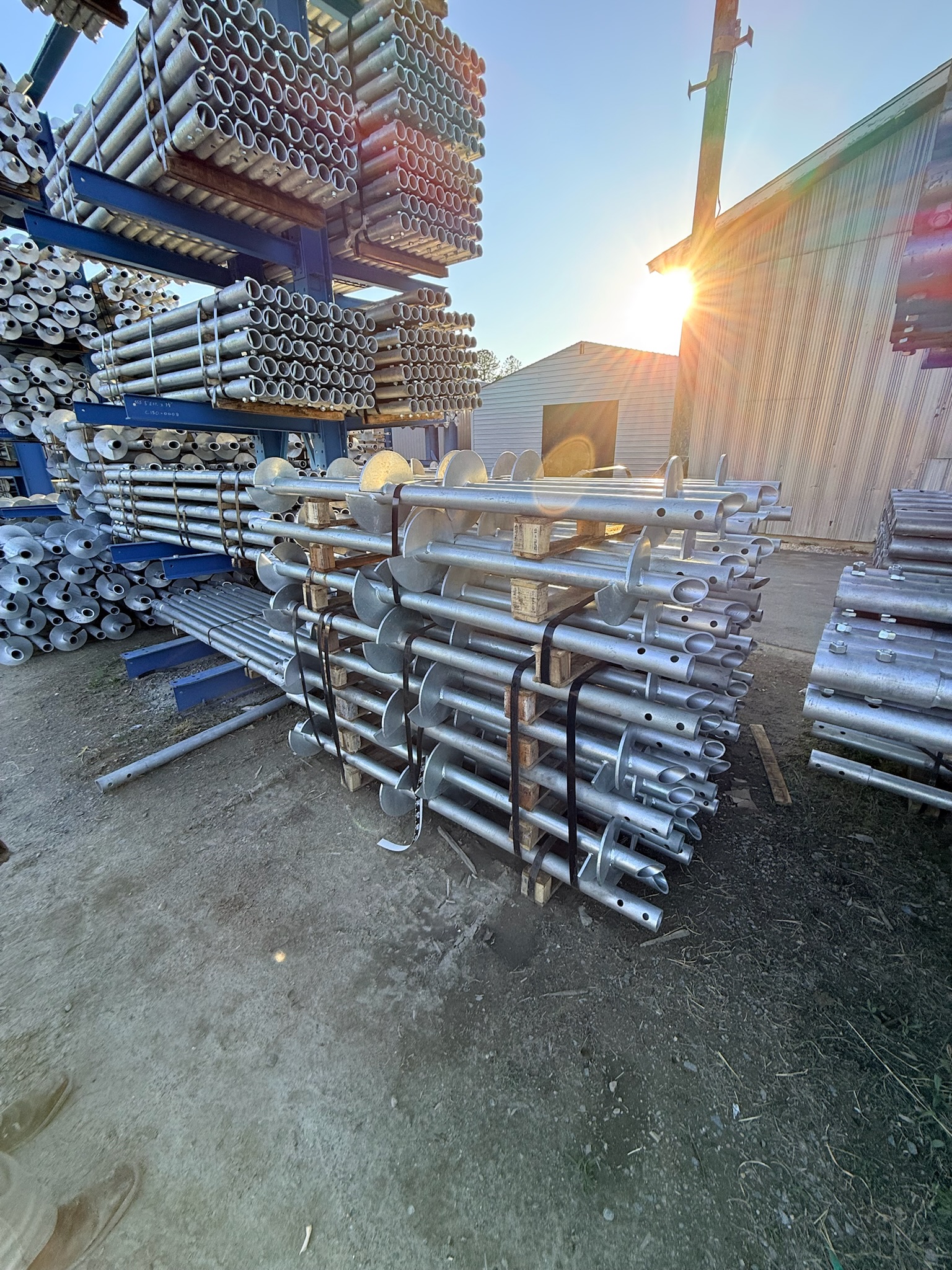
Hydraulically driven steel piers reach competent bearing strata below the unstable soil layer, transferring the foundation load to stable ground.
Footing Bracket & Transfer
Load transfer brackets are attached to the footing at each pier location, distributing the structural load directly to the pier column.
Hydraulic Lift (Where Applicable)
After pier installation and load transfer, hydraulic pressure can raise a settled section back toward its original position, subject to structural assessment.
Written Inspection Report
Settlement pattern documentation before work begins, crack measurements, floor slope readings, and settlement differential. Useful for insurance and real estate disclosure.
Written Workmanship Guarantee
OBW's foundation leveling work carries a written workmanship guarantee; terms vary by service, ask your inspector to confirm the exact terms for your project.
The Process
How OBW Levels a
Settled Maryland Foundation
Foundation leveling follows a fixed sequence, assessment, engineering, installation, and verification. No step is skipped because the previous one looked good.
Settlement Assessment
We measure floor slopes, crack patterns, and differential settlement to determine which areas have moved, how much, and what's causing it.
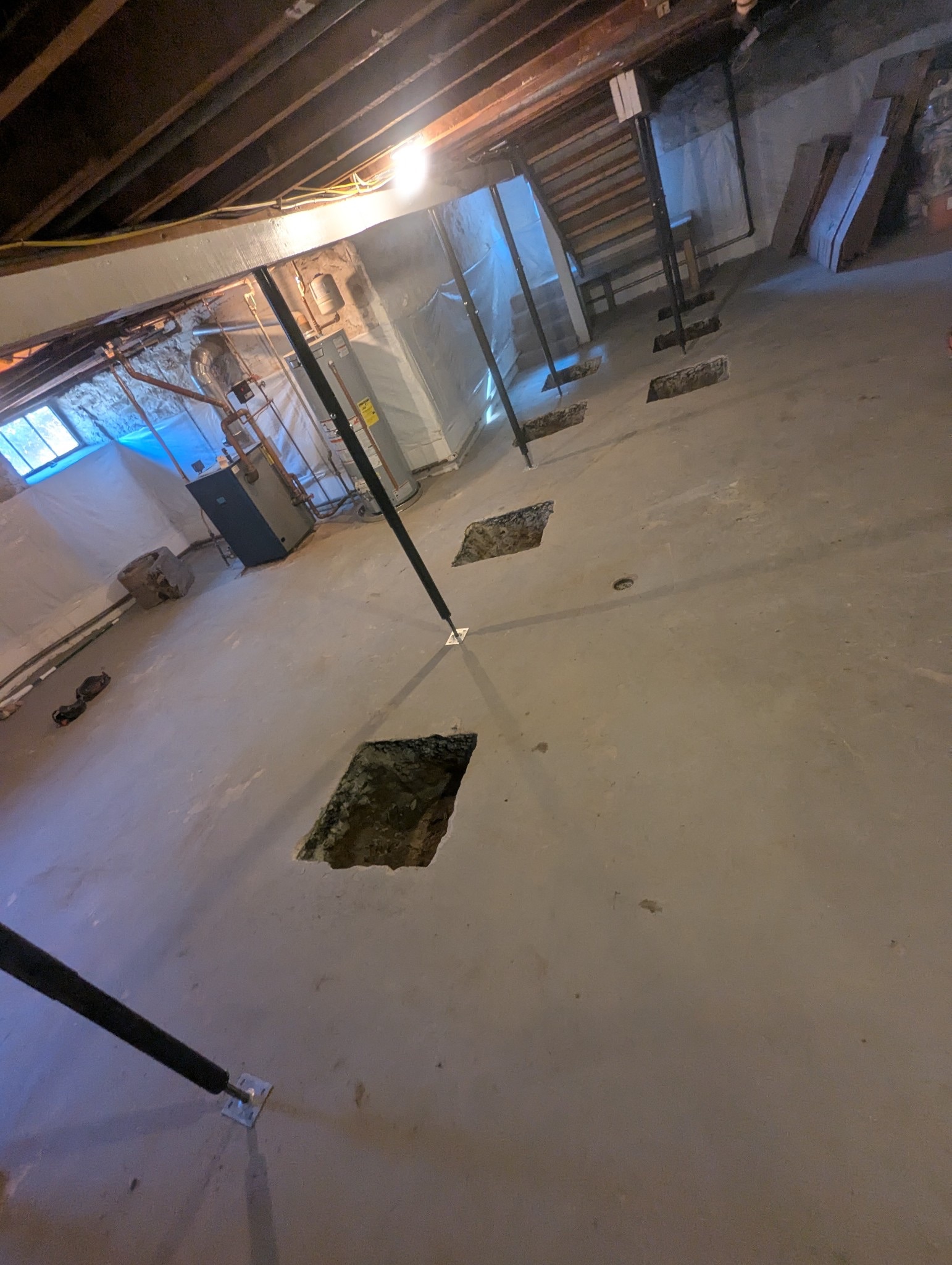
Pier Location Layout
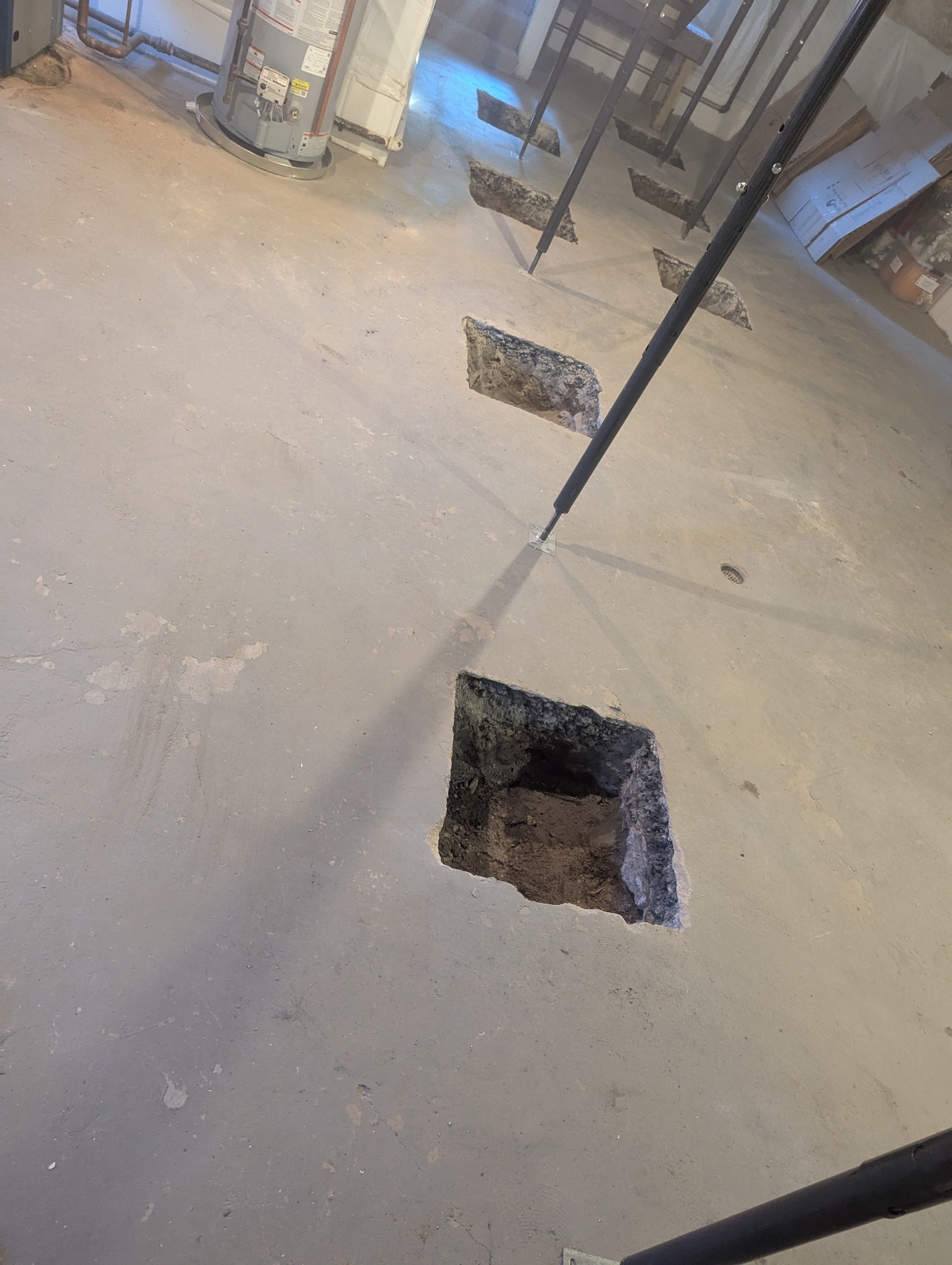
Pier spacing and locations are engineered based on load, span, and soil conditions. Excavation at each pier point exposes the footing.
Pier Installation & Bracket
Piers are driven or screwed to bearing depth, then bracket-connected to the footing. Each pier is load-tested before proceeding.
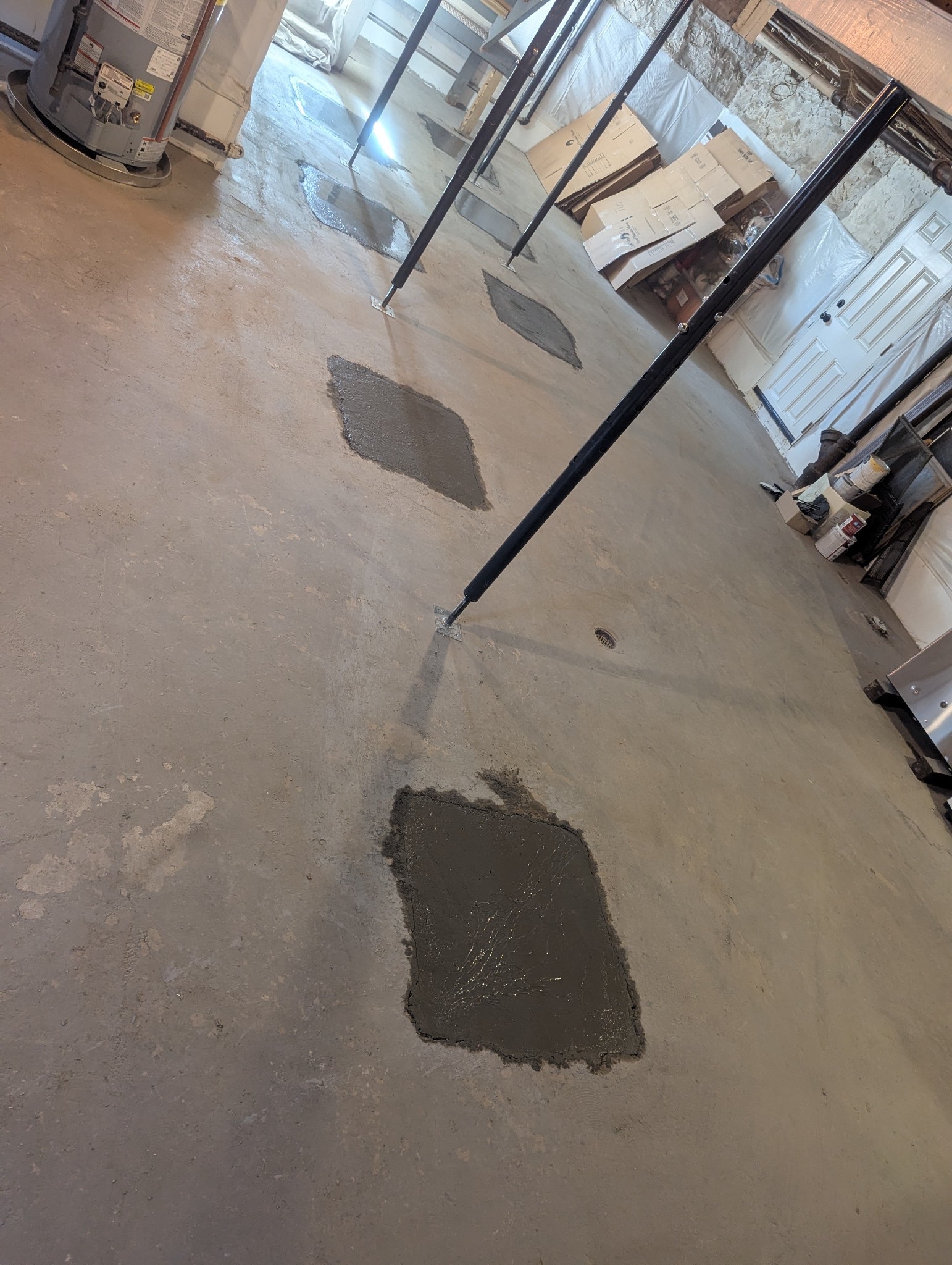
Lift, Verify & Backfill
Hydraulic lift is applied where indicated. Settlement measurements are re-taken and documented. Excavations are backfilled and site is restored.
Photos From the Field
Job Site Photos
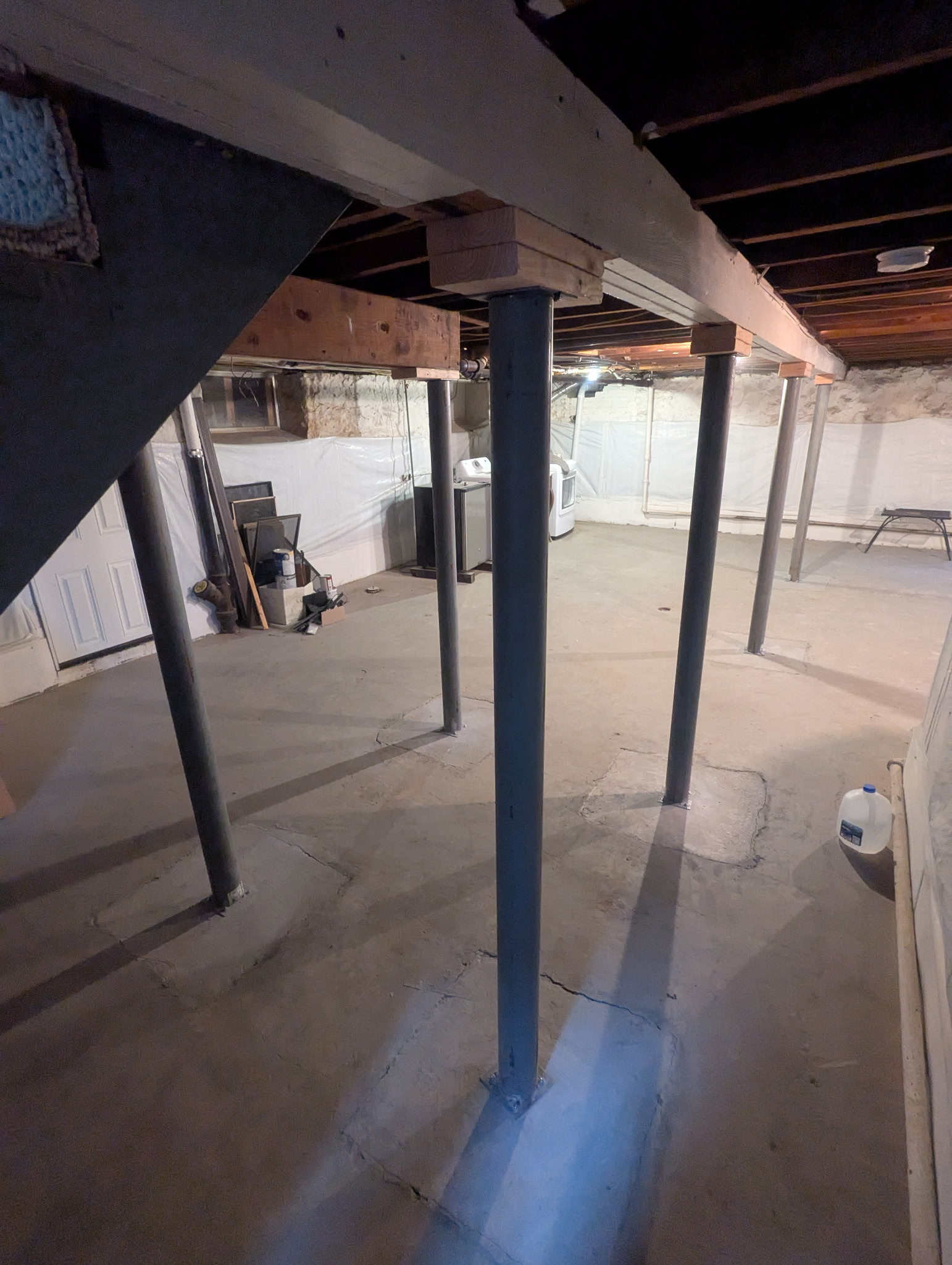
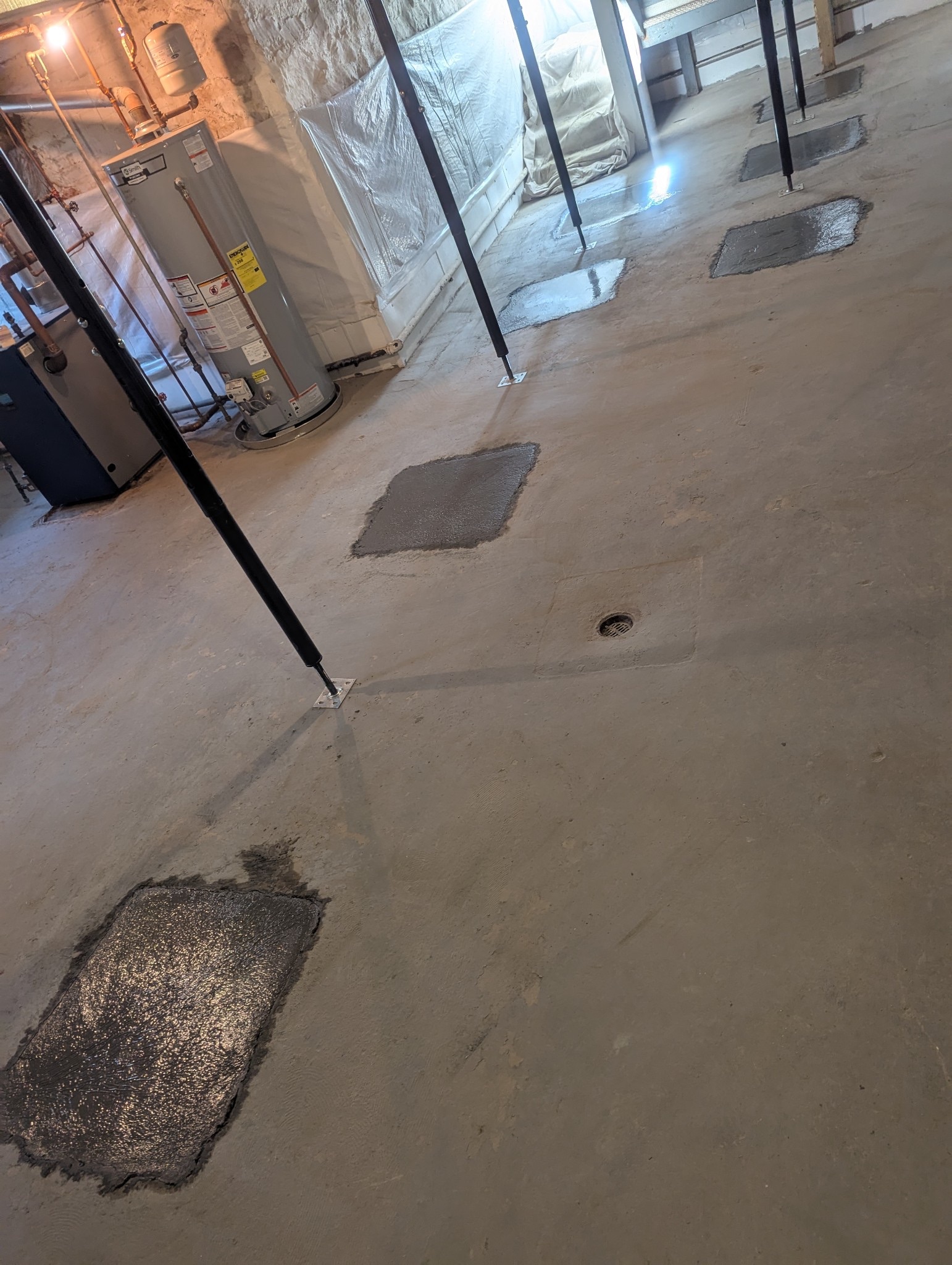
A closer look at the equipment, materials, and job site conditions involved in this kind of work.
Your Questions, Answered Honestly
Foundation Leveling Questions
from Maryland Homeowners
Call (410) 879-3360 with anything not covered here. Our inspectors take a consultative approach and answer your questions.
What causes a foundation to settle in Maryland?
The primary driver in Maryland is the Piedmont clay soil that covers most of the Baltimore region, Harford County, and parts of Carroll and Cecil counties. Clay soils have a significant volumetric change characteristic, they expand when saturated and contract when they dry out. Over decades, this repeated expansion and contraction beneath and around a foundation causes the soil to lose density and consolidate. The foundation above it begins to follow the settling soil downward.
Secondary causes include drainage problems, gutters that discharge near the foundation, improper grading that directs runoff toward the house, or failed downspout extensions. When water concentrates near the footing, it erodes and loosens the bearing soil. Tree root infiltration is a third cause, particularly in older neighborhoods where large trees have grown close to the foundation. Root systems extract moisture from the soil, causing it to dry and shrink unevenly beneath the footing.
Age is a contributing factor in older construction. Many Maryland homes built before 1960 have footings that were sized to standards that didn't fully account for clay behavior. As those footings have been exposed to 60 or 70 years of seasonal soil movement, settlement is common even in homes that were built correctly.
Can a settled foundation actually be leveled back to its original position?
In many cases, yes, partial or full restoration of a settled section is achievable with pier systems. The process involves driving steel piers (push piers or helical piers depending on soil conditions) down through the unstable layer to competent bearing strata. Once the piers are at depth and confirmed to be bearing on stable material, the load of the foundation can be transferred to the piers, and hydraulic lift can be applied to raise the settled section.
The realistic outcome depends on how much settlement has occurred, how long it's been settling, and whether any connected structures (interior walls, plumbing, mechanical connections) have been compromised during the settling process. Lifting a foundation that has been settled for many years can sometimes cause cracking in other areas as the structure readjusts, something OBW's inspectors will assess and discuss with you before recommending a lift.
In some cases, the right answer is stabilization without lift, stopping further movement without trying to reverse it. If a foundation has settled and stabilized, and the structure above it has adjusted, aggressive lifting can introduce new problems. We will tell you honestly which scenario applies to your home.
How many piers does foundation leveling require, and what does it cost?
The number of piers depends on the load that needs to be supported and the linear footage of the settled section. For a typical residential settled corner, four to six piers is common. A longer settled wall section might require eight to twelve or more. Each pier is spaced based on the load-bearing calculation, closer spacing for heavier loads, wider for lighter residential construction.
Foundation leveling is priced individually after inspection. Cost depends on pier count, pier type, depth required to reach competent bearing, and site access conditions, so we provide a written, itemized quote rather than a phone range. We do not quote leveling jobs without measuring.
What's the difference between push piers and helical piers, and which does OBW use?
Push piers are driven hydraulically using the weight of the structure above them as resistance. They work well in most residential applications, particularly where the goal is to transfer load down through soft upper soil layers to deeper bearing strata. They require the structure above to be heavy enough to drive the pier, very light structures can't generate enough downward force.
Helical piers are screwed into the ground using a hydraulic motor. They don't rely on the weight of the structure above, making them appropriate for lighter structures, new construction, or areas where access for a push pier rig is limited. They can also be installed at angles for specific stabilization needs.
OBW's own underpinning work uses push piers. The inspector will assess soil conditions, access, load type, and depth to bearing, and will tell you when a screwed pier system is the better fit and what to look for from a specialist who installs them.
How long does foundation leveling take, and how disruptive is the process?
Most residential foundation leveling jobs take one to three days depending on the number of piers and whether excavation around the footing is required. The pier installation process involves exposing the footing at each pier location, typically by hand digging a small excavation, driving or screwing the pier, attaching the bracket, and then performing the lift. Interior access is usually not required for the installation phase.
Disruption during the job is moderate. There will be excavation equipment and crews working around the exterior of the foundation. Mechanicals that run through the settling section, supply lines, waste lines, HVAC connections, should be inspected before and after any lift. In some cases, a brief service interruption for those systems is necessary.
After the job, excavation areas are backfilled and the site is restored. Any concrete flatwork, stoops, patios, walkways, that was disturbed by the settlement or by the pier installation will need to be addressed after the foundation work is complete. OBW can advise on what surface repairs will be needed once the structural work is done.
Why Oriole
Why Maryland Homeowners Choose
OBW for Foundation Leveling
Leveling work requires experience with Maryland's specific soil conditions. OBW brings 70 years of that experience to every pier installation.
Maryland Clay Expertise
Piedmont clay behavior drives most Maryland settlement problems. OBW has been working in this soil for 70 years.
Honest About Scope
OBW applies decades of Maryland foundation experience to leveling, and we tell you exactly what we can and can't do.
No Subcontracting
OBW's own crew does the work, English-speaking, direct employees. No subcontractors, no handoffs, no communication gaps on structural work.
Written Workmanship Guarantee
Foundation leveling work carries a written workmanship guarantee; terms vary by service, ask your inspector to confirm the exact terms for your project.
Stop the Movement. Restore the Structure.
Three Steps to a Stabilized
Maryland Foundation
Settlement that goes unaddressed gets worse. The repair cost increases as more of the structure distresses. Call before the next wet season.
Free Settlement Inspection
OBW measures floor slopes, documents crack patterns, and identifies the cause of settlement, clay compression, drainage failure, or root intrusion.
Written Pier Plan & Quote
You receive a written, itemized quote specifying pier type, count, locations, and expected outcome. No vague estimates. No pressure to sign the same day.
Installation & Verification
Our crew installs piers, transfers load, performs the lift where applicable, and re-measures to document the result. Written workmanship guarantee upon completion, terms vary by service.
Your Foundation Is Still Moving. Let's Stop It.
Free inspection. Written quote. Honest, consultative guidance. No subcontractors.
Family-owned since 1953 · MHIC #4247 · Written Workmanship Guarantee