
A Homeowner's Guide, Not a Service We Offer
Polyurethane Foam
Void Filling
in Maryland
Filling the empty space beneath a slab to stabilize it, without necessarily lifting it back to grade
Foam void filling injects lightweight expanding foam beneath a slab to fill a confirmed void and stop it from growing. Unlike a foam injection lift, the goal isn't raising the slab's elevation, it's supporting the slab from below where it's lost that support. This guide explains the method. Oriole does not offer foam void filling. Where a slab has dropped or sounds hollow, Oriole's inspectors will diagnose the cause at no charge and explain the options, including mud jacking for a slab lift and push piers where the movement is structural settlement rather than a void.

Filling the Gap, Not Necessarily Lifting the Slab
Void Filling vs.
Foam Injection Lifting
Both methods put the same lightweight expanding foam beneath a slab through small drilled holes. The difference is the goal. A foam injection lift aims to raise a sunken slab back toward its original grade. Void filling has a narrower purpose: filling the empty space beneath a slab and stabilizing the soil condition there, whether or not the slab needs to move.
This distinction matters for a slab that sounds hollow or has a confirmed void but hasn't sunk enough to need a full lift, or where the homeowner's goal is simply to stop the void from growing rather than restore original elevation. Filling the void supports the slab and prevents further movement either way.
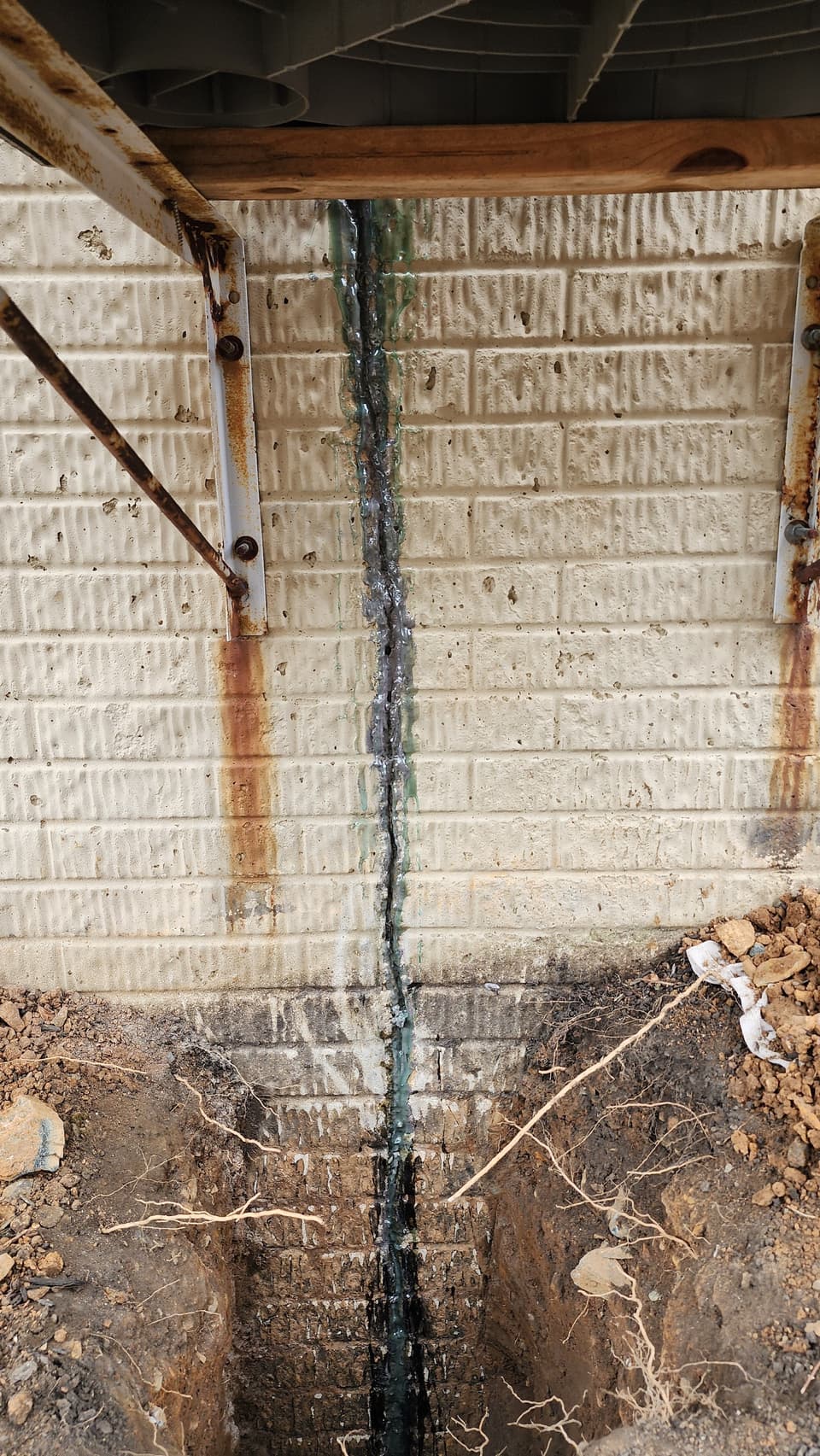
A void beneath a slab, confirmed before any fill work begins
When Filling Is Enough
Signs Void Filling
May Be the Right Fit
- A hollow sound when the slab is knocked on, without visible sinking yet
- A confirmed erosion void that hasn't yet caused enough drop to need a lift
- A goal of preventing further settlement rather than restoring original elevation
What's Included
How a Void Fill
Is Performed
Void Confirmation
An actual void is confirmed beneath the slab, often by sounding it for a hollow response, before filling is considered. What created the void matters as much as the void itself.
Small Access Holes
Small holes are drilled at planned points to reach the void without disturbing the surrounding slab.
Controlled Fill
Lightweight expanding foam is injected to fill the confirmed void and support the slab from below.
Hole Patching
Access holes are patched and finished once the void has been filled.
Common Questions
Void Filling Questions from
Maryland Homeowners
Does Oriole offer foam void filling?
No. Foam work is not part of Oriole's service line, and this page explains the method rather than offering it. Concrete lifting specialists carry the foam and the injection equipment.
The diagnosis is still worth having, and Oriole does that at no charge. A hollow sounding slab over a washed out void is a different problem from a slab moving because the ground under the foundation is settling, and homeowners are frequently sold the wrong one. Where the cause turns out to be structural, that work is Oriole's.
How is void filling different from foam injection lifting (polyjacking)?
Both use the same lightweight expanding polyurethane foam, injected beneath a slab through small drilled holes. The difference is the goal. Foam injection lifting aims to raise a sunken slab back toward its original grade. Void filling aims to fill the empty space beneath a slab and stabilize the soil condition there, without necessarily lifting the slab back to its original elevation.
Void filling is often the right call when a slab sounds hollow when you knock on it, or a void has been confirmed beneath it, but the slab hasn't sunk enough to need a full lift, or lifting it back to original grade isn't the goal. Filling the void stops the slab from being unsupported and prevents the void from growing.
Is void filling a structural underpinning method?
No. Like foam injection lifting, void filling is a concrete and slab support method, filling empty space beneath a slab, not a structural underpinning technique for a settling foundation wall or footing. OBW does not use foam void filling as a substitute for pier based underpinning.
Why Oriole
Why Maryland Homeowners Ask
Oriole to Diagnose a Slab
Void Confirmed First
A void has to be confirmed to exist, and its cause established, before filling it is worth discussing. Oriole diagnoses that first.
No Pressure to Buy Ours
If a foam fill is what your slab needs, you will be told so, including that it is work Oriole does not perform.
No Subcontracting
On the work Oriole does perform, its own crew does it in house, from assessment through the finished repair.
Family-Owned Since 1953
Founded by Frank Pirog Sr. in 1953. Amber Pirog leads the company today.
Hollow-Sounding Slab?
Free inspection. Oriole will confirm whether there is a void, what caused it, and who should address it.
Family-owned since 1953 · MHIC #4247 · Honest, consultative guidance