



So You Found a Crack… Now What?
Finding a new home crack in foundation can shake your confidence. The good news? Not every crack spells disaster.
Quick Assessment Guide for Foundation Cracks in New Homes
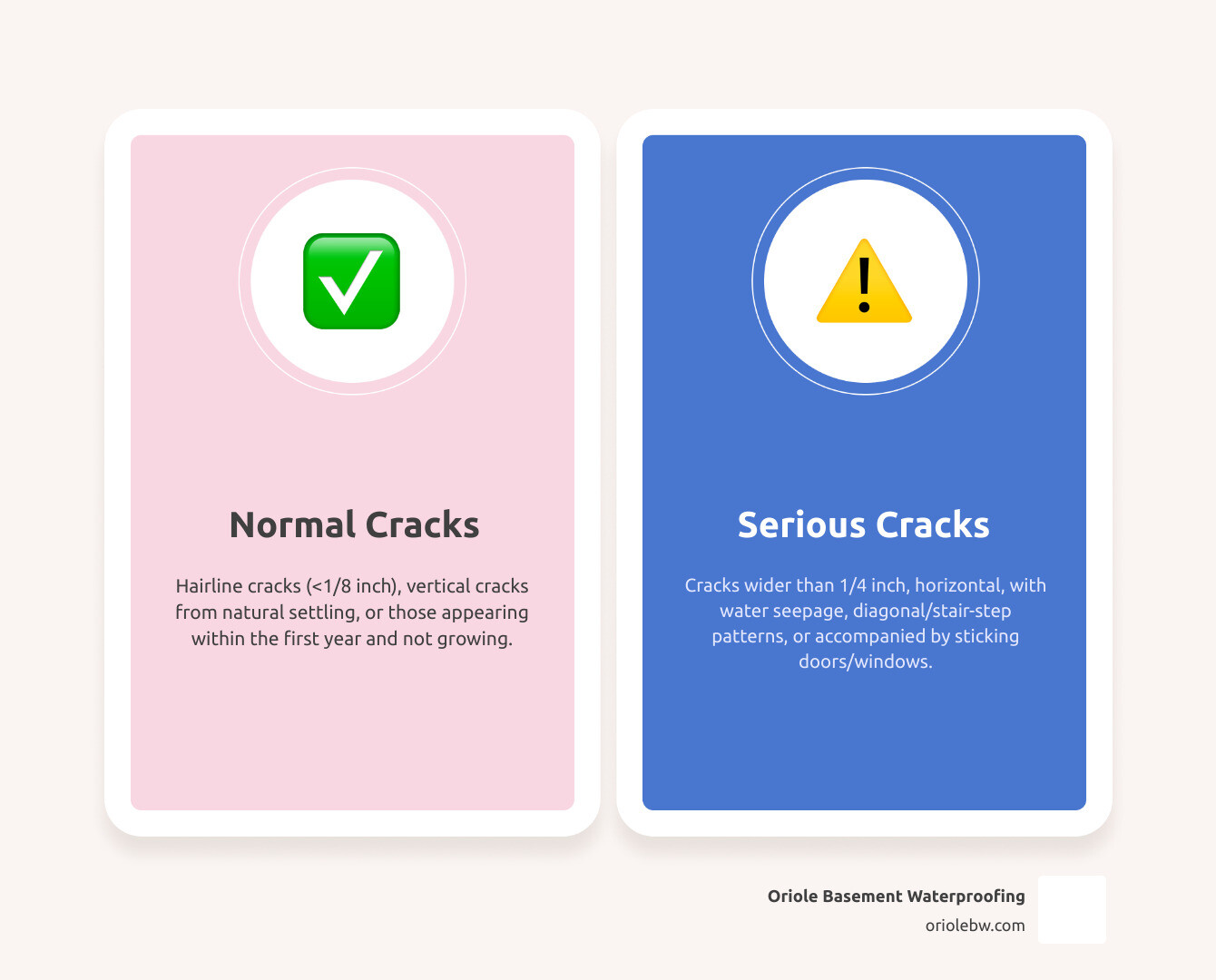
Normal (Monitor Only):
- Hairline cracks less than 1/8 inch wide
- Vertical cracks from natural settling
- Cracks that appear within the first year and don’t grow
Needs Professional Attention:
- Cracks wider than 1/4 inch
- Horizontal cracks (serious structural concern)
- Cracks with water seepage
- Diagonal or stair-step patterns
- Cracks accompanied by sticking doors/windows
You just closed on your new home and spot a thin line on your basement wall. Your stomach drops. Is this normal? Will your house collapse?
Take a breath. As a company that has fixed Maryland foundations for over 70 years, we can tell you: most cracks in new homes are normal. Concrete shrinks as it cures, and the ground settles. Even well-built foundations can develop hairline cracks in the first year.
The key is knowing which cracks are harmless and which need immediate attention. This guide will help you assess what you’re seeing and decide on the next steps.
What to Look For: A Homeowner’s Guide to a New Home Crack in Foundation
Finding a new home crack in foundation is alarming, but not all cracks are created equal. At Oriole Basement Waterproofing, our goal is to help you understand what you’re seeing so you can make informed decisions. We’ve seen it all in Baltimore City, Baltimore County, and Harford County, and we’re here to share our expertise.
Common Causes and Types of Foundation Cracks
Foundations are constantly interacting with the environment, which can lead to cracks, especially in a new home.
Let’s explore the most common culprits:
- Concrete Shrinkage: This is the most common cause of cracks in new homes. As concrete cures, water evaporates, causing it to shrink. This natural process creates stress that can lead to small cracks.
- Soil Settlement: Your new home is heavy, and the soil beneath it needs time to compact under the weight. This settlement process is normal, but if it happens unevenly, it can stress the foundation and cause cracks.
- Hydrostatic Pressure: This is a fancy term for water pressure. In our Maryland climate, heavy rain can saturate the soil. If drainage is poor, this water exerts immense pressure on the walls, which can cause them to crack or even bow inward.
Now, let’s talk about the different appearances these cracks can take:
- Hairline Cracks: Typically less than 1/8 inch wide, these are often cosmetic and result from concrete curing. We consider these low urgency, but they should be monitored.
- Vertical Cracks: These run up and down the wall. They generally indicate normal house settlement and are less serious than horizontal cracks.
- Diagonal Cracks: Running at an angle, these can suggest uneven settlement. If they are wider than a few millimeters, it’s a sign of moderate to high urgency.
- Horizontal Cracks: These are the most concerning. Running horizontally, they are almost always a sign of a serious issue, like hydrostatic pressure. A horizontal crack requires immediate professional assessment.
- Stair-Step Cracks: Common in block foundations, these follow the mortar joints. They often indicate that one part of the foundation is settling more than another.
To help you quickly identify what you’re dealing with, here’s a table summarizing these crack types:
| Crack Type | Common Appearance | Typical Causes | Typical Severity Level |
|---|---|---|---|
| Hairline | Very thin, < 1/8 inch wide | Concrete shrinkage, normal settling, curing process | Low (Cosmetic) |
| Vertical | Runs straight up/down | Normal house settlement, minor foundation movement | Low to Moderate |
| Diagonal | Runs at an angle (often 45-degree) | Uneven settlement, shifting soil, poor soil compaction, moisture changes | Moderate to High |
| Horizontal | Runs across the wall | Hydrostatic pressure, expansive soil pushing inward | High (Structural) |
| Stair-Step | Follows mortar joints in blocks/bricks | Differential settlement, soil pressure | Moderate to High |
Normal Settling vs. Serious Structural Issues
How do you tell the difference between a harmless blemish and a serious problem? It comes down to size, direction, and other symptoms.
- Crack Width: Hairline cracks (less than 1/8 inch) are typically cosmetic. However, if a crack is wider than 1/4 inch, it warrants professional attention. Cracks over 1 inch are very severe.
- Crack Direction: Vertical cracks are usually less concerning. A horizontal crack, especially if the wall is also bowing inward, is a serious red flag indicating structural movement.
- Water Intrusion: If water is seeping through a crack, it’s no longer just a cosmetic issue. This can lead to water damage, mold, and further structural problems. Water is the enemy of your foundation.
- Monitoring Cracks: The best way to know if a crack is a problem is to monitor it. Take pictures, measure it, and mark the ends with a pencil and date. If it’s growing or widening, it’s time to call us. You can learn more about understanding crack severity in our comprehensive Foundation Crack Complete Guide.
If you are curious about what is considered a “normal” crack in the building industry, the National Association of Home Builders has a helpful summary on common crack misconceptions in new homes: Misconceptions About the Common Crack.
Warning Signs a New Home Crack in Foundation Needs a Pro
If you spot a new home crack in foundation and notice any of these accompanying signs, it’s a strong indicator that professional help is needed:
- Sticking Doors and Windows: Have you noticed doors and windows that used to open smoothly are now getting stuck? If this is happening across one side of your house, it’s a strong sign of foundation shift.
- Sloping Floors: Do you feel like you’re walking on an incline in certain rooms? An uneven or sloping floor is a classic symptom of foundation issues.
- Gaps in Walls, Ceilings, or Floors: Look for gaps between walls and ceilings, or where baseboards meet the floor. These separations can mean your home’s structure is shifting.
- Bowing Walls: If a basement wall bulges inward, especially with horizontal cracks, it’s a critical sign of external pressure and potential structural failure.
- Dampness or Leaks: Any water intrusion, damp spots, or musty odors in your basement can be linked to foundation cracks. Our Basement Crack Repair Guide offers more details on these issues.
If you’re noticing any of these warning signs in your Baltimore City, Baltimore County, or Harford County home, please don’t hesitate to reach out.
Your Next Steps: Repair, Prevention, and Peace of Mind
Once you’ve determined your new home crack in foundation needs more than monitoring, it’s time for professional intervention. At Oriole Basement Waterproofing, we provide lasting solutions and peace of mind to our Maryland neighbors.
Professional Repair Methods for Foundation Cracks
When a crack is more than cosmetic, we employ engineering-backed solutions. Here are some of the effective methods we use:
- Crack Injections (Epoxy and Polyurethane): For leaking or moving vertical/diagonal cracks, injection is highly effective. Epoxy Injection structurally re-bonds the concrete, restoring its strength. Polyurethane Injection is a flexible material that expands to create a watertight seal, perfect for active leaks. You can learn more about this process in our Crack Injection Repair guide.
- Carbon Fiber Straps for Bowing Walls: When hydrostatic pressure causes walls to bow, carbon fiber straps provide incredible reinforcement. These straps are applied to the interior wall to stabilize it and prevent further movement.
- Wall Stabilization & Other Repairs: Beyond straps, we offer comprehensive wall stabilization. Our expertise also covers sill plate replacement, support beam replacement, lolli column replacement, floor joist replacement, sub floor replacement, and other structural repairs to restore your home’s integrity. You can explore more about our approaches in our 5 Foundation Repair Methods article.
Understanding Repair Costs and Insurance Coverage
The cost to repair a new home crack in foundation varies.
- Repair Costs: Minor injection repairs might range from $250 to $800. Major structural work for bowing walls or settlement can range from $2,000 to over $6,000. For serious issues, we partner with a structural engineer to ensure an accurate diagnosis and a permanent solution.
- Homeowner’s Insurance: Most policies do not cover foundation repair from settling, soil movement, or hydrostatic pressure. Coverage is usually limited to damage from a “covered peril” like a fire or falling tree. Always check your specific policy.
- Long-Term Implications of Ignoring Cracks: Foundation damage only gets worse. Ignoring a serious crack can lead to more extensive structural damage, water infiltration and mold, decreased property value, and potential health hazards. The best time to fix a foundation is now. To learn more, check out our guide on What to Do If Your Foundation Needs Repair.
For a neutral overview of how home insurance typically treats foundation issues, you can also review this summary from the Insurance Information Institute: Homeowners Insurance Coverages.
Preventing Future Issues with Your New Home Crack in Foundation
Prevention is always better (and cheaper!) than repair. Here are our top tips for homeowners:
- Proper Drainage & Grading: This is the most crucial step. Ensure the ground slopes away from your home (at least 6 inches of fall in the first 10 feet) to direct rainwater away.
- Gutter Maintenance: Keep gutters clean and add downspout extensions that carry water at least four feet away from the foundation. This simple step is highly effective.
- Smart Landscaping & Moisture Control: Plant trees and large shrubs at least five feet away from the foundation. In dry spells, a soaker hose can help maintain consistent soil moisture around the home.
- Interior Systems: A sump pump with an interior drainage system is the best defense against hydrostatic pressure. For crawl spaces, encapsulation with a vapor barrier and dehumidifier helps prevent moisture problems and can support a more stable environment around the foundation.
At Oriole Basement Waterproofing, our encapsulation and foundation repairs come with a lifetime transferable guarantee. We believe in creating strong, dry foundations. If you’re concerned about a crack in your new home, our team is ready to help with a free inspection. Give us a call today to protect your biggest investment. For more information on protecting your home, visit our Waterproofing Foundation Cracks page.