



That Little Crack in Your Basement: A Bigger Deal Than You Think
Waterproofing foundation cracks requires professional injection methods to create a permanent seal. Here’s what you need to know:
Quick Solutions for Foundation Crack Repair:
- Non-structural cracks: Polyurethane injection for a flexible, waterproof seal.
- Structural cracks: Epoxy injection plus carbon fiber reinforcement.
- Moving cracks: Professional assessment before any repair.
- Static cracks: Direct injection after proper cleaning.
Note: Surface sealants like caulk or hydraulic cement typically fail within months.
A homeowner in Baltimore County recently called us about a “tiny” crack. After the next big Maryland downpour, she was standing in two inches of water. That’s the thing about foundation cracks-they’re rarely as harmless as they look. What starts as a hairline fracture can become a water highway during our heavy rains and freeze-thaw cycles.
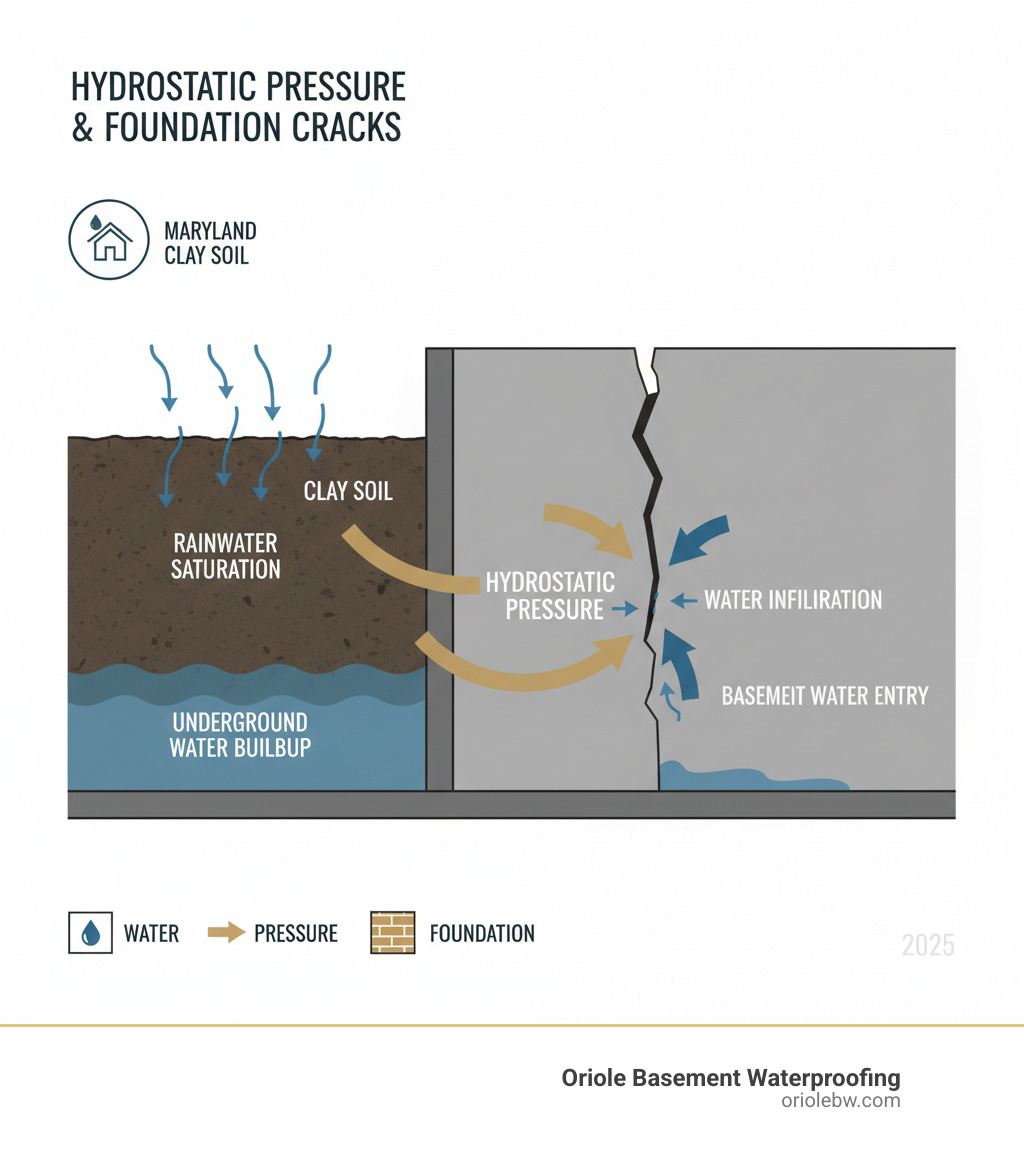
Concrete is porous, and when hydrostatic pressure from wet soil pushes against your foundation, water finds every weakness. That innocent-looking crack is an invitation for water damage, mold, and structural issues. Research shows 90% of foundation crack repairs use polyurethane injection because it creates a flexible seal that moves with your concrete as Maryland’s clay soil expands and contracts.
The good news is that proper waterproofing can stop the problem permanently, but only if you choose the right approach.
Understanding and Identifying Foundation Cracks
Here’s what we’ve learned after seven decades of fixing foundations in Maryland: every crack tells a story. Understanding what you’re looking at – and more importantly, what caused it – is the first step in waterproofing foundation cracks effectively.
Common Causes of Cracks in Maryland Foundations
After 70 years of working in Baltimore City, Baltimore County, and Harford County, we’ve seen the same culprits show up again and again.
Hydrostatic pressure is our biggest troublemaker. Heavy rains saturate Maryland’s clay soil, creating immense pressure that pushes water through porous concrete, leading to leaks and even bowing walls.
Freeze-thaw cycles are another Maryland specialty. Water enters small cracks, freezes, and expands, acting like a tiny jackhammer that widens the flaw year after year.
Soil settlement happens as a house settles. If water erodes soil under one section, it can sink faster than the rest, causing stair-step or diagonal cracks.
Concrete curing can also be a factor. As new concrete dries, it can form hairline shrinkage cracks, which are often the first entry points for water.
For a deeper dive into why these cracks appear specifically in Maryland homes, check out our detailed guide on Maryland crack causes and solutions.
Decoding the Cracks: Structural vs. Non-Structural
Not all cracks deserve the same level of concern. Some are minor, while others signal that your foundation needs immediate professional attention.
Non-structural cracks are often the result of concrete shrinkage. These typically appear as vertical cracks less than 1/8 inch wide. While they won’t threaten your home’s stability, they are pathways for water and should be sealed.
Structural cracks tell a different story. Horizontal cracks are almost always serious, meaning water pressure is causing your wall to bow inward. We treat these as urgent repairs.
Stair-step cracks follow mortar joints in block foundations and typically indicate that one part of your foundation is settling faster than another. They require professional evaluation.
Wide vertical cracks (over 1/8 inch) or any crack that’s growing also fall into the structural category.
| Feature | Non-Structural Cracks | Structural Cracks |
|---|---|---|
| Width | Typically < 1/8 inch | Typically > 1/8 inch, or widening over time |
| Direction | Vertical, diagonal (hairline) | Horizontal, wide vertical, stair-step |
| Cause | Curing shrinkage, minor settlement | Uneven settlement, hydrostatic pressure, frost heave |
| Water Intrusion | Possible | Highly likely, often with visible leaks |
| Repair Needs | Sealing, waterproofing | Reinforcement, stabilization, waterproofing |
Don’t just look at the cracks. Bowing walls, sticking doors, or new drywall cracks can all signal foundation movement and point to a bigger problem.
The Dangers of Ignoring Foundation Cracks
Foundation problems don’t improve with time; they just get more expensive. Ignoring a crack can lead to:
Water damage: Even a hairline crack can channel surprising amounts of water during Maryland’s heavy rains, flooding basements and destroying belongings.
Mold growth: Maryland’s humidity and water intrusion create perfect conditions for mold. Beyond the musty odors, mold can cause health issues. For comprehensive mold remediation, we work with our trusted partners at Raven Mold.
Structural damage: Untreated structural cracks can compromise your home’s stability, causing walls to bow, shift, and fail. This can decrease your property value and affect everything from your floors to your roof.
Pest entry: Cracks are highways for insects, rodents, and other unwelcome guests.
The Basement Health Association emphasizes how crucial a healthy basement is for your entire home. Taking action when cracks are small protects your investment and your family.
Want to learn more? Our guide on protecting homes from water in the foundation covers the steps every homeowner should know.
The Professional Approach to Waterproofing Foundation Cracks
When it comes to waterproofing foundation cracks, the difference between a temporary patch and a permanent solution is professional expertise. Our team at Oriole Basement Waterproofing has been protecting homes across Baltimore City, Baltimore County, and Harford County for decades, and we know a true repair addresses the root cause.
Why DIY Fixes Often Fail for Waterproofing Foundation Cracks
We understand the allure of a quick DIY fix, but when it comes to foundations, surface sealants often fall short.
Here’s why many DIY approaches fail:
- Surface-Level Solutions: Products like caulk or hydraulic cement only cover the surface. They don’t penetrate the crack and can’t withstand hydrostatic pressure.
- Rigidity vs. Flexibility: Concrete expands and contracts. Rigid patches can’t flex with this movement, so they crack and fail, often right next to the original repair.
- Improper Adhesion: DIY products need a perfectly clean, dry surface, which is rare in a damp basement. This leads to poor bonding and early failure.
- Misdiagnosis: It’s easy to mistake a serious structural crack for a simple leak. Using the wrong material on a structural issue can be dangerous.
As one industry professional put it, “Foundation repairs are not a wise or safe place for most DIY attempts.” When your home’s foundation is at stake, professional intervention is critical. For more on when to call in the pros, see what to do when your foundation needs repair.

Choosing the Right Professional Method for Waterproofing Foundation Cracks
We don’t use one-size-fits-all fixes. We assess each crack to determine the best, most permanent solution based on its type, cause, and whether it’s moving or static.
Here are the primary professional methods we employ:
- Polyurethane Injection:
- What it is: A flexible, expanding foam injected directly into the crack.
- When we use it: This is our go-to for non-structural, leaking cracks (90-95% of cases). Its flexibility allows it to move with the concrete, maintaining a watertight seal.
- Advantages: It expands to fill the entire crack and remains flexible, preventing new leaks as the foundation shifts.
- Epoxy Injection:
- What it is: A strong, rigid material that bonds concrete back together.
- When we use it: For structural cracks that need to be bonded to restore the concrete’s strength (5-10% of cases).
- Advantages: It provides immense structural strength, often making the repaired area stronger than the original concrete.
- Carbon Fiber Reinforcement:
- What it is: Incredibly strong, thin straps adhered to the foundation wall.
- When we use it: For structural reinforcement, particularly for bowing walls. It is always used with epoxy injection to create a rigid, stable repair. Carbon fiber is 10 times stronger than steel.
- Advantages: Provides superior strength against inward pressure and is far less intrusive than steel beams.
The best repair method is determined by a thorough inspection from our certified technicians. Our engineering-backed solutions ensure long-term stability. You can learn more about our various foundation repair methods.

What to Expect from a Professional Repair & Lifetime Warranty
When you choose Oriole Basement Waterproofing, you’re getting a comprehensive solution with white-glove service. We make the process seamless for homeowners in Baltimore City, Baltimore County, and Harford County.
Here’s what you can expect:
- Thorough Inspection: Our certified project managers conduct a detailed, free, no-obligation inspection to identify the crack’s cause and assess your entire foundation and drainage.
- Customized Solution: We recommend the most effective repair, whether it’s injection, carbon fiber straps, or other services like sill plate or support beam replacement. We partner with structural engineers on major repairs.
- Expert Repair & Cleanup: Our technicians carefully prepare the area, use specialized equipment for a precision repair, and leave your property cleaner than we found it.
- Holistic Approach: We assess drainage, grading, and humidity to address the root cause, ensuring you never chase a recurring problem.
- Lifetime Transferable Warranty: We stand behind our work. Our foundation repairs come with a transferable lifetime guarantee, adding significant value and peace of mind to your home.
Don’t let a small crack turn into a major structural nightmare. We’re here to be your trusted partner for creating strong, dry, and healthy foundations.
Ready to seal the deal on those pesky foundation cracks? Get a free, no-obligation foundation repair inspection today!