



So You Found a Crack in Your New Basement? Here’s What to Know.
New basement floor cracks can be alarming, but most are a normal part of the concrete curing process and don’t signal a disaster. Here’s a quick guide to understanding what you’re seeing.
Quick Answer: Should You Worry?
- Hairline cracks (< 1/8 inch): Usually normal shrinkage. Monitor them, but no immediate action is needed.
- Wider cracks (> 1/8 inch): Should be sealed to block water, moisture, and radon gas.
- Uneven, growing, or leaking cracks: Call a professional foundation specialist right away.
- Cracks reaching the walls: This is a potential sign of foundation settlement. Get an inspection immediately.
All concrete cracks as it shrinks and dries, typically within the first year. While some of these cracks are just cosmetic, others can be early warnings of soil settlement, poor drainage, or installation issues that need attention.
This guide will help you tell the difference between a normal shrinkage crack and a serious structural problem. You’ll learn what causes them, when to seal them, and when it’s time to call a foundation specialist. By the end, you’ll know what your basement floor is trying to tell you.
Decoding Your New Basement Floor Cracks: What’s Normal and What’s Not?
Finding a crack in a new basement floor is unsettling, but here in Maryland, we’ve seen it all. The key is to understand what the crack is telling you about your foundation.
Common Causes of Cracks in a New Floor
Several factors contribute to new basement floor cracks, often working in combination.
- Concrete Shrinkage: This is the most common cause. As new concrete dries and cures, the water in it evaporates, causing it to shrink. This natural contraction creates stress, which is relieved by forming small, hairline cracks. The American Concrete Institute has more on this process.
- The Concrete Mix: A mix with too much water will shrink more as it dries, leading to weaker concrete that’s more prone to cracking.
- Installation Practices: Concrete that dries too quickly can develop surface cracks. Also, if control joints (planned grooves meant to guide cracks) are not cut soon enough, random cracks will appear across the floor.
- Site Preparation: The ground beneath your slab must be stable. If the soil wasn’t properly compacted, it can settle unevenly, causing the concrete floor to crack. This is a particular concern with the expansive clay soils we sometimes see in Baltimore County.
How to Tell Harmless Shrinkage from Serious Structural Cracks
Not all new basement floor cracks are cause for alarm. Here’s how to tell the difference.
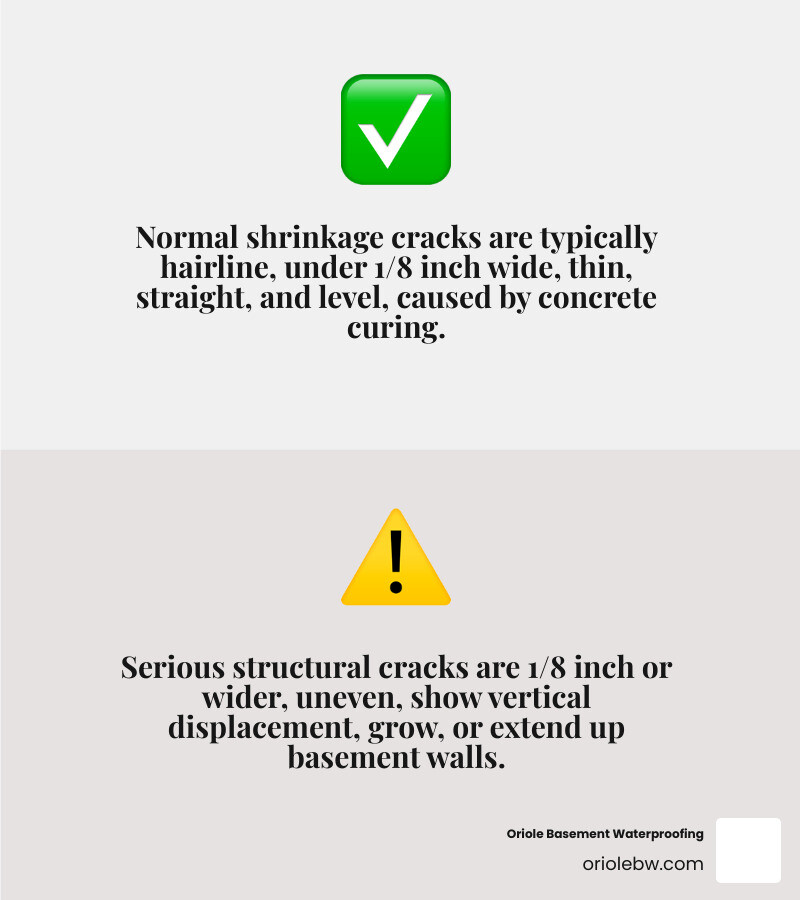
Hairline cracks (less than 1/8 inch wide) are typically harmless shrinkage cracks. While they don’t usually indicate a structural problem, sealing them is a good idea to prevent moisture and radon from entering.
Pay closer attention to these red flags:
- Width: Cracks that are 1/8 inch or wider should be sealed. If a crack is 1/4 inch or wider, it’s a definite cause for concern and needs a professional assessment.
- Unevenness: If one side of the crack is higher than the other (vertical displacement), it’s a major red flag. This indicates the ground beneath has shifted and the slab has settled unevenly.
- Heaving: An upward bulge in the floor is known as heaving. This is often caused by expansive clay soils, common in parts of Maryland, and requires immediate professional attention.
- Cracks Extending to Walls: A crack that runs from the floor up a foundation wall is a strong indicator of a larger problem, suggesting the foundation itself could be settling.
- Growth: An “active” crack that is getting longer or wider over time is always a concern.
Your basement floor doesn’t support your house, but its cracks can be symptoms of a larger foundation problem. That’s why knowing these differences is so important.
The Risks of Ignoring New Basement Floor Cracks
Thinking “out of sight, out of mind” with basement cracks can lead to bigger, more expensive problems. Here’s what you risk by ignoring them:
- Water Intrusion: Cracks are direct pathways for water. During heavy Maryland rains, hydrostatic pressure can force water from saturated soil right through these openings, leading to leaks and a damp basement.
- Mold Growth: Persistent moisture creates a perfect environment for mold, which can harm your home’s air quality and your family’s health.
- Radon Gas: Cracks can also be an entry point for radon, a naturally occurring radioactive gas. The EPA recommends sealing foundation cracks to prevent this health risk. You can find more information on local radon zones here.
- Impeded Basement Finishing: Never finish a basement with unaddressed cracks. Building over a damp, unstable floor will ruin your investment and lead to mold, damaged materials, and costly tear-outs.
- Worsening Structural Problems: While most floor cracks aren’t structural, those that are (uneven, growing, or extending to walls) point to foundation issues that will only get worse and more expensive to fix over time.
When to Call a Foundation Specialist
So, when is it time to stop monitoring and make the call? You should contact a foundation specialist like us if you see any of the following:
- Cracks 1/8 inch or wider, especially if they reach 1/4 inch.
- Growing cracks that are getting longer or wider.
- Uneven floors where one side of the crack is higher than the other.
- Water seepage or dampness coming from a crack.
- Cracks extending up the basement walls from the floor.
- Multiple cracks that appear suddenly.
If you notice these signs, it’s time for a professional foundation inspection. A specialist can determine the root cause and recommend the right solution. For new homes, remember to check your builder’s warranty, as significant cracking in the first year may be their responsibility to fix. An independent assessment can provide the documentation you need to support your claim.
Your Next Steps for a Strong, Dry Maryland Basement
Finding new basement floor cracks is daunting, but with the right professional support, you can ensure your Maryland home’s foundation is strong and dry. At Oriole Basement Waterproofing, we’ve spent over 70 years helping our neighbors in Baltimore City, Baltimore County, and Harford County do just that.
Typical Repair Options and Who Should Perform Them
The right repair depends on the crack’s type and cause. While a DIY sealant might cover a tiny hairline crack, any significant issue requires a professional to diagnose and fix it correctly.
Here are some common professional repair options we provide:
- Crack Injection: For leaking or wider cracks, we inject specialized epoxy or polyurethane to seal the gap from within, bonding the concrete and blocking water.
- Carbon Fiber Straps: If floor cracks are related to bowing foundation walls, we use incredibly strong carbon fiber straps to stabilize the wall and prevent further movement.
- Foundation Stabilization: For major settlement issues, we perform structural repairs like replacing sill plates, support beams, and floor joists. For complex settlement problems, we partner with structural engineers to design and implement the correct, engineered solution.
- Waterproofing Systems: If hydrostatic pressure is the underlying cause, a full waterproofing system, including an interior drain and sump pump, is the best solution to manage water and keep your basement permanently dry.
Our foundation repairs and encapsulation work come with a lifetime transferable guarantee because we stand by our solutions. Our certified team provides white-glove service, keeping you informed every step of the way.
Ensuring a Healthy Foundation for the Future
Fixing existing cracks is important, but preventing future ones is the key to long-term stability. We take a holistic approach, looking at your entire property to find a permanent solution.
Proper water management is the best defense against foundation problems:
- Gutter Systems and Downspouts: Keep your gutters clean and extend downspouts at least 5-10 feet from your home to channel rainwater away from the foundation.
- Yard Grading: The ground around your house should slope away from the foundation, preventing water from pooling and soaking into the soil.
- Basement Waterproofing: For homes prone to moisture, a professional waterproofing or encapsulation system is the ultimate protection, creating a dry, healthy environment that protects your foundation.
If you plan to finish your basement, it’s non-negotiable to fix cracks and moisture issues first. A dry, stable foundation is the only way to protect your investment. In a new home, remember to check your builder’s warranty, as they may be responsible for significant cracks.
As a local Maryland company with over 70 years of experience, we understand the challenges our soil and weather pose to homes in Baltimore City, Baltimore County, and Harford County. Don’t let new basement floor cracks keep you up at night.
Get a free, no-obligation inspection for your foundation cracks and let us help you achieve a strong, dry, and worry-free basement.