



Why a Permit for a Simple Crack? Your Guide to Maryland’s Rules
Whether a Maryland basement wall repair permit required depends on the job. Here’s the quick answer most homeowners need:
When You Need a Permit:
- Structural repairs: Bowing walls, carbon fiber straps, wall reinforcement, or any work affecting load-bearing elements.
- Excavating under or around your foundation.
- Adding a bedroom or changing how basement space is used.
- Major alterations involving plumbing, electrical, or HVAC.
- Work on properties in flood zones, historic districts, or the Chesapeake Bay Critical Area.
When You Typically Don’t Need a Permit:
- Small cosmetic crack repairs with epoxy or sealant.
- Applying waterproofing paint.
- Minor repairs that don’t involve structural changes.
You noticed a crack in your basement wall after that last big rainstorm. Now you’re wondering: do I need to call the county before I call a contractor? The frustrating truth is that the rules change depending on where you live. Baltimore City, Baltimore County, and Harford County all have their own specific requirements.
Working without a required permit is a costly gamble. Baltimore City can issue fines up to $1,000 or even jail time. Your insurance could deny a future claim, and unpermitted work can kill a home sale.
But here’s the good news: the permit process is your friend. It ensures the repair is done right, inspected by a professional, and won’t cause bigger headaches later. At Oriole Basement Waterproofing, we’ve steerd Maryland’s permit rules for over 70 years. We pull permits for every job that needs one, so you don’t have to worry.
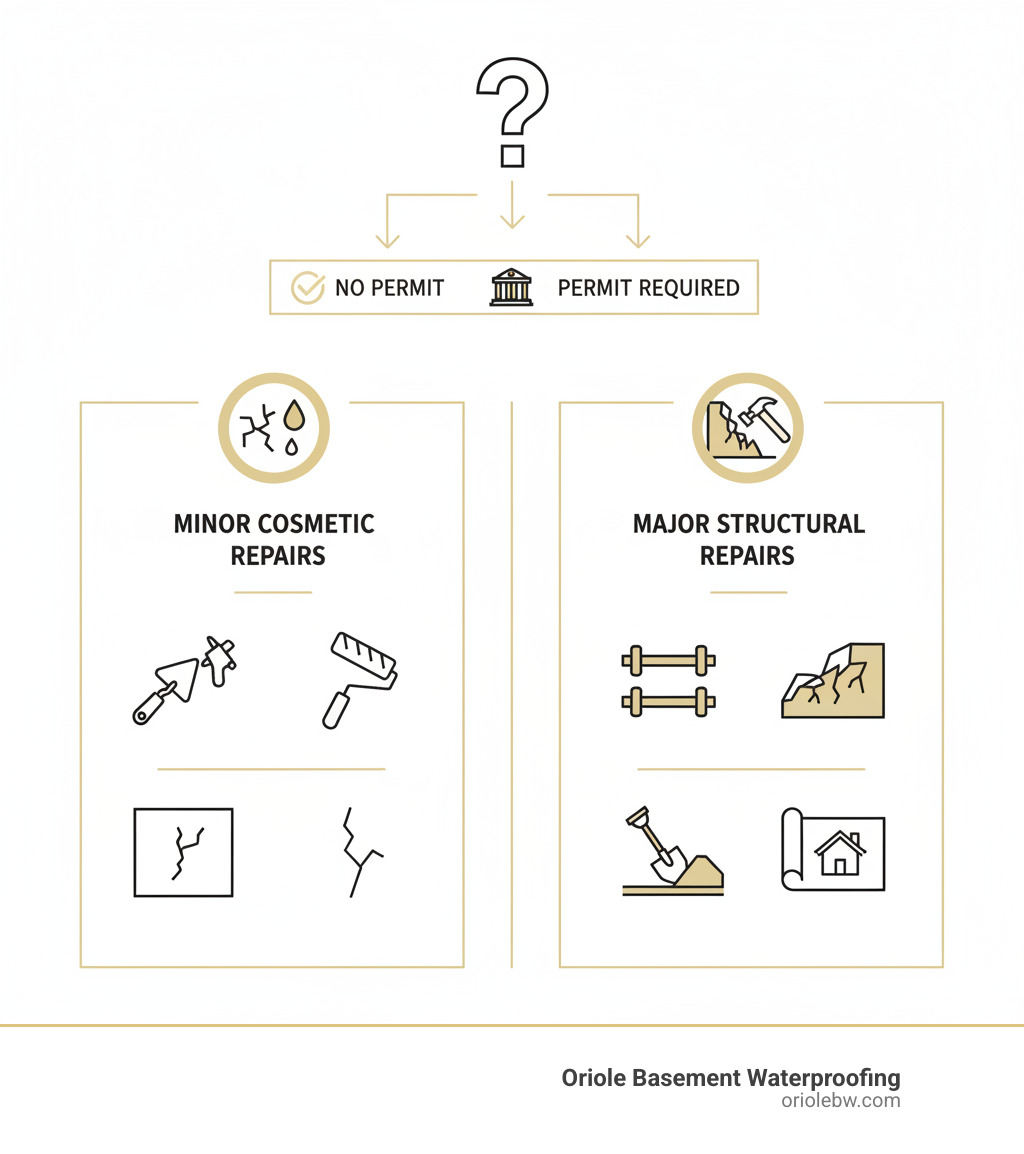
When is a Maryland basement wall repair permit required for structural vs. non-structural work?
The main question is whether you’re fixing a cosmetic flaw or touching the “bones” of your house.
Structural Repairs affect your home’s stability and almost always require a permit. An improper repair can put your whole house at risk.
- Bowing walls: Using carbon fiber straps or other anchors to stabilize walls is a structural job.
- Foundation component replacement: Any work on sill plates, support beams, or floor joists needs a permit.
- Major foundation cracks: Large, active, or stair-step cracks often point to deeper issues. Repairing them to stabilize the foundation is structural work. We always assess the root cause of Cracked Basement Maryland Causes Solutions first.
- Excavation: Digging around your foundation for exterior waterproofing is a significant alteration that typically requires a permit.
Non-Structural Repairs are usually cosmetic and less likely to need a permit.
- Minor crack sealing: Using epoxy to stop a small, non-active leak. Learn more about Waterproofing Foundation Cracks.
- Waterproofing paint: Applying a coating to interior walls is considered a preventative measure.
Even so, it’s always best to check with your local permitting office. The line can be blurry, and it’s better to be safe than sorry.
What are the consequences of skipping a basement wall repair permit?
Skipping a permit is a shortcut that can lead to serious problems:
- Stop-Work Orders: An inspector can halt your project immediately, leaving your basement in disarray until you get the proper permits.
- Fines and Penalties: Baltimore City can prosecute unpermitted work as a misdemeanor, with fines up to $1,000 or jail time. Other counties also impose hefty fines, often doubling the original permit fee.
- Insurance Claim Denial: If unpermitted work contributes to future damage, like a flood or structural failure, your homeowner’s insurance may refuse to cover the costs. This is a huge risk when dealing with issues like Seeping Basement Walls.
- Trouble Selling Your Home: Unpermitted work is a major red flag for buyers and can derail a sale.
- Safety Hazards: Permits trigger inspections, which are critical safety checks. Skipping them means you’re skipping a professional review that ensures the work is safe and up to code.
How do permit rules differ across Baltimore City, Baltimore County, and Harford County?
Navigating Maryland basement wall repair permit required rules is tricky because they vary by jurisdiction. While the goal is always public safety, the specific triggers for a permit can differ.
Here’s a quick comparison:
| Permit Trigger / Project Type | Baltimore City | Baltimore County | Harford County |
|---|---|---|---|
| Structural Changes (e.g., carbon fiber straps, sill plate replacement) | Permit always required for altering or repairing a structure. | Permit required for structural changes or moving a bearing wall. | Permit generally required for structural alterations. |
| Basement Excavations | Permit required for any “excavating.” | Permit required for all basement excavations. | Permit generally required for significant excavation. |
| Adding a Basement Bedroom | Permit required for changing the use of a space. | Permit required to add a basement bedroom. | Permit generally required for adding new habitable space. |
| Converting to Finished Basement (no structural changes) | Permit required if plumbing, gas, or electrical is altered. | Permit NOT required if NO structural changes, NO sensitive areas (flood zone, etc.), and NO utility work. | Permit generally required if new utility work is involved. |
| Utility Work (Plumbing, Electrical) | Permit required to alter, repair, or replace any system. | Separate trade permits required from licensed professionals. | Separate trade permits are typically required. |
Baltimore City requires a permit for almost any alteration, repair, or renovation. You can find official information in their Building or Renovating? What requires a permit? guide.
Baltimore County provides clear guidance on its Basement Alteration Permit page, specifying when a permit is or isn’t needed for finishing a basement.
Harford County generally requires permits for work affecting structural integrity or involving new utility installations. Their Permits & Licenses page is the best starting point.
Given these differences, the safest bet is to work with a professional like Oriole Basement Waterproofing who handles these details for you.
The A-to-Z on Getting Your Maryland Basement Wall Repair Permit Required
Getting a permit might feel like red tape, but it’s your best friend in a major repair project. It’s proof that the work was done to code, inspected by professionals, and properly documented. When a Maryland basement wall repair permit required situation arises, the process ensures your investment is protected.
At Oriole, we’ve walked hundreds of homeowners through this. We handle the paperwork, engineer coordination, and inspections so you don’t have to.

What is the typical process for obtaining a permit for basement wall repairs in Maryland?
While it can seem complex, the permit process follows a logical path. When you work with us, we manage every step.
-
Application and Plans: The first step is submitting a detailed application. For structural repairs, this includes plans stamped by a licensed structural engineer that show the existing problem and the proposed solution. We partner with engineers on every major foundation repair, so this is built into our process. You can see the types of documents required on portals like Baltimore County’s Apply for a Permit page.
-
Review and Approval: County departments review the plans to ensure they meet all building, zoning, and safety codes. They may ask for changes, which is a normal part of ensuring the job is designed correctly. Once approved, we pay the fees and the official permit is issued.
-
Inspections and Finalization: This is the most critical part. An inspector must check the work at key stages, for example, before an excavated area is backfilled. These inspections are quality control checkpoints. After the final inspection passes, the project is officially closed out, giving you documentation that the work was completed to code. This is essential for any Foundation Repair MD project.

Are licensed contractors required to pull permits for basement wall repairs in Maryland?
Yes, absolutely. For any structural basement wall repair in Maryland, a licensed contractor is legally required to pull the permit. This is for your protection.
When a contractor pulls a permit, they are putting their license and reputation on the line, taking legal responsibility for the work. Any contractor performing home improvement work must have a Maryland Home Improvement Commission (MHIC) license. You can and should verify any contractor’s status on the MHIC License public query website.
While a homeowner can technically pull their own permit for their primary residence, it’s a bad idea for structural work. If you pull the permit, you assume all liability. If the work fails inspection or causes other problems, the responsibility is entirely yours.
At Oriole Basement Waterproofing, we are fully licensed and insured, and we handle the entire permit process. This gives you peace of mind that your Foundation Repair MD project meets every legal and safety standard.

What building codes and standards must basement wall repairs adhere to?
Permits ensure your repair meets a strict set of building codes designed to protect you. These aren’t suggestions; they’re the law.
Maryland primarily follows codes based on the International Residential Code (IRC) and the International Existing Building Code (IEBC). The state has its own modifications, like the Maryland Building Rehabilitation Code, which you can review here: 09.12.50–09.12.58.pdf. These codes are enforced by your local jurisdiction, such as Baltimore City, Baltimore County, or Harford County.
These codes cover critical requirements for:
- Structural Integrity: Specifying foundation wall thickness and reinforcement needed to withstand soil pressure.
- Waterproofing: Detailing the proper materials and methods for keeping water out, which is key to protecting your home. Learn more at Water in Foundation How to Protect Maryland Homes.
- Egress: Requiring basement bedrooms to have specific window or door sizes for emergency escape.
- Drainage: Mandating proper drainage systems around the foundation to prevent water buildup.
Our engineering-backed solutions are designed to meet or exceed all applicable state and local codes. This commitment isn’t just about passing inspections; it’s about building strong, dry foundations that last.
Don’t Let Paperwork Weaken Your Foundation
We get it. When you see a crack in your basement wall, the last thing you want to deal with is paperwork. But understanding when a Maryland basement wall repair permit required is about protecting your biggest investment and keeping your family safe.
Permits and inspections are your assurance that the job is done right. They ensure the repair meets engineering standards, that your home insurance will cover you, and that you won’t face issues when it’s time to sell.
At Oriole Basement Waterproofing, we’ve been helping Maryland homeowners with these challenges for over 70 years. We know the permit rules in Baltimore City, Baltimore County, and Harford County inside and out. We handle the forms, the engineers, and the inspections so you don’t have to.
We believe in doing things the right way. That means pulling permits, partnering with structural engineers, and adhering to the highest building codes. Our mission is to deliver best-in-class foundation repair and waterproofing with transparent pricing and best customer care.
Plus, every foundation repair we complete comes with a lifetime transferable guarantee. That’s a promise that stays with your home, giving you and future owners total peace of mind.
Don’t let a crack in the wall turn into a bigger problem. With our team handling everything from the initial assessment to the final inspection, you can relax. We’ll take care of the permits, the repair, and the peace of mind.
Ready to get started? Contact us for a free, no-obligation inspection today. We’ll give you straightforward answers and a clear plan, permits and all.