


That Musty Smell Isn’t Just “Old House” Charm
Basement water seepage solutions range from simple drainage improvements to comprehensive interior waterproofing systems, but the key is identifying the root cause before water damage becomes a costly nightmare.
Quick Solutions for Basement Water Seepage:
- Interior drainage systems with sump pumps for ongoing water management
- Foundation crack repair using injection methods or carbon fiber reinforcement
- Exterior improvements like proper grading and gutter extensions
- Crawl space encapsulation to prevent moisture from below
- Professional inspection to identify the true source and create a custom plan
That persistent damp feeling in your basement isn’t something you have to live with. When you catch a whiff of that musty smell or notice water stains creeping up your foundation walls, your home is trying to tell you something important.
Water seepage is more than just an inconvenience. It threatens your family’s health through mold growth, ruins stored belongings, and can lead to serious structural damage that costs thousands to repair. According to industry data, over 60 percent of basements experience some form of moisture seepage.
Here in Maryland, our clay-heavy soil and unpredictable weather create the perfect storm for basement water problems. Heavy spring rains saturate the ground around your foundation, while our region’s older homes often have settling foundations that develop new pathways for water intrusion.
The good news? You don’t have to live with a damp, musty basement. With the right approach and professional guidance, you can transform your basement from a source of worry into a dry, usable space that adds value to your home.
Why Is Water Getting In? Uncovering the Root Causes of Seepage
If you’re dealing with a wet basement, you’re not alone, and it’s definitely not your fault. After more than 70 years of helping Maryland and Pennsylvania homeowners, we’ve learned that basement water seepage solutions start with understanding exactly why water is finding its way into your home in the first place.
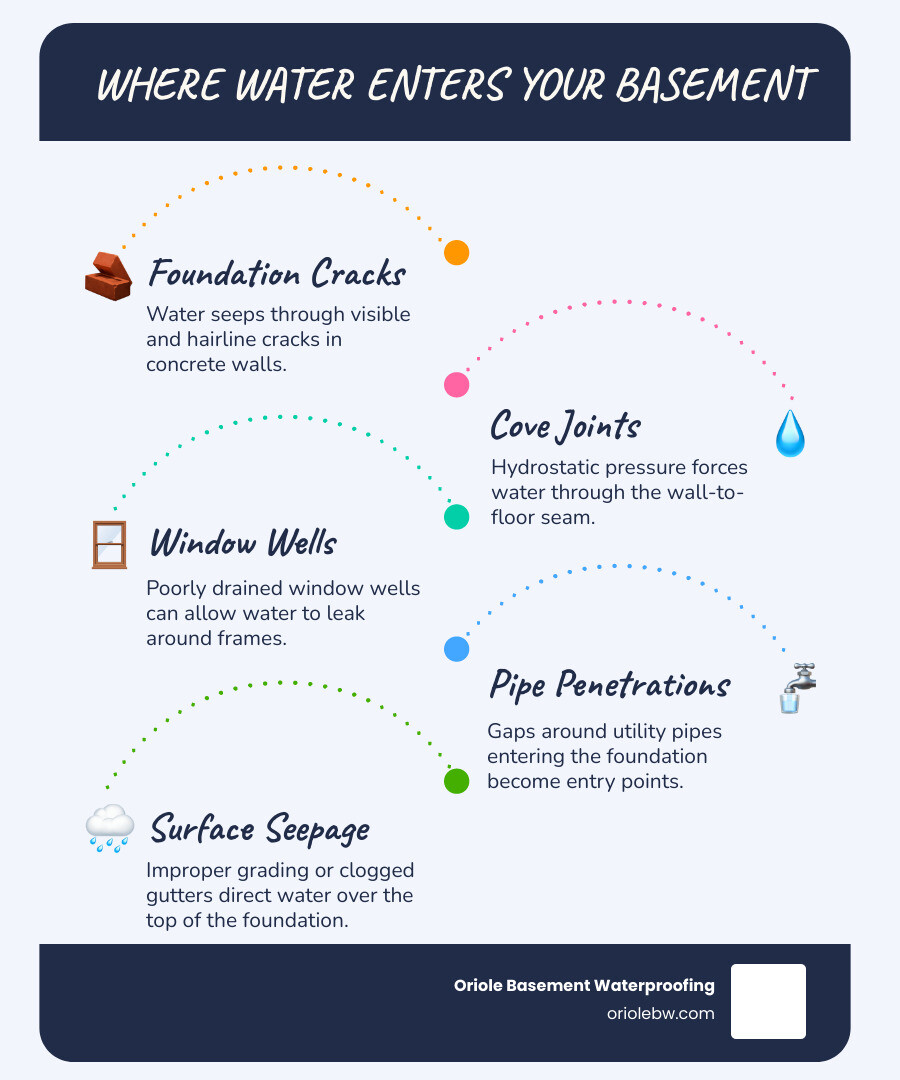
Here’s the truth: our region creates a perfect storm for basement moisture problems. Maryland’s heavy clay soil acts like a sponge during our unpredictable spring rains, then swells up and pushes against your foundation walls with incredible force. Meanwhile, many of our homes were built decades ago when waterproofing wasn’t the priority it is today.
Understanding the source of your water problem is the first step toward fixing it permanently. We’ve seen homeowners try the same temporary fixes over and over, only to have water return through a different pathway. That’s why our approach focuses on identifying the real culprit before we recommend any basement water seepage solutions.
The Pressure is On: Hydrostatic Pressure and the ‘Clay Bowl Effect’
Picture this: after a heavy Maryland rainstorm, the soil around your foundation becomes completely saturated with water. All that water has to go somewhere, and it creates what we call hydrostatic pressure. This is essentially thousands of pounds of water pushing relentlessly against your basement walls and floor.
Even the smallest crack or weak point in your concrete becomes a highway for water when this pressure builds up. We’ve seen water forced through concrete that looks perfectly solid to the naked eye, simply because the pressure is so intense.
What makes it worse is something called the ‘clay bowl effect.’ When your home was built, contractors dug a big hole for the foundation, then backfilled it with loose soil after the concrete cured. This backfilled soil doesn’t pack as tightly as the undisturbed earth around it, creating an invisible bowl that traps water right against your foundation walls.
This clay bowl effect is especially problematic in our area because of Maryland’s clay-heavy soil composition. The loose backfill soil acts like a funnel, directing water straight to your basement instead of allowing it to drain away naturally.
When Your Foundation is the Front Door for Water
Your foundation might look solid, but concrete is actually more like a very hard sponge than an impenetrable barrier. Over time, even the best foundations develop tiny pathways that welcome water inside.

Foundation cracks are incredibly common. We see them in brand-new homes and century-old rowhouses alike. As your house settles into its foundation, hairline cracks appear. Sometimes these grow into larger fissures, especially if the underlying soil shifts or if tree roots create pressure against the walls.
But cracks aren’t the only entry points. Porous concrete naturally allows moisture to seep through, particularly in older homes where concrete quality wasn’t what it is today. We also frequently find problems around pipe penetrations, anywhere a water line, sewer pipe, or utility enters through your foundation wall. If these weren’t sealed properly during construction, or if the seals have deteriorated over the decades, they become express lanes for water.
The key is catching these weak points before they turn into major problems. A small crack that lets in a trickle today can become a gaping hole that floods your basement during the next heavy storm.
Trouble from Above: Gutters, Grading, and Surface Water
Sometimes the water in your basement isn’t mysterious groundwater at all; it’s rainwater that your home isn’t managing properly. Think about it: your roof collects thousands of gallons during a typical Maryland thunderstorm, and all that water needs somewhere to go.
Clogged gutters are one of the biggest culprits we encounter. When leaves and debris block your gutters, water overflows and pours down right next to your foundation. Short downspouts create the same problem. If they’re dumping water less than six feet from your house, you’re essentially watering your foundation during every rainstorm.
Improper yard grading is another frequent issue, especially in older neighborhoods where landscaping has shifted over time. If your lawn slopes toward your house instead of away from it, every drop of rain naturally flows toward your foundation and pools there.
Don’t overlook window well issues either. We’ve seen basement windows turn into miniature swimming pools when window wells aren’t properly drained or maintained. Once water collects there, it’s only a matter of time before it finds a way through the window or the surrounding foundation.
The good news is that surface water problems are often the easiest to fix with the right approach. But identifying whether your water is coming from above or below ground requires the trained eye of a professional who understands how all these systems work together.
Reading the Signs: How to Spot a Water Problem Before It’s a Disaster
Your basement might be trying to tell you something important, and catching these early warning signs can save you thousands in repair costs. After seven decades of working in Maryland and Pennsylvania basements, we’ve learned that homeowners who trust their instincts and act on subtle changes often avoid the major disasters.
Start with your nose. That musty smell isn’t just “character.” It’s your basement’s way of saying moisture has moved in and made itself comfortable. Even without visible water, persistent dampness creates the perfect environment for mold and mildew to flourish, producing that unmistakable odor.
Next, pay attention to how the air feels when you walk downstairs. Damp, heavy air that seems to cling to your skin indicates liftd humidity levels, even when everything looks dry on the surface. We often hear from homeowners in Baltimore County who say, “Something just feels different down there,” and they’re usually right.
Visual clues are everywhere once you know what to look for. Water stains creeping up foundation walls tell the story of past flooding events. Peeling paint often indicates moisture working its way through the concrete from outside. Warped wood trim around basement windows or doors shows that humidity levels have been consistently high.
One of the most telling signs is efflorescence, which is that white, chalky powder that appears on concrete walls. It might look harmless, but it’s actually mineral deposits left behind when water evaporates after seeping through your foundation. Think of it as a breadcrumb trail showing exactly where water has been traveling through your basement walls.
Leaks at the Cove Joint: A Common Trouble Spot
If you’re going to check one spot in your basement regularly, make it the cove joint, the seam where your basement wall meets the floor. This is where we find water most frequently, and it’s often the first place hydrostatic pressure reveals itself.
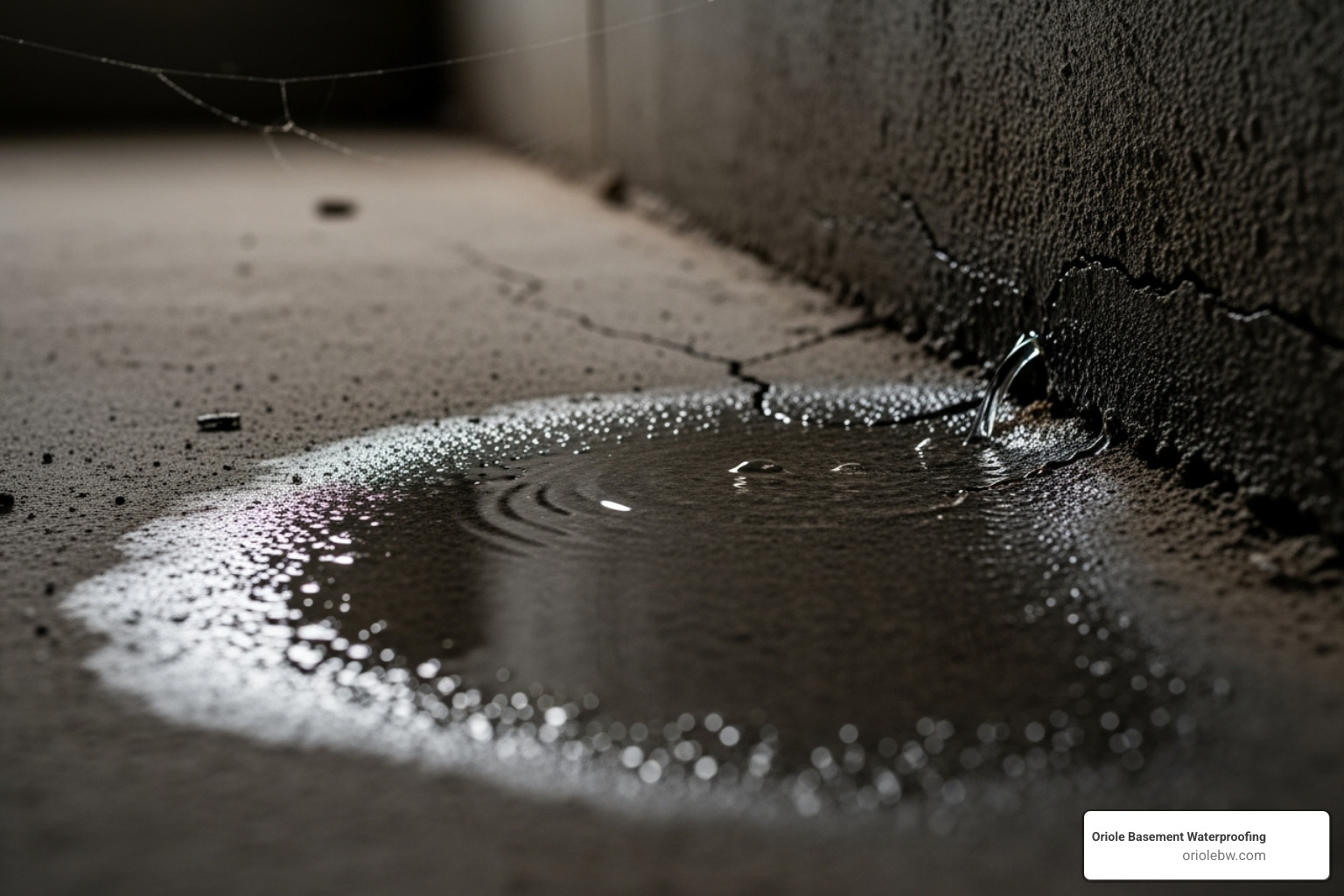
When groundwater levels rise around your home (which happens frequently in our clay-heavy Maryland soil), the pressure pushes water up through your foundation footing and into this vulnerable joint. Water appearing specifically at the cove joint is a critical sign that you’re dealing with a significant groundwater issue, not just a simple surface water problem.
We’ve seen homeowners try to seal these joints with store-bought caulks, only to watch the water find new pathways nearby. Effective basement water seepage solutions for cove joint leaks typically require interior drainage systems that can manage the ongoing hydrostatic pressure, rather than trying to fight it.
Is it Seepage or Condensation?
Here’s where many homeowners get confused, and honestly, it’s not always easy to tell the difference. Both condensation and water seepage create moisture problems, but they need different approaches to solve.
Condensation happens when warm, humid air hits your cool basement surfaces, like pipes, walls, or floors. You’ll often see it as beads of water forming on surfaces, especially during humid summer months or in poorly ventilated areas. It’s your basement’s version of a cold drink sweating on a hot day.
Water seepage, on the other hand, is external water actively pushing its way into your basement through cracks, joints, or porous concrete. You might notice water stains, that white efflorescence powder, or actual puddles that appear after heavy rains. The timing is often your best clue: if moisture problems get worse during rainstorms, you’re likely dealing with seepage.
Both can create that musty smell and contribute to mold growth, but seepage indicates a structural breach that needs professional attention. Poor ventilation might cause condensation, but it won’t cause water to pool at your cove joint after a thunderstorm.
Understanding which problem you’re facing helps us recommend the right basement water seepage solutions for your specific situation.
A Homeowner’s Guide to Professional Basement Water Seepage Solutions
When you’re standing in your damp basement, watching water trickle down the walls, it’s natural to want a quick fix. We’ve seen homeowners try everything from waterproof paint to fancy sealants they found at the hardware store. Here’s the thing, though: these temporary solutions usually fail because they’re trying to hold back water instead of giving it somewhere to go.
Think of it this way: if you have a creek running behind your house and you try to stop it with a small dam, eventually that water will find a way around, over, or through. The same principle applies to your basement. Basement water seepage solutions need to work with the water, not against it.
At Oriole Basement Waterproofing, we’ve learned over our 70+ years that the only way to truly solve water problems is to take a holistic approach. We don’t just patch the symptom; we address the source. Every solution we recommend is backed by engineering principles and designed to last for decades, not just until the next heavy rain.
Interior Solutions: Managing Water from the Inside Out
One of the most effective basement water seepage solutions we offer is an interior drainage system, and honestly, it’s often the least disruptive option for homeowners. Instead of tearing up your entire yard, we work from inside your basement to create a pathway for water that’s much easier than trying to push through your foundation walls.
Here’s how it works: we install a drainage channel around the perimeter of your basement floor, usually tucked away where you won’t even notice it. This channel acts like a highway for any water that manages to get in, directing it straight to a sump pump system. The sump pump then automatically kicks on and sends that water far away from your home.
What makes this system so effective is that it actually relieves the hydrostatic pressure we talked about earlier. Instead of water building up against your walls with nowhere to go, it now has an easy escape route. It’s like giving a bully an easier target. The water will always choose the path of least resistance.
Our sump pump systems are designed to protect your basement around the clock, even when you’re not home. For homeowners in our service areas, we also offer battery backup systems because we know how unpredictable Maryland and Pennsylvania weather can be. The last thing you want is for your power to go out during a storm and leave your basement vulnerable. You can learn more about our backup systems for Harford County Sump Pump Battery Backups and York County PA Sump Pump Battery Backups.
Foundation Repair: The First Step in Lasting basement water seepage solutions
We focus about 80% of our work on foundation and crawl space issues because we’ve learned that a dry basement starts with a strong, stable foundation. You can install all the drainage systems in the world, but if your foundation is compromised, you’ll keep chasing water problems.
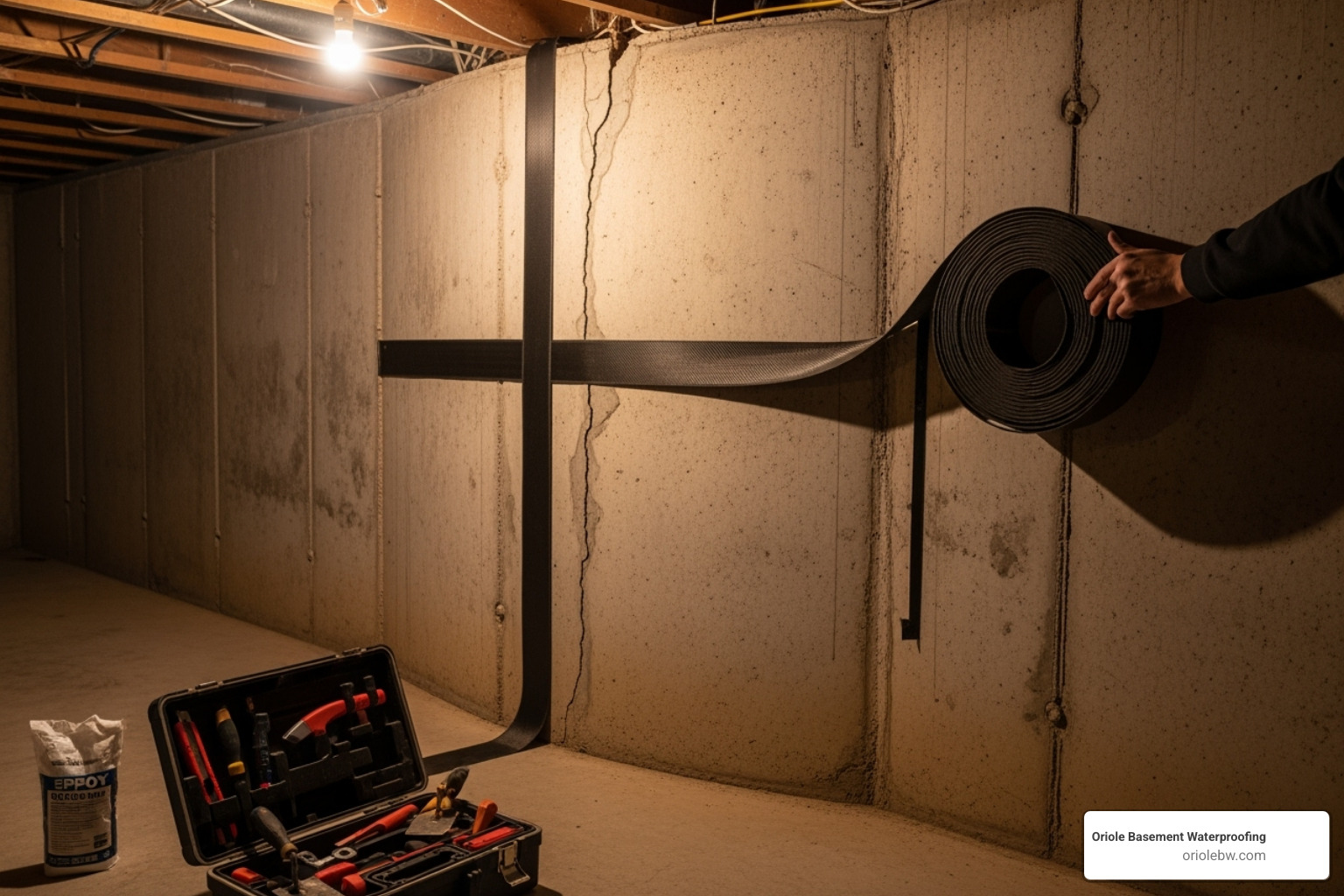
When we find foundation cracks, we use specialized injection techniques that don’t just fill the crack. They actually bond with the concrete to create a seal that’s often stronger than the original wall. For basement walls that are bowing inward from all that hydrostatic pressure, we install carbon fiber straps that provide incredible reinforcement without the expense and disruption of excavating your entire foundation.
But foundation repair goes beyond just cracks and bowing walls. Sometimes the structural elements of your home need attention too. We handle sill plate replacement when the wooden beam that sits on top of your foundation wall has rotted from moisture exposure. Support beam replacement becomes necessary when the main beams carrying your floor loads have weakened. We also replace lolli columns, floor joists, and even subflooring when water damage has compromised these critical structural components.
Every one of these repairs contributes to creating a stable, dry environment. When your foundation is solid and properly sealed, water has far fewer opportunities to find its way inside.
Crawl Space Health is Basement Health
Here’s something many homeowners don’t realize: your crawl space and basement are intimately connected. If you have a damp, unsealed crawl space, that moisture doesn’t just stay put. It rises up through your home in what we call the “stack effect,” carrying humidity, musty odors, and sometimes even mold spores into your living areas.
We’ve seen crawl spaces that look more like swamps than part of someone’s home. The dirt floor is damp, the wooden joists are starting to sag, and the air feels thick and musty. This isn’t just unpleasant; it’s actively working against any basement water seepage solutions you might have in place.
Our crawl space encapsulation process completely transforms this space. We install heavy-duty vapor barriers that seal off the earth completely, preventing ground moisture from ever entering your home’s environment. But we don’t stop there. We also integrate dehumidifiers to control any lingering humidity and ensure the space stays dry year-round.
When we properly encapsulate your crawl space, we’re not just protecting that area. We’re improving the air quality throughout your entire home. The musty smells disappear, humidity levels drop, and your basement becomes a much healthier environment. It’s amazing how addressing moisture problems below ground can make such a difference in how your whole house feels.
Securing Your Home’s Health and Value for the Long Haul
Finding water in your basement can feel overwhelming, but knowing how to respond quickly can save you from extensive damage. Safety comes first. If you see standing water near electrical outlets or appliances, don’t wade in. Try to identify where the water might be coming from if you can do so safely, but the true source often requires professional detective work.
When you call us at Oriole Basement Waterproofing, we understand you’re dealing with stress and uncertainty. We’ve walked hundreds of homeowners through this exact situation, from that first worried phone call to the final walkthrough of their completely dry basement.
Why a Professional Inspection is Crucial for basement water seepage solutions
You might be tempted to grab some caulk and patch visible cracks yourself, we get it. But here’s what we’ve learned after seven decades in this business: the water you see is rarely coming from where you think it is. That wet spot on your east wall might actually be caused by poor drainage on the west side of your house, traveling underground before finding the easiest way in.
Our inspection process is like being a detective for your home’s foundation. We look for the real culprit, not just the obvious symptoms. Is hydrostatic pressure pushing water up through your floor? Are foundation cracks allowing seepage during heavy rains? Is your yard grading actually funneling water toward your house instead of away from it? Sometimes it’s all three working together.
This thorough approach means we create a plan that’s custom-built for your specific home and situation. A rowhouse in Baltimore faces different challenges than a split-level in Harford County. We’ve seen both, and we know exactly what works for each. This prevents you from spending money on solutions that won’t last and ensures you understand every option before we start any work.
The Oriole Promise: A Healthy Home from the Ground Up
When your neighbor down the street mentions their dry basement, there’s a good chance we had something to do with it. We’ve been protecting Maryland and Pennsylvania homes for over 70 years, which means we’ve weathered every type of storm, literally and figuratively. From the historic brick foundations in Baltimore City to the newer developments in Anne Arundel County, we know exactly what our local soil and weather patterns can do to a foundation.
Our lifetime transferable guarantee isn’t just marketing speak. It’s our promise that when we fix your foundation or encapsulate your crawl space, it stays fixed. This guarantee transfers to new owners if you sell, which means you’re not just solving a problem, you’re adding real value to your home. A dry basement increases your property’s value, and potential buyers know they won’t inherit your water worries.
We take a holistic approach that looks at your entire home’s foundation health. While other companies might focus on just one aspect, we examine drainage patterns, grading issues, humidity control, and structural integrity all together. Our engineering-backed solutions mean you’re getting repairs that are built to last decades, not just until the next heavy rain.
Our white-glove service means you’re never left wondering what’s happening. From the moment our certified technicians arrive for your free inspection to our follow-up calls after the work is complete, we keep you informed every step of the way. You’ll know exactly what we found, why we’re recommending specific basement water seepage solutions, and how long everything will take.
Don’t let water damage chip away at your home’s value or your peace of mind. We’re here to help you achieve that worry-free basement you’ve been dreaming about. Schedule your free, no-obligation inspection today and let us show you exactly what’s possible for your home.