


Why That Musty Smell Means More Than You Think
Basement water issues are a common problem for Maryland homeowners. If you’ve noticed dampness, stains, or a musty odor, you’re not alone. Over half of all basements experience moisture, and ignoring it can lead to serious structural damage, health risks, and costly repairs.
Quick Answer: Common Basement Water Issues
- Water stains or puddles – Often from poor grading, clogged gutters, or foundation cracks
- Musty odors – Signal mold growth from persistent moisture
- Efflorescence (white, chalky residue) – Indicates water seeping through concrete
- Bowing or cracked walls – Result of hydrostatic pressure against your foundation
- Sump pump failure – A leading cause of basement flooding
The good news is most problems can be fixed before they spiral out of control. Understanding the warning signs is the first step toward a dry, healthy basement.
Maryland’s clay-heavy soil and unpredictable weather make our basements vulnerable. When rain saturates the ground, hydrostatic pressure builds against foundation walls, pushing water through even the smallest cracks. This is often worsened by the “clay bowl effect,” where backfilled soil traps water around your foundation.
This isn’t just about water; it’s about your family’s health and your home’s integrity. Mold can grow within 48 hours of water exposure, and foundation damage only gets worse over time. In this guide, we’ll help you spot the signs, trace the source, and know when to call a pro. With over 70 years of experience in Baltimore City, Baltimore County, and Harford County, we know what works.
Basement water issues further reading:
A Homeowner’s Guide to Diagnosing Basement Water Issues
Step 1: Playing Detective – The Telltale Signs of a Water Problem
When it comes to basement water issues, your senses are your first line of defense. A musty smell or a faint stain can be an early warning. We’ve seen hundreds of basements in Baltimore City, Baltimore County, and Harford County, and these small clues often point to bigger problems.
Here’s what to look for:
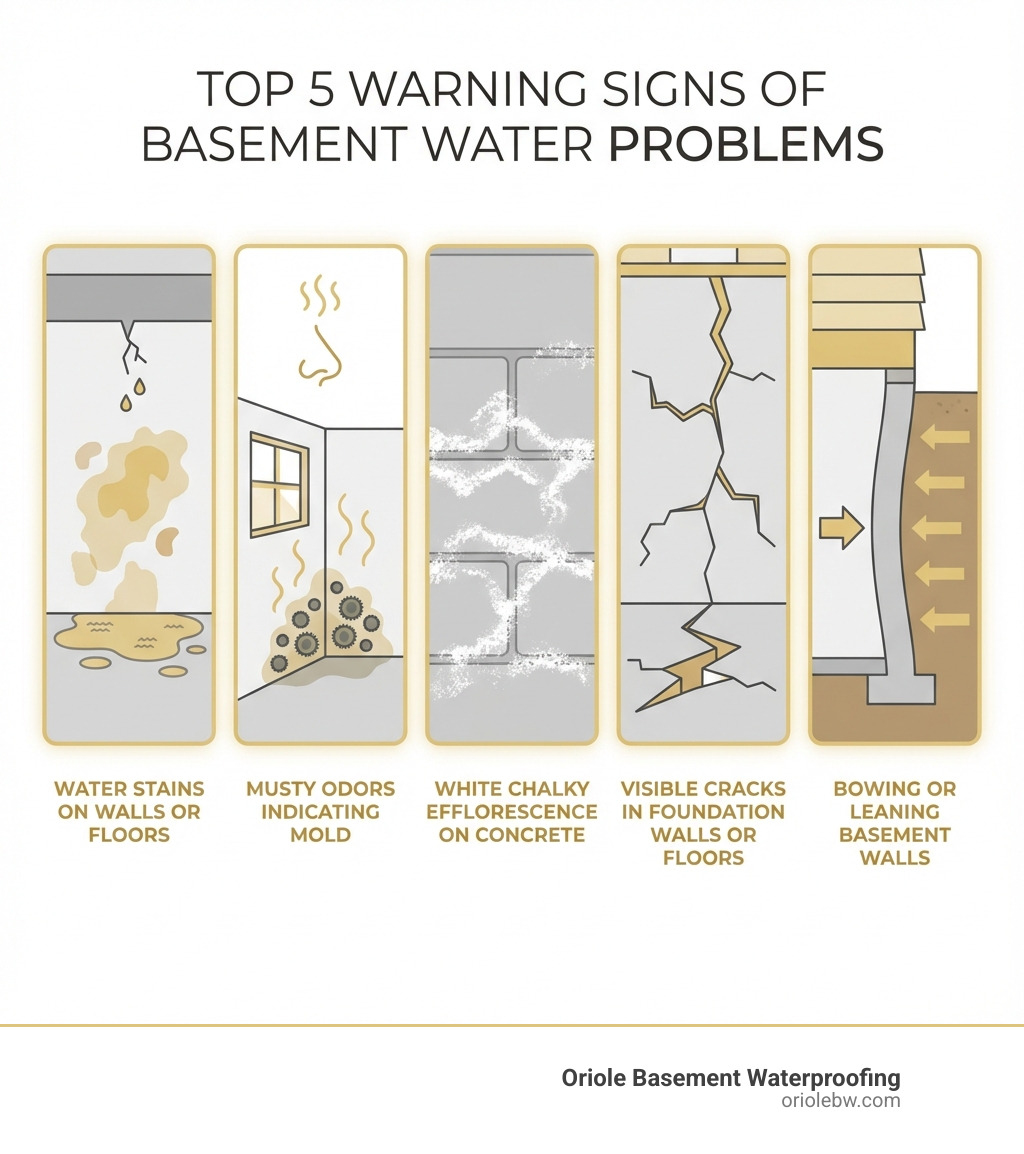
- Water Stains: Discolored patches on walls, floors, or ceilings that tell a story of past or present water intrusion.
- Peeling or Bubbling Paint: A clear sign that moisture is trapped behind the paint, pushing it away from the surface.
- Chalky White Residue (Efflorescence): A powdery deposit on concrete or masonry. It’s not mold, but mineral salts left behind as water evaporates, indicating water is penetrating your foundation.
- Visible Mold or Mildew: Black, green, or white fuzzy patches that thrive in damp environments. Mold can pose health risks and often requires professional attention. We partner with Raven Mold for remediation unless there’s active water.
- Damp Spots on the Floor or Walls: A cold, clammy spot on your basement floor or wall is a strong indicator of moisture intrusion.
- Cracks in Walls or Floors: Small cracks can be entry points for water. Larger cracks, especially horizontal or stair-step ones, often point to foundation movement.
- Bowing or Leaning Walls: A serious structural concern. If your walls bulge inward, it means immense pressure is pushing against your foundation.
- Rotting Wood: Softness or decay in wooden elements like sill plates or floor joists indicates prolonged exposure to moisture.
Recognizing these signs early can save you trouble and expense. For more details, see our guides on 6 Signs You Need to Get Your Basement Waterproofed and our Ultimate Guide to Bowing Basement Walls.
Step 2: Tracing the Source – Common Causes of Water Intrusion
Once you’ve identified the signs, the next step is understanding why water is getting in. Many homeowners in our service areas face similar challenges, often stemming from issues right outside their homes.
Here are the most common culprits:
- Poor Grading: If the ground slopes towards your foundation, it funnels rainwater right where you don’t want it, creating pressure against your basement walls.
- Clogged Gutters and Short Downspouts: When gutters overflow or downspouts dump water too close to the house, all that roof runoff pools around your foundation. A single inch of rain on a 2,000 sq. ft. roof can produce 1,250 gallons of water!
- Leaky Window Wells: If not drained properly, window wells can act like small pools against your foundation, allowing water to seep through the window or surrounding wall.
- Foundation Cracks: Cracks are direct pathways for water. Wall cracks are the most common source of seepage in poured foundations. Learn more in our Foundation Crack Complete Guide.
- Plumbing Leaks: A leaky pipe or faulty water heater can be an internal source of major water damage. Water heaters typically last 6-12 years.
- Sump Pump Failure: If your sump pump fails during a storm due to a power outage or mechanical issue, your basement can flood quickly.
- Sewer Backups: During heavy rainfall, overwhelmed municipal systems can cause sewer water to back up into your basement.
Addressing these causes is key. We often recommend solutions like Down Spout Extensions Exterior Drainage to direct water away from your home.
The Unseen Forces: Why Maryland Basements Are Prone to Leaks
Living in Maryland means dealing with local environmental factors that contribute to basement water issues. It’s not just what you see; it’s the powerful forces at work underground.
- Hydrostatic Pressure: When the soil around your foundation gets saturated, the groundwater creates immense pressure against your walls and floor. Concrete is porous, and this pressure can force water through tiny cracks and even seemingly solid surfaces.
- The ‘Clay Bowl Effect’: The soil backfilled around your foundation after construction is often looser than the surrounding undisturbed soil. This area acts like a sponge, holding water against your foundation and creating a persistent source of moisture and pressure.
- Maryland’s Dense Soil & Heavy Rain: Our region’s clay-heavy soil expands when wet, exerting tremendous force on foundation walls that can lead to cracks and bowing. Intense downpours quickly saturate this dense soil, leading to a rapid buildup of hydrostatic pressure, which is why many issues appear after a big storm.
These local factors make robust waterproofing essential. We understand the unique pressures on Maryland foundations, including issues like Baltimore City Underground Streams and Basement Waterproofing. For a deeper dive, you can learn more about bulk water control methods for foundations.
The High Stakes: Risks of Ignoring Basement Water Issues
Ignoring basement water issues is a gamble you don’t want to take. The risks go far beyond a little dampness.
- Structural Damage: Persistent moisture weakens concrete, erodes soil supporting your foundation, and rots wooden structures. This can lead to foundation settlement, growing cracks, and bowing walls.
- Health Risks from Mold: Mold can grow within 48 hours in a damp basement, triggering allergies and respiratory issues. If mold is present with active water, we address the water source and refer to Raven Mold for remediation.
- Pest Infestations: Damp basements are breeding grounds for insects, rodents, and termites.
- Damaged Belongings: Stored items like furniture, electronics, and family heirlooms can be ruined by water and mold.
- Decreased Home Value: A wet basement is a major red flag for potential buyers, signaling costly hidden problems.
- Musty Odors: That unpleasant smell indicates mold and mildew, and it can permeate your entire home.
Protecting your home from these risks is why we do what we do. Learn more about Why is Basement Waterproofing Necessary? The Risks of Skipping It and our Foundation Repair services.
The Professional Solution: When to Call a Foundation and Crawlspace Expert
While identifying problems is a good first step, many basement water issues require professional expertise. DIY fixes often fall short when dealing with foundation or persistent moisture problems.
Here’s when to call the experts at Oriole Basement Waterproofing:
- Persistent or Recurring Leaks: If you’ve fixed the easy stuff but water still gets in, it’s time for a professional diagnosis.
- Any Sign of Structural Damage: Large cracks (wider than 1/16th inch), horizontal cracks, or bowing walls are foundation problems that demand immediate assessment. We are experts in foundation repair, offering solutions like carbon fiber straps, sill plate replacement, and support beam and joist replacement. We partner with structural engineers on every major repair.
- Mystery Leaks: If you can’t find the source of the water, our technicians can trace it for you.
- Sump Pump Issues: A constantly running or failing pump needs professional service. We install and maintain reliable sump pump systems, often with battery backups. See our Sump Pump Maintenance Tips.
- High Humidity and Musty Odors: If your basement is always damp and musty, you may need a comprehensive solution like an interior drainage system or crawlspace encapsulation.
- Crawlspace Moisture: A damp crawlspace affects your whole home. Encapsulation, which involves installing vapor barriers and dehumidifiers, creates a dry, healthy space. Our Crawl Space Encapsulation Systems Guide has more info.
Professional waterproofing is an investment, but it’s far less than the cost of major structural repairs. We take a holistic approach, assessing everything from drainage to structural integrity to provide a lasting solution. We are your go-to experts for Foundation Repair in Baltimore City, Baltimore County, and Harford County.
Secure Your Foundation and Reclaim Your Basement for Good
Your Next Step to a Permanently Dry Basement
Facing basement water issues can be overwhelming, but you don’t have to do it alone. For over 70 years, Oriole Basement Waterproofing has been the trusted partner for homeowners in Baltimore City, Baltimore County, and Harford County. We know Maryland’s weather and soil, and we provide solutions that last.
Our mission is to deliver best-in-class foundation repair and waterproofing with transparent pricing and best customer care. When you choose us, you’re choosing:
- Decades of Expertise: We bring 70+ years of experience to the unique challenges of Maryland homes.
- Engineering-Backed Solutions: We partner with structural engineers on major foundation repairs to ensure long-term stability.
- Lifetime Transferable Guarantees: We stand by our work on encapsulation and foundation repairs with guarantees that give you peace of mind.
- A Holistic Approach: We look at the whole picture – drainage, grading, humidity, and structural integrity – to fix the root cause.
- White-Glove Service: Our certified technicians keep you informed from the initial inspection to the final follow-up.
Don’t let a damp basement diminish your home’s value or your family’s health. We invite you to get a free, no-obligation inspection to assess your specific basement water issues and recommend the most effective, long-term solutions.
Ready to secure your foundation for good?
Contact us today! We proudly serve Baltimore City, Baltimore County, and Harford County. Check our Service Areas for more information.