



Why Adding a Sump Pump to Your Basement is Critical for Maryland Homes
Adding a sump pump to basement spaces is essential for many homeowners across Baltimore City, Baltimore County, and Harford County. Maryland’s clay soil and frequent storms create the perfect conditions for basement flooding, and a sump pump is often your best defense against water damage.
Our Professional Installation Process:
- Assessment: We identify the root cause of your water issues to confirm a sump pump is the right part of the solution.
- Site Selection: Our experts find the lowest point in your basement for maximum water collection.
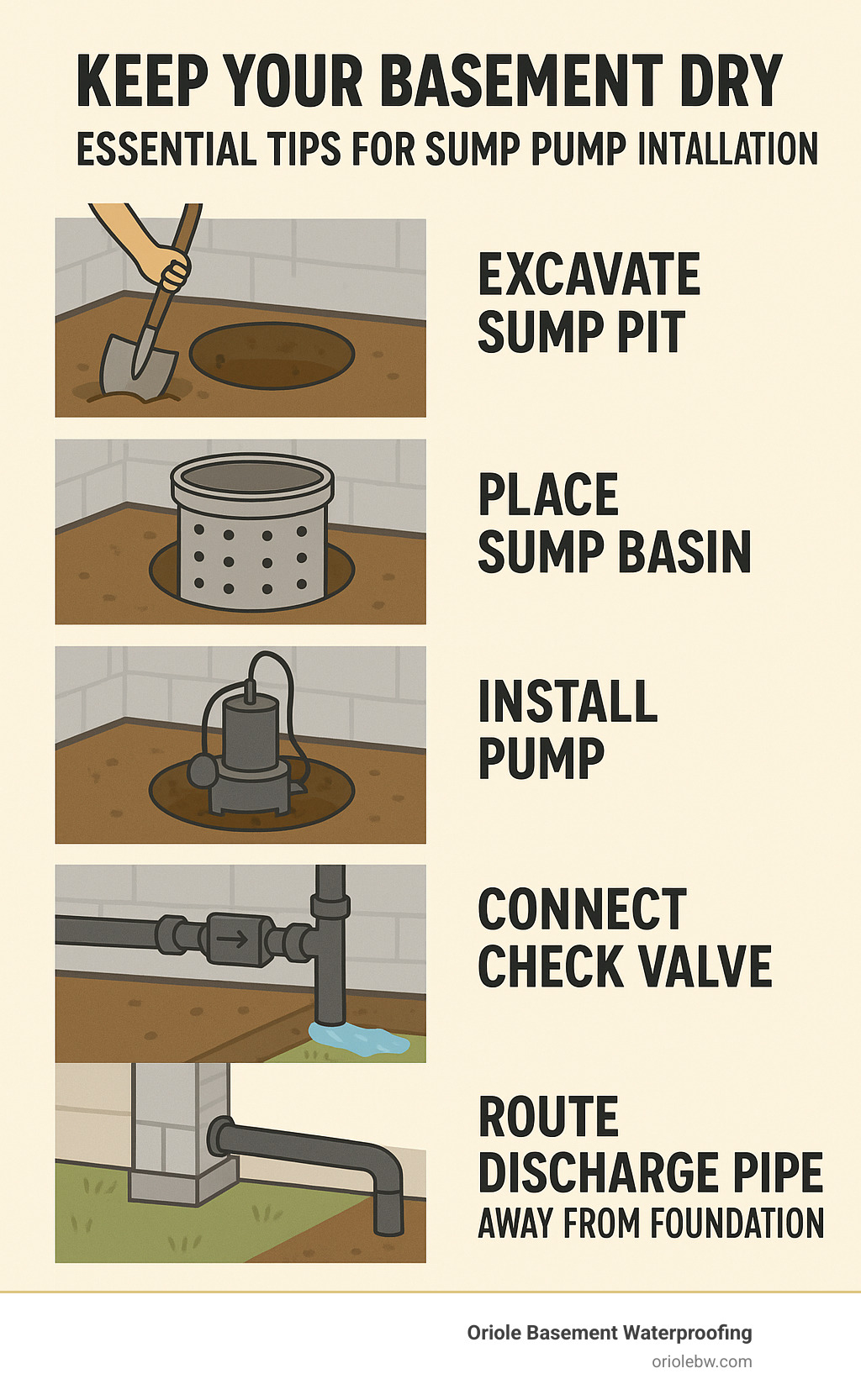
- Excavation & Installation: We professionally excavate a sump pit and install the basin, pump, and discharge piping.
- Electrical & Testing: We ensure a safe connection to a dedicated GFCI outlet and test the system thoroughly.
One homeowner in Baltimore County told us her basement felt more like an underground pool every time it rained. “I couldn’t store anything down there without worrying about water damage,” she said. After our team installed a proper sump pump system, she now uses her basement for storage and her kids’ play area.
The truth is, basement water problems don’t fix themselves. Maryland’s weather puts constant pressure on your foundation. A quality sump pump system removes water before it can cause mold, structural damage, or ruin your belongings.
But here’s what many homeowners don’t realize: not all sump pump installations are created equal. The difference between a professional installation and a quick DIY job can mean the difference between a dry basement and a flooded one when you need protection most.
Is a Sump Pump the Right Solution for Your Basement?
Many homeowners wonder, “What are the signs that indicate a need for a sump pump?” In our 70+ years of serving Maryland homes, we’ve seen a few common indicators that your home could benefit from adding a sump pump to basement spaces:
- Persistent Dampness & Odors: If your basement always feels clammy or has a distinctive “basement smell,” it’s a red flag for moisture that can lead to mold or mildew.
- Visible Mold or Efflorescence: Seeing mold growth or a powdery white substance on the walls (efflorescence) are clear signs that water is seeping through your foundation.
- High Humidity: Heavy, humid air in your basement contributes to condensation and can damage belongings over time.
- Location and Soil: Homes in low-lying areas or with Maryland’s dense clay soil face increased hydrostatic pressure against foundation walls, forcing water inside. You can learn more on how soil type affects basements from UCONN’s Soil Survey.
A sump pump collects this groundwater and pumps it safely away from your home, protecting your basement from long-term damage. For more information, explore our basement waterproofing services. We also agree with why FEMA recommends sump pump maintenance as a proactive measure.
When Water Intrusion Signals Deeper Issues
Sometimes, water in your basement is a symptom of deeper structural concerns. Persistent leaks, foundation cracks, or bowing walls indicate that water pressure may be compromising your home’s integrity. A sump pump is an excellent tool for managing water, but it doesn’t fix the root cause.
At Oriole Basement Waterproofing, we believe in a holistic assessment. Our expertise extends to comprehensive foundation repair, including sill plate replacement, support beam and lolli column replacement, floor joist and sub floor replacement, and carbon fiber straps for bowing walls. We partner with structural engineers on every major foundation repair, ensuring long-term stability for your home. Learn more about our specialized Foundation Repair solutions.
Protecting Your Crawl Space
It’s not just basements that need attention. Many Maryland homes have crawl spaces that become breeding grounds for moisture.
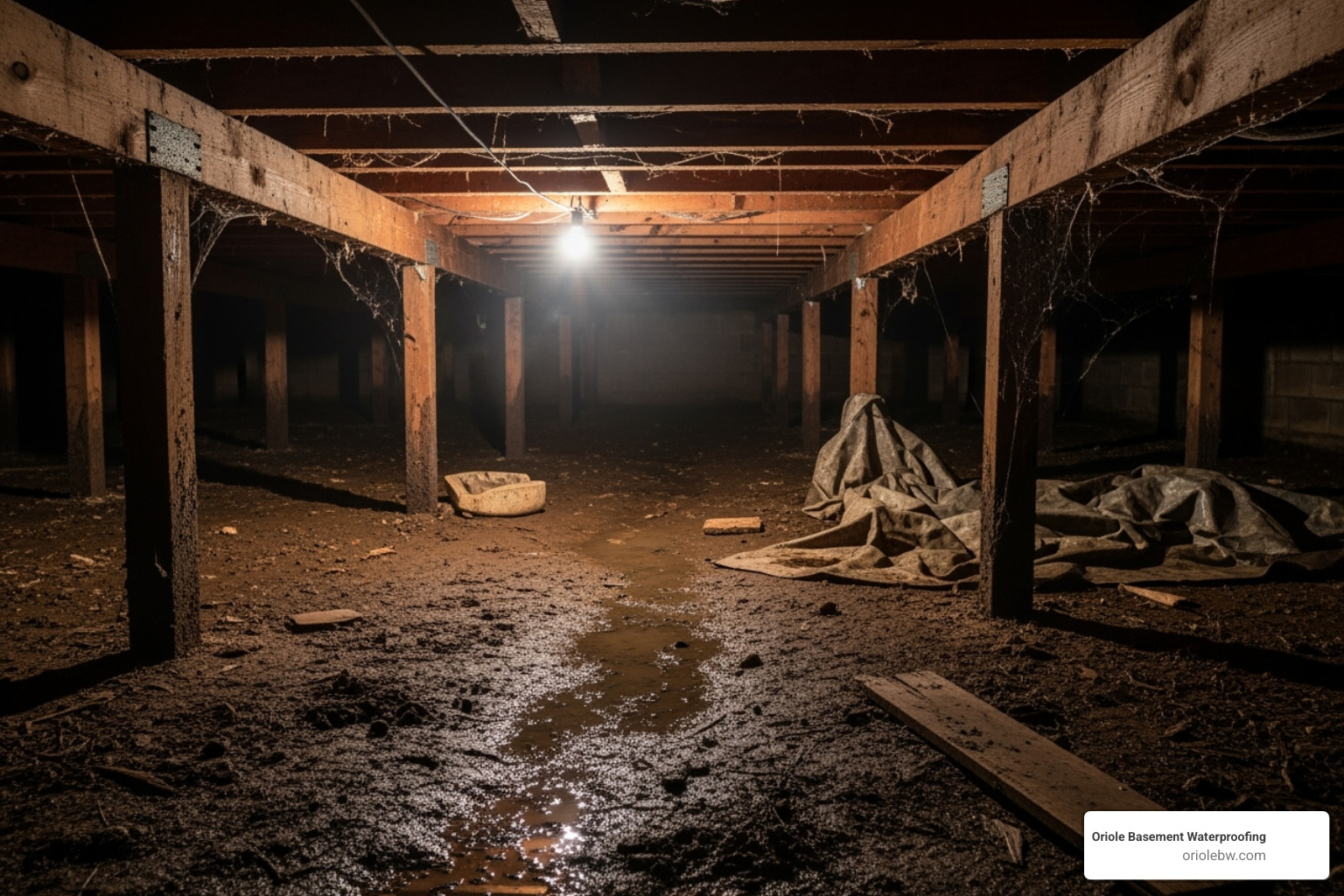
A damp crawl space can lead to sagging floors and musty air rising into your home through the “stack effect.” Installing a sump pump in a crawl space, often combined with a vapor barrier and dehumidifier, is vital for protecting your home’s structure and air quality. For more on this, see our Essential Insights: Crawl Space Sump Pump Installation.
Understanding Your Sump Pump Options
When you’re adding a sump pump to basement spaces, the choices can feel overwhelming. The main decision is between submersible and pedestal pumps, but choosing the right horsepower is just as important. Too little power and your pump can’t keep up; too much and it will cycle on and off constantly, wearing out prematurely.
That’s why we always start with a professional assessment. One customer in Baltimore County learned this the hard way after buying a powerful pump from a hardware store. It burned out in six months from short-cycling. The right-sized pump we installed for him has been running smoothly for eight years.
Submersible vs. Pedestal Pumps: What’s the Difference?
Both pumps remove water, but they work in different ways. Here’s a quick comparison:
| Feature | Submersible Sump Pump | Pedestal Sump Pump |
|---|---|---|
| Design | Pump and motor are one unit, submerged in the sump pit. | Motor is on a pedestal above the pit, with a hose into the water. |
| Noise Level | Generally quieter, as the water dampens motor sounds. | Louder, as the motor is exposed above the water. |
| Space-Saving | More compact, sits entirely within the sump pit. | Takes up more space above the pit. |
| Lifespan | Typically 5-15 years, as the motor is cooled by water. | Can last up to 30 years, as the motor is not submerged. |
| Cost | Generally more expensive due to sealed, waterproof design. | Less expensive upfront. |
| Maintenance/Repair | Requires pump removal for servicing. | Easier to access and service the motor. |
| Ideal Use | Finished basements, high-volume needs, quiet operation. | Unfinished basements where noise is not a concern and easy service access is preferred. |
Submersible pumps sit completely underwater, which helps cool the motor and makes them quieter, making them perfect for finished basements. Pedestal pumps keep the motor out of the water, making them louder but easier to service.
We typically recommend submersible pumps for finished basements in Baltimore City and Baltimore County. Pedestal pumps can be a good fit for unfinished basements where noise isn’t a primary concern.
Why a Battery Backup System is a Must-Have in Maryland
Maryland storms often knock out the power right when you need your sump pump the most. A battery backup sump pump system is your insurance policy against a power outage.
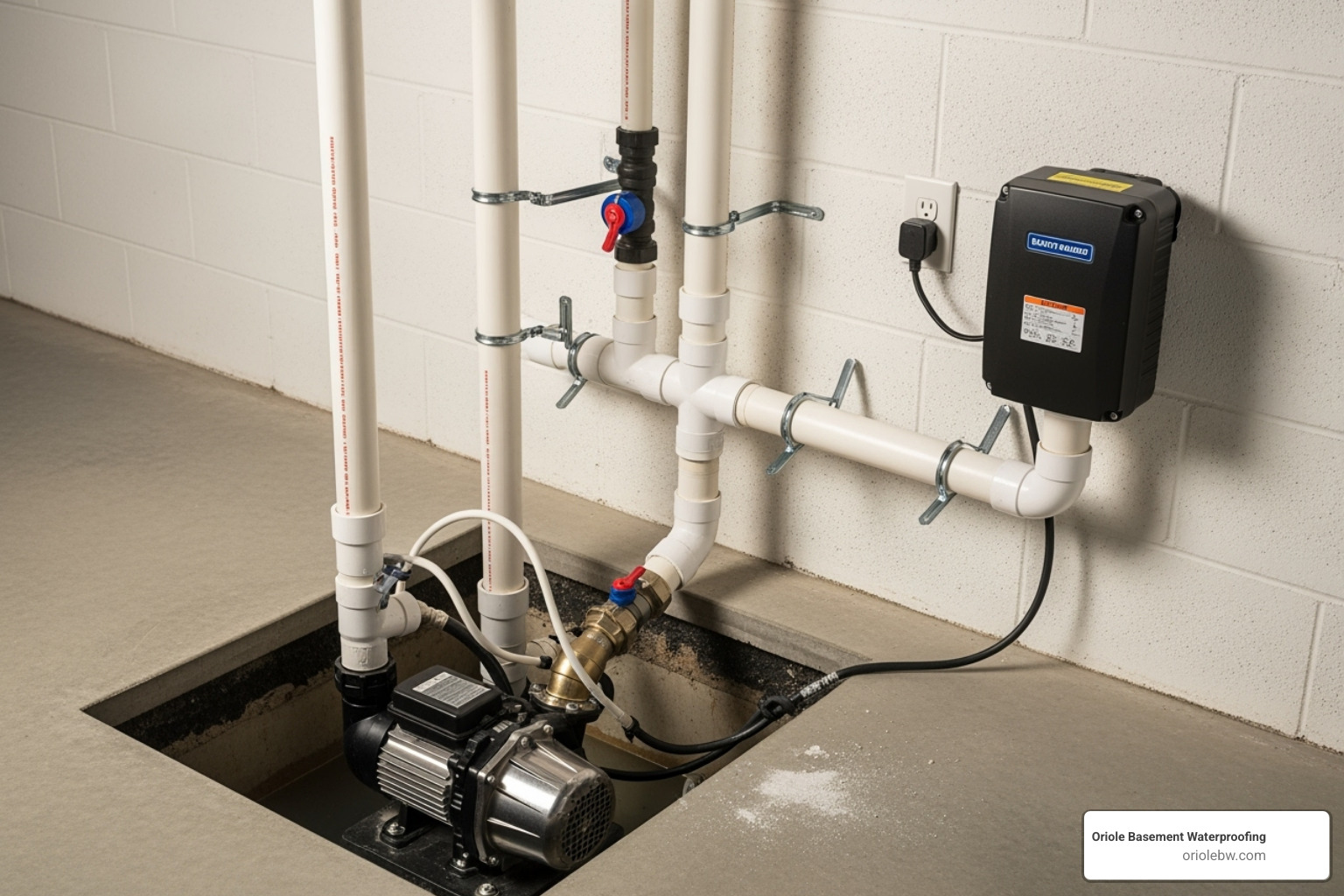
It automatically kicks in when your main pump fails or loses power. One homeowner in Harford County called us after a big storm, relieved. “I heard the backup pump running at 2 AM and thought, ‘Thank goodness we listened to you guys!'” His neighbors weren’t so lucky.
The peace of mind alone makes a backup system worth it. Your primary pump handles day-to-day water, but the backup system provides continuous protection against a power outage, pump failure, or overwhelming amounts of water.
For detailed information, explore our Sump Pump Battery Backups or learn how to Add a Battery to an Existing Sump Pump.
The Professional Process of Adding a Sump Pump to a Basement
When it comes to adding a sump pump to basement spaces, a professional installation ensures your pump works when you need it most. While DIY guides exist, a proper installation involves expertise that only comes with experience.
We start by identifying the absolute lowest point in your basement where water naturally collects. The sump pit excavation is a precise job, requiring us to break through concrete and dig a hole properly sized for the sump basin. An improperly sized or positioned pit can lead to pump failure.
Our process includes setting the perforated basin perfectly level, surrounding it with gravel for optimal drainage, and carefully placing the pump to ensure the float switch moves freely. We also install a check valve, a crucial component that prevents pumped water from flowing back into the pit and burning out your pump. Finally, we ensure your pump connects to a dedicated GFCI outlet for electrical safety in a wet environment.
For more insights into our meticulous approach, check out our 5 Expert Tips for Sump Pump Installation.
Proper Sump Pump Discharge: Where Does the Water Go?
One of the biggest mistakes we see is poor discharge planning. Discharging water away from the foundation is essential to prevent the same water from seeping right back into your basement. In Baltimore City, Baltimore County, and Harford County, local regulations prohibit connecting sump pumps to municipal sewer systems to avoid overwhelming them during heavy rains.
We ensure the discharge point is at least 10-20 feet from your foundation, on a grade that carries water away from your home. This prevents water from reentering through window wells or pooling near the foundation.
Considerations for Adding a Sump Pump to a Finished Basement

Adding a sump pump to basement spaces that are already finished requires a different level of care. Protecting your finished floors and walls is just as important as solving the water problem. We use dust containment systems, protective coverings, and work with precision to avoid damaging your space.
Our expertise goes beyond basic installation. We know how to integrate the system so it’s effective but discreet, preserving the beauty and function of your finished basement. Our clean installation approach means we handle all debris removal and cleanup, leaving your basement as clean as we found it.
Sump Pump Lifespan, Maintenance, and Costs
Homeowners often ask, “How long will my sump pump last?” A quality pump typically lasts about 10 years, but this depends on usage and maintenance. A pump in an area with a high water table will work harder and wear out faster. Think of it like your car: regular service prevents breakdowns at the worst possible moment.
One Baltimore County homeowner learned this when his 12-year-old pump gave out during a hurricane. After we installed his replacement and set up a maintenance schedule, he told us, “I’ll never ignore those warning signs again.”
Regular maintenance isn’t just about extending your pump’s life; it’s about ensuring it’s ready when you need it. Our professional inspections catch small issues before they become expensive emergencies.
Essential Maintenance for Your Sump Pump
While some basic checks are helpful, professional maintenance ensures your system is truly prepared for a storm. Our technicians perform several key checks:
- Test the Pump: We test the pump’s activation and response to ensure it turns on when needed.
- Clean the Pit: Debris like dirt, gravel, or small objects can clog the pump. We clear the pit to prevent this.
- Check the Float Switch: We ensure the switch moves freely and isn’t obstructed, as this is what tells the pump to activate.
- Inspect the Discharge Line: We check the exterior pipe for blockages from leaves, ice, or debris that could cause water to back up.
If you’re ever unsure, it’s always safest to call a professional.
What to Expect for Sump Pump Installation Costs
We know cost is a major consideration when adding a sump pump to basement spaces. The national average for a complete professional installation is around $1,400, but costs can range from $500 to over $4,000 depending on the project’s complexity.
Factors that influence the final price include whether we are replacing an old pump or excavating a new pit through concrete, which is more labor-intensive. The pump type and horsepower also affect the cost. Adding a battery backup system is an additional investment, but it can save you thousands in potential flood damage during a power outage. One Baltimore City customer told us her backup system saved her finished basement during a storm. “The extra cost was nothing compared to what I would have spent replacing my flooring and furniture,” she said.
While DIY might seem cheaper, the complexity of proper excavation, electrical work, and discharge routing makes professional installation the smarter long-term investment. For detailed breakdowns, check out our Sump Pump Installation Cost Breakdown and learn more about What is the Labor Cost to Install a Sump Pump?.
When to Call a Professional for Your Basement Needs
Here’s the truth about adding a sump pump to basement: this isn’t a simple weekend DIY project. We’ve been called to fix too many installations that went wrong.
Complex installations that require cutting through concrete and excavating a new pit should always be left to professionals. One homeowner tried it himself and hit a water line, turning a standard installation into a costly emergency repair. The electrical work also requires a pro; a sump pump needs a dedicated GFCI outlet, and mixing water and electricity is a serious safety risk.
If your pump is making strange noises or constantly running even without water, it’s a sign of failure. A pump running dry will burn out, usually when you need it most. Learn more about Why Your Sump Pump Runs Without Water.
A sump pump also works best as part of a comprehensive waterproofing system, which requires professional integration to keep your basement truly dry.
A Holistic Approach to a Dry Basement
After 70+ years in this business, we’ve learned that just installing a pump often treats the symptom, not the underlying problem.
A truly dry basement requires looking beyond the pump. We start by assessing foundation integrity, as even small cracks can let in significant water. We also address crawl space moisture, which can affect your home’s air quality and structural components like floor joists.
Our complete solution approach means we address root causes, from foundation issues to poor drainage around your home. When we finish a job, you can be confident that your basement will stay dry for decades, which is why we offer our lifetime transferable guarantee.
For comprehensive moisture management, explore our Crawl Space Repair services to see how we protect your entire foundation system.
Your Partner for a Dry and Healthy Maryland Basement
When you’re adding a sump pump to basement spaces, you’re investing in your home’s future. A properly installed sump pump is a critical defense against Maryland’s weather, protecting your foundation and your family’s health.
At Oriole Basement Waterproofing, we bring over 70 years of local experience in Baltimore City, Baltimore County, and Harford County. We’re not just contractors; we’re your neighbors. We understand our region’s clay soil and what solutions work for the long haul.
What sets us apart is our engineering-backed, holistic approach. We look at the complete picture: foundation integrity, crawl space moisture, drainage, and the right sump pump system for your home. We partner with structural engineers on major foundation repairs to ensure lasting results.
Our lifetime transferable guarantee on encapsulation and foundation repairs is our commitment to you. We’ve been serving Maryland families since the 1950s and plan to be here for decades to come.
One homeowner in Baltimore County recently told us, “You didn’t just fix my basement; you gave me my peace of mind back.” That’s our goal. Whether you need a sump pump or a comprehensive waterproofing system, we deliver transparent pricing and white-glove service.
For a complete solution to your basement water problems in Baltimore City, Baltimore County, or Harford County, schedule your free inspection today. Let our certified technicians show you what your basement needs to stay dry and healthy. Get protected with Sump Pump Battery Backups and experience the Oriole difference.