


That Crack in Your Basement Wall Isn’t Just Cosmetic
Foundation crack problems in Maryland homes are common, but not all cracks are created equal. If you’ve spotted one, you’re probably wondering if it’s normal settling or a major issue.
Quick Answer: What You Need to Know
- Hairline cracks (under 1/8″): Usually cosmetic, from concrete curing.
- Vertical cracks (1/8″ to 1/4″): Often from settling; monitor but not typically urgent.
- Horizontal cracks: Serious. A sign of soil pressure; requires immediate professional assessment.
- Cracks wider than 1/4″: Potential structural issue; get a pro inspection.
- Active water seepage: Seal promptly to prevent moisture damage and mold.
We’ve been fixing Maryland foundations for over 70 years, from harmless hairline cracks to bowing walls in old Baltimore rowhomes. The good news is that most cracks are fixable if you catch them early.
Why Maryland homes crack: Our clay-rich soil expands when wet and shrinks when dry. Add in freeze-thaw cycles and heavy spring rains, and you have a recipe for foundation stress. Older homes in Baltimore City and Baltimore County are especially vulnerable.
This guide will help you identify crack types, understand their causes, and know when to act. No scare tactics, just straight talk from a local contractor who’s been there.
Understanding Your Foundation Crack: What to Look For
Spotting a crack is unsettling, but the first step is to identify its type, width, and location. These clues tell the story of your home’s foundation.
Decoding the Different Types of Foundation Cracks
Understanding the crack type is key to assessing its severity.
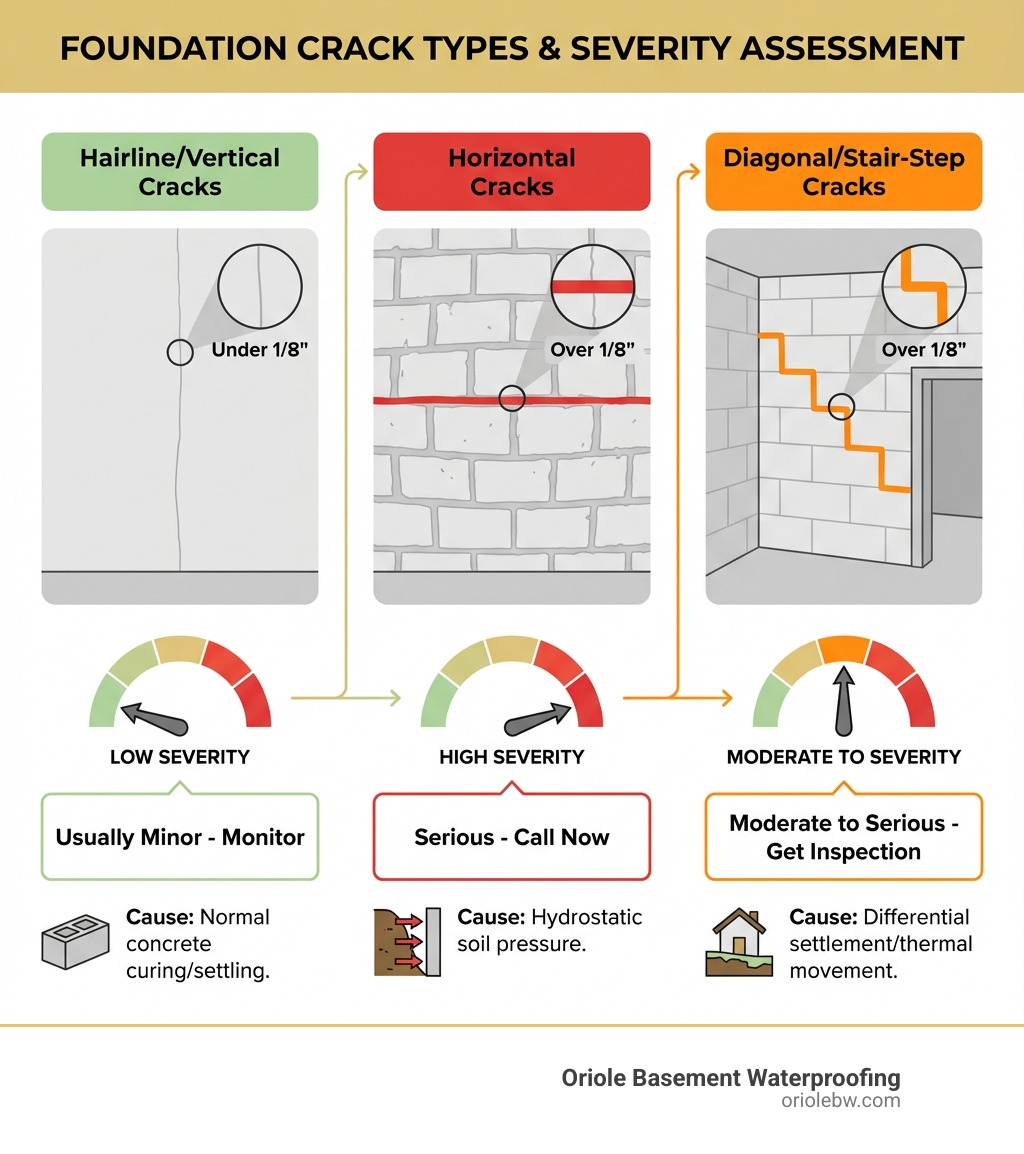
- Vertical Cracks: Running up and down, these are often the least troublesome. They usually result from natural settling or concrete curing. While not a major structural concern, they can let water and pests in. We see these often in Baltimore City and Harford County homes as they settle over decades.
- Horizontal Cracks: Running left to right, these are always a cause for concern. They are caused by external soil and water pressure. In our climate, the freeze-thaw cycle makes this worse. Unaddressed, they can lead to bowing walls and foundation failure.
- Diagonal & Stair-Step Cracks: These angled or zigzag cracks often indicate uneven foundation settling. While sometimes less serious than horizontal cracks, they can worsen and cause structural damage and water seepage. If a quarter fits in the crack, it’s time to call a professional.
- Hairline Cracks: Very fine cracks, common in new construction as concrete cures. They are usually cosmetic, but you should monitor them to ensure they don’t expand.
- Structural vs. Non-Structural: A non-structural crack (often hairline or minor vertical) doesn’t threaten your home’s stability. A structural crack (typically wider, horizontal, or diagonal) compromises your foundation’s integrity and requires professional attention.
Crack Width Guide:
The width of a crack is a straightforward indicator of its severity:
- Under 1/8 inch: Usually hairline cracks from normal settling. Simple sealing may be an option for aesthetics or minor moisture.
- 1/8 to 1/4 inch: Often from settling. These should be monitored closely, and a professional assessment is recommended if they grow.
- Wider than 1/4 inch: A sign of more serious structural damage requiring professional repair. According to engineering guidelines, cracks from 3/16″ to 9/16″ are moderate, while anything wider is considered severe.
For a deeper dive, check our guide on Cracked Basement Maryland Causes & Solutions.
Why Foundations Crack: Common Causes in Maryland
Maryland’s climate and geology contribute to foundation stress across Baltimore City, Baltimore County, and Harford County.
- Hydrostatic Pressure: Saturated soil from heavy rain or snowmelt exerts immense pressure against basement walls, causing horizontal cracks and bowing.
- Soil Settlement: Uneven settlement occurs when soil beneath one part of the foundation compacts more than another, causing the foundation to shift and crack.
- Freeze-Thaw Cycles: Maryland winters cause water in the soil to freeze and expand, pushing on your foundation. This repeated cycle creates significant stress.
- Tree Roots: Large tree roots can push against a foundation or draw moisture from the soil unevenly, causing settlement and cracks.
- Poor Construction: Improperly compacted soil or inadequate drainage during construction can lead to foundation weaknesses and cracks over time.
- Expansive Clay Soil: Common in the Baltimore area, clay soil swells when wet and shrinks when dry, putting constant stress on foundations.
Learn more about water’s impact in our article: Water in Foundation: How to Protect Maryland Homes. While new construction often sees minor shrinkage cracks, as detailed in Understanding common cracks in new construction, it’s the significant ones that need our expertise.
Assessing Severity: When to Worry About a Foundation Crack
How do you know if a crack is serious? When in doubt, call us out. But here are clear indicators that you need immediate professional attention:
-
Serious Warning Signs:
- Bowing or Bulging Walls: A major red flag, especially with horizontal cracks, indicating immense external pressure.
- Water Seepage: Any crack letting water in is a problem. It can lead to mold (we refer to Raven Mold for remediation unless there’s active water intrusion) and further foundation damage.
- Sticking Doors/Windows: A sign your foundation is shifting and throwing the house frame out of alignment.
- Uneven Floors: Sloping or uneven floors suggest your foundation is settling unevenly.
- Visible Gaps: Gaps between walls and ceilings or around window frames can indicate significant foundation movement.
- Cracks Wider Than 1/4 Inch or Growing: Wider cracks are generally structural. If a smaller crack is actively growing, the underlying issue is worsening.
-
Monitoring Crack Growth: For smaller cracks, mark the ends with a pencil and date it. Check it monthly. If it expands, it’s time to call us.
-
When to Call a Professional: If you see any serious warning signs, consult a professional. Foundation work is not a DIY project. Our certified technicians can properly assess the damage and recommend the right solution. Early detection is key to preventing costly repairs.
Don’t wait. Learn more in our guide: What to do if foundation needs repair.
Professional Solutions and Long-Term Prevention
When it comes to your home’s foundation, you want engineered solutions for lasting stability. That’s what we provide for homes across Baltimore City, Baltimore County, and Harford County.
Proven Foundation Crack Repair Techniques
We don’t just patch cracks; we address the root cause with proven, engineering-backed solutions.
- Crack Injection (Epoxy and Polyurethane): This is a highly effective method for sealing cracks.
- Polyurethane Injection: For damp or leaking cracks, we inject a polyurethane foam that expands to create a flexible, watertight seal.
- Epoxy Injection: For structural cracks, high-pressure epoxy injection bonds the concrete back together, restoring its strength.
- Carbon Fiber Straps: When a wall is bowing from external pressure, we apply carbon fiber straps. These are 10 times stronger than steel and prevent further inward movement, stabilizing the foundation.
- Wall Stabilization: For severely compromised walls, we offer comprehensive solutions like sill plate, support beam, and floor joist replacement. We partner with structural engineers on every major repair to ensure a custom, long-term solution for your home.
You can learn more about one of our key methods here: High-Pressure Injection Concrete Crack Repair.
Repair Costs, Home Value, and Insurance Facts
Understanding the financial side of foundation crack repair is crucial. Costs vary based on the severity and repair type.
- Minor vs. Major Repair Costs: Sealing minor, non-structural cracks can range from $250 to $800. Major restoration for issues like bowing walls or severe settlement can range from $2,000 to $6,000 or more. If structural cracks are ignored, costs can easily reach $4,000 to $5,000 and higher if heavy machinery is needed.
| Repair Type | Characteristics | Typical Cost Range |
|---|---|---|
| Minor Cosmetic Crack | Hairline, under 1/8 inch, stable, no water seepage | $200 – $600 |
| Minor Non-Structural Crack | Vertical, 1/8-1/4 inch, minor seepage, stable | $250 – $800 |
| Major Structural Crack | Horizontal, diagonal, >1/4 inch, bowing walls, active growth | $2,000 – $6,000+ |
| Extensive Structural Repair | Severe bowing, significant settlement, engineer involved | $4,000 – $15,000+ (or more) |
- Impact on Home Value & Insurance: Unrepaired foundation cracks can significantly lower your home’s value. Conversely, professional repairs with documentation protect your investment. Most homeowner’s insurance policies do not cover damage from settlement or soil issues, but may cover damage from a sudden event like a burst pipe. Always review your specific policy.
Protecting Your Home and Hiring the Right Pro
Prevention is better than a cure, and choosing the right contractor is critical.
-
Prevention Tips: Most foundation issues stem from poor water management.
- Proper Drainage: Ensure the ground slopes away from your foundation.
- Gutter Maintenance: Keep gutters clean and extend downspouts away from the house.
- Smart Landscaping: Avoid planting large trees and shrubs too close to the foundation.
- Prompt Repairs: Address even minor cracks and leaks quickly to prevent them from worsening.
-
Best Practices for Hiring a Contractor:
- Look for Experience & Credentials: Choose a licensed, insured company with a long track record, like our 70+ years serving Maryland.
- Get Multiple Estimates: Get at least three detailed proposals.
- Insist on Engineering-Backed Solutions: For major issues, ensure the contractor works with structural engineers. This is a core part of our process.
- Ask About the Warranty: We offer a lifetime transferable guarantee on our foundation repairs, which adds significant value to your home.
At Oriole Basement Waterproofing, we’re your local experts. We understand the challenges Maryland homes face and are committed to delivering best-in-class solutions. Our holistic approach assesses the entire problem, so you get a permanent fix.
If you’re concerned about a foundation crack, reach out today for a free inspection. Let us help you create a strong, dry, and healthy foundation. Visit our Foundation Repair page to learn more and schedule your assessment.