

Why a Bowing Basement Wall Demands Your Immediate Attention
A bowing basement wall is a foundation wall that curves inward due to immense pressure from the soil outside. This isn’t a cosmetic flaw; it’s a serious structural problem that can lead to wall collapse, water damage, and escalating repair costs if you wait.
Quick Answer: What You Need to Know About Bowing Basement Walls
- What causes it? Heavy, water-saturated soil (hydrostatic pressure), expansive clay, poor drainage, and frost heave.
- Warning signs: Horizontal or stair-step cracks, a visible inward bulge, and water seepage.
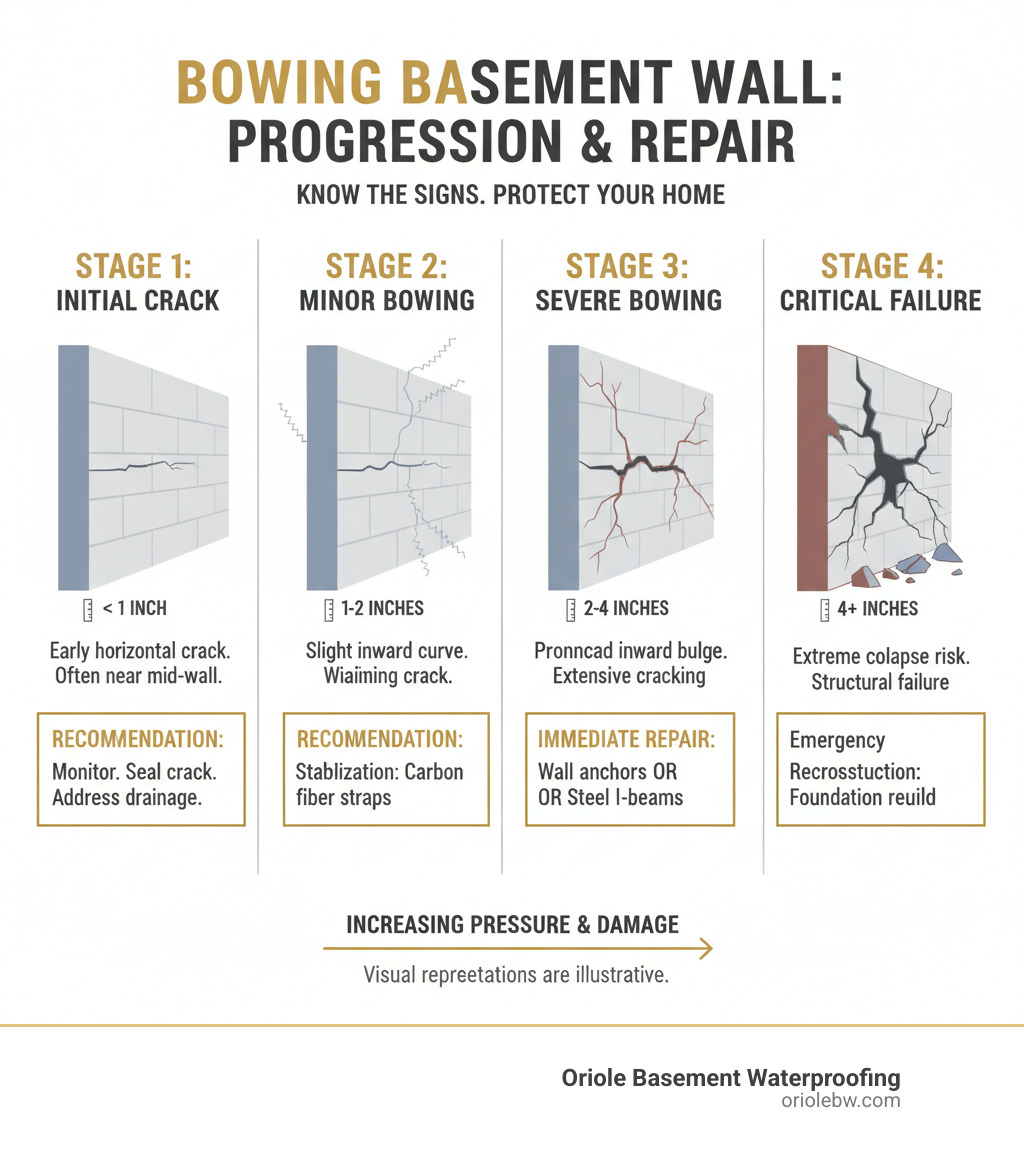
- Severity guide: A bow of less than 2 inches is minor but needs stabilization. More than 2 inches is severe and requires immediate repair.
- Repair method: Carbon fiber straps are a modern, non-invasive solution.
- Typical cost: $6,950–$8,300+, depending on the wall size and extent of the damage.
- Timeline: Most repairs are completed in just 1–2 days.
Here’s the thing about bowing walls: they don’t fix themselves. The forces pushing against your foundation are relentless. We’ve seen it countless times in Baltimore City and across Harford County: a small crack gets ignored, and six months later, the wall has moved two inches and water is seeping in after every storm.
The good news is that most bowing walls can be permanently stabilized, especially if caught early. With Maryland’s clay-heavy soil, our homes are particularly at risk. But after 70+ years of fixing foundations in Baltimore County and the surrounding areas, we know how to solve the problem for good, not just cover it up.
Must-know bowing basement wall terms:
Understanding and Repairing a Bowing Basement Wall
A bowing basement wall is your home’s way of telling you that outside forces have become too much to handle. You’ll see the evidence in telltale horizontal cracks or stair-step cracks in block walls. These aren’t just blemishes; they’re warnings of a structural problem that, if ignored, can lead to water intrusion, mold, and a serious drop in your property’s value. In the worst cases, it can lead to structural failure, compromising the safety of your entire home.
The Root Causes: Why Your Basement Walls Are Bowing
Understanding why your walls are bowing is the first step to a permanent fix. After 70+ years in this business, we know it’s usually a combination of factors.
- Hydrostatic Pressure: After a heavy Maryland rain, water-saturated soil exerts immense pressure on your foundation. According to the Association of State Floodplain Managers, this pressure intensifies as water levels rise, acting like a battering ram against your walls. Learn more about managing this with our tips on foundation waterproofing.
- Expansive Clay Soil: Many neighborhoods in Baltimore County sit on clay-rich soil. This soil swells dramatically when wet and shrinks when dry, a cycle that puts incredible stress on foundation walls. The American Society of Civil Engineers estimates this issue affects one in four homes nationwide. You can review scientific research on expansive soils for more detail.
- Poor Drainage: Clogged gutters, improper yard grading, and short downspouts are common culprits that dump water right next to your foundation, creating the perfect conditions for hydrostatic pressure.
- Frost Heave: During winter, water in the soil freezes and expands by up to 9%. This cyclical force, known as frost heave, can push walls inward over time.
- Construction Factors: Some older homes in Baltimore City were built with inadequate reinforcement or on improperly compacted soil, making them more susceptible to bowing.
Assessing the Damage: Minor vs. Severe Bowing
Understanding the severity of the bow determines the urgency and type of repair. You can get a rough idea by holding a straight edge or a taut string against the wall. The gap between the string and the wall’s deepest point is the measurement of the bow.
- Minor Bowing (Less Than 2 Inches): At this stage, you might see hairline horizontal cracks or a slight inward curve. Don’t let the word “minor” fool you. It’s a serious problem that will get worse. However, catching it early allows for less invasive and more affordable repairs.
- Severe Bowing (More Than 2 Inches): A bow of this size, often with wide horizontal or stair-step cracks, indicates a high risk of structural failure. You may also see shearing, where the top of the wall has shifted inward more than the bottom. This requires immediate professional attention.
No matter the degree of bowing, a professional assessment is crucial. For more on wall damage, see our guide to cracked basements in Maryland.
Professional Repair Solutions for a Bowing Basement Wall
For a permanent fix, you need an engineered solution. With over 70 years of experience in Baltimore City, Baltimore County, and Harford County, we rely on proven methods that provide long-term stability.
For walls with minor to moderate bowing (typically less than 2 inches), carbon fiber straps are an incredibly effective, modern solution. These high-strength straps are 10 times stronger than steel and are bonded to the wall with industrial-grade epoxy. This process integrates the straps with your foundation, counteracting the external pressure and preventing any further inward movement.
The biggest advantages of carbon fiber are that it’s a non-invasive repair (no exterior excavation needed) and has a low profile, meaning it can be easily painted over. The installation is fast, often completed in just a day or two.
Engineering-Backed Solutions: Our Commitment to Lasting Stability
We don’t guess. We partner with structural engineers on every major foundation repair. An engineer assesses the damage and designs a precise repair plan customized for your home. This ensures our solutions are not just a quick fix, but a robust, permanent stabilization. It’s this combination of hands-on experience and professional engineering that gives our clients peace of mind. You can learn more at our foundation repair services page.
The Repair Process: Cost, Timeline, and What to Expect
We believe in complete transparency, so you know exactly what to expect.
- Cost: The cost to repair a bowing wall typically ranges from $6,950 to $8,300+, depending on the wall size, the severity of the bow, and accessibility. The only way to get an accurate price is with a professional, on-site inspection and a detailed estimate.
- Timeline: We pride ourselves on efficient service. Most carbon fiber strap installations are completed in just 1 to 2 days, minimizing disruption to your life.
- The Oriole Experience: From your first call, we provide white-glove service. This includes a thorough inspection, a detailed proposal with clear pricing, a clean and professional installation by our certified crew, and a final follow-up to ensure your complete satisfaction.
- Our Lifetime Warranty: We stand behind our work. All our foundation repairs, including carbon fiber installations, come with a transferable lifetime guarantee. This protects your investment and is a significant asset if you ever sell your home. Find out more about choosing the right pro in our guide to finding a local foundation repair expert.
Your Next Steps: Prevention and Making Smart Decisions
You now understand what causes a bowing basement wall, how to spot it, and how it can be fixed. The next step is taking action, whether you’re preventing future issues or dealing with a current one.
Buying a Home with Potential Foundation Issues
Should you buy a house with a bowing wall? It’s a common question, especially for older homes in Baltimore City and Baltimore County. A bowing wall isn’t an automatic deal-breaker, but it requires careful due diligence.
- Get a Professional Assessment: If a home inspector flags a bowing wall, your next call should be to a foundation specialist. We offer free, no-pressure inspections to determine the severity, cause, and cost of repair.
- Use It as Negotiation Leverage: A repair estimate (typically $6,950–$8,300+) is a powerful negotiation tool. You can ask the seller to make the repairs or lower the price.
- Think Long-Term: A home with a properly repaired foundation, backed by a transferable lifetime warranty like ours, can be a fantastic investment. You’re getting a foundation that’s stronger than it was before. However, buying a home with an unaddressed issue is inheriting a costly and dangerous problem. For more tips, see our guide on what to do if your foundation needs repair.
How to Prevent Basement Walls from Bowing in the First Place
The best repair is the one you never have to make. Most bowing basement wall problems start with water. Here’s how to keep it away from your foundation.
- Keep Gutters Clean: Clogged gutters dump water right at your foundation. Clean them twice a year, especially in the fall.
- Extend Your Downspouts: This is critical. Downspouts should carry water at least 10 feet away from your home. Extensions are cheap and effective.
- Check Your Yard’s Grade: The ground should slope away from your house. If water pools near the foundation, you have a grading problem that needs to be addressed.
- Consider a Sump Pump: In areas with high water tables, a reliable sump pump system is your best defense against hydrostatic pressure. We install systems with battery backups for protection during storms.
- Schedule Annual Inspections: A yearly check-up from a professional can catch small cracks or slight bows before they become major emergencies. We offer free inspections throughout our service areas in Baltimore City, Baltimore County, and Harford County.
Our holistic approach means we don’t just fix the symptom; we address the cause. It’s why we can confidently offer a lifetime transferable warranty on our work.
You’ve built a life in your home. Protecting its foundation is what we do. Don’t let a bowing basement wall compromise your home’s safety, value, or your peace of mind. We’re here to help with honest assessments, transparent pricing, and solutions that last. Learn more about how we serve your community by visiting our Baltimore, MD service area page.
Contact Oriole Basement Waterproofing today for a free inspection, and take the first step toward a structurally sound, worry-free home.